

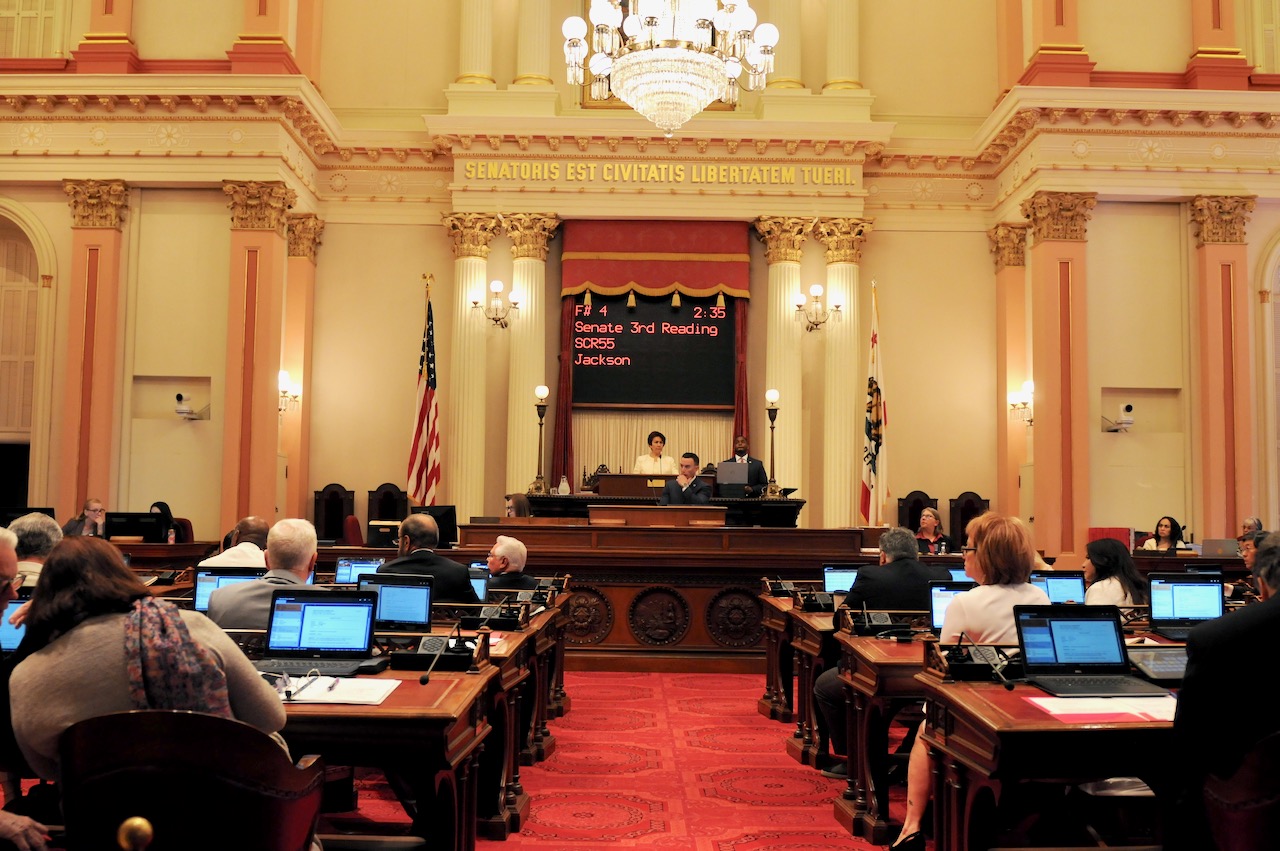
California State Capitol. (Photo: Katy Grimes for California Globe)
Does Statutory Text Trump Statements of the Law’s Author?
Under California’s structural interpretation paradigm, courts utilize a strict hierarchy
By Chris Micheli, November 14, 2026 2:30 am
In California statutory construction, the unambiguous text of a statute always trumps the extrinsic declarations of its author. Under California’s structural interpretation paradigm, courts utilize a strict hierarchy. If the statutory text is clear and unambiguous on its face, the plain meaning governs, and judges are legally forbidden from looking at extrinsic legislative history or individual letters of intent.
Because an individual bill author does not represent the “collegial view” of the entire 120-member Legislature, California courts routinely minimize or explicitly reject authors’ formal statements of intent when they conflict with a strict textual reading.
In California Teachers Assn. v. San Diego Community College Dist. (1981) 28 Cal.3d 692, a teachers’ association sought to interpret part-time teacher salaries using a letter written by the bill’s author (a state senator) directly to the Governor, which had also been integrated into the legislative discussion.
The California Supreme Court strictly minimized the author’s statement. The Court solidified the principle that the statement of an individual legislator, including the author of a bill, is not considered in construing a statute unless it merely reiterates shared floor debates. Because the statutory language had a direct import, the author’s individual interpretation could not be used to reshape the plain text.
In Ross v. RagingWire Telecommunications, Inc. (2008) 42 Cal.4th 920, five current and former state legislators who authored a medical cannabis bill filed an amici curiae brief stating that they formally “believed that this statutory enactment clearly and sufficiently expressed” their intent to require employers to accommodate off-duty medical cannabis use under the Fair Employment and Housing Act (FEHA).
The California Supreme Court flatly rejected the authors’ formal statement of intent. The Court ruled that because the authors failed to show they explicitly communicated this interpretation to the Legislature as a whole during the vote, their understandings did not reflect the intent of the actual statutory text. The plain meaning of the text, which did not mandate employer accommodation, prevailed.
In Halbert’s Lumber, Inc. v. Lucky Stores, Inc. (1992) 6 Cal.App.4th 1233, the appellate court wrote California’s primary “how-to” guide for statutory interpretation. Parties attempted to use an extensive array of legislative history materials, including author assertions, to interpret a mechanics’ lien release form statute.
The Court of Appeal strictly minimized extrinsic tools, outlining a text-first workflow. The court emphasized that judges must examine the plain language first. If the words are clear, the inquiry ends immediately. The court noted that relying on individual authorial expressions creates a slippery slope where courts accidentally “rewrite” clear laws under the guise of finding legislative intent.
In People v. Valenzuela (1987) 195 Cal.App.3d 1249, defense counsel sought to introduce a formal letter written by a bill’s author to the Governor to establish a favorable interpretation of a penal statute. The Fourth District Court of Appeal completely denied judicial notice of the author’s letter. The court noted that a single legislator’s letter to the executive branch is not legitimate legislative history because it only records the subjective views of one person, rather than the collective body that voted on the literal text.
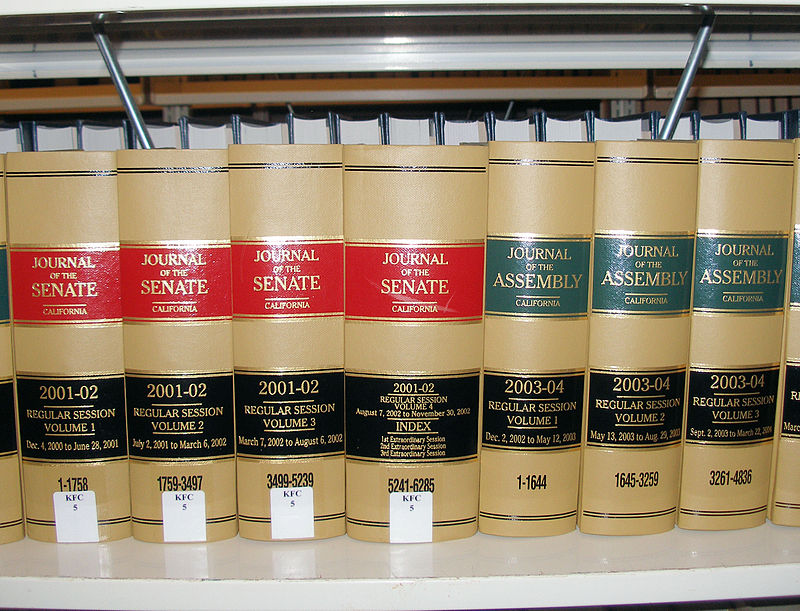
In re Marriage of Bouquet (1976) 16 Cal.3d 583 was a case that dealt with the limits of formal “Letters of Legislative Intent” published in the Senate or Assembly Daily Journals. While the Court noted that a formal motion to print an author’s letter in the Journal can make it admissible, the Supreme Court explicitly minimized its weight. The Court ruled that no guarantee can issue that those who supported an author’s proposal shared his view of its compass. The author’s personal understanding cannot per se expose or override the objective meaning of the enacted words.
As a result of these court decisions, if you are arguing statutory construction in a California court, a bill author’s statement is only persuasive if it serves as a historical record of collegial debate (e.g., repeating exactly what was argued on the floor to the entire body). If the author’s statement attempts to add, limit, or clarify something that conflicts with the text-strict reading of the statute, California courts will dismiss it as an inadmissible “isolated fragment.”


- Does Statutory Text Trump Statements of the Law’s Author? - November 14, 2026
- How Do California Courts View Legislative Amendments to Ballot Measures? - November 13, 2026
- OAL Disapproval: Common Pitfalls in Agency Rulemaking Files - November 13, 2026
RELATED ARTICLES
-
 October 12, 2020
-
 November 2, 2026
-
 September 6, 2022