

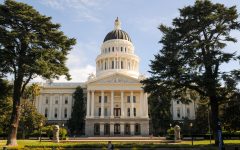
California State Capitol. (Photo: Katy Grimes for California Globe)
How Do California Courts View Legislative Amendments to Ballot Measures?
The Legislature is strictly prohibited from amending or repealing a voter-approved initiative unless the initiative itself explicitly permits it
By Chris Micheli, November 13, 2026 2:00 pm
Under Article II, Section 10(c) of the California Constitution, the Legislature is strictly prohibited from amending or repealing a voter-approved initiative unless the initiative itself explicitly permits it. When an initiative allows for amendments, typically requiring a supermajority vote (such as 2/3) and requiring that the bill to “further the purposes” of the initiative, California courts apply a highly specific legal framework to evaluate the bill’s constitutionality.
The definitive standard was established by the California Supreme Court in the landmark case Amwest Surety Insurance Co. v. Wilson (1995). According to the state’s high court, the core legal test is “Any Reasonable Construction.” The standard for judicial review is highly deferential to the Legislature, but it acts as a firm constitutional boundary as well. A court will uphold a legislative amendment if, by any reasonable construction, it can be said that the statute furthers the purposes of the initiative.
In these cases, courts presume that the Legislature’s enacted statute is constitutional and valid. The party challenging the amendment bears the burden of proving that the amendment does not further the purposes of the initiative under any plausible interpretation. However, despite this broad latitude, deference to the legislative enactment is not absolute. If an amendment directly undermines, conflicts with, or narrows the core objectives of the voter initiative, the court will strike it down as an unconstitutional exercise of legislative power.
How do the state’s courts determine the “purposes” of the initiative? In order to decide if a bill furthers an initiative’s goals, a court must first define exactly what those goals are. Courts use standard rules of statutory interpretation, treating the initiative as if it were a statute enacted by the Legislature.
As a result, the primary source is the text of the initiative itself, especially any formal “Findings and Declarations” or “Statement of Purpose” sections embedded in the law. If the text is ambiguous, courts look to extrinsic evidence from the official Voter Information Guide, including the Legislative Analyst’s Office (LAO) analysis, arguments for and against the measure, and the official ballot summary presented to voters.
The ultimate goal of the court is to determine what a reasonable voter would have understood the core purposes of the measure to be when casting their ballot. What are the key factors that the courts use in their analyses? When contrasting the legislative bill against the initiative’s purposes, the court focuses on several critical distinctions:
First, does it promote or thwart the core mandate of the ballot measure? In Amwest, voters passed Proposition 103 to regulate insurance rates and strip surety companies of certain exemptions. The Legislature subsequently passed a bill exempting surety companies from those provisions. The Supreme Court struck the bill down, ruling that exempting an industry from regulation could not, by any reasonable construction, “further the purpose” of an initiative meant to universally regulate it.
The state’s courts have recognized a distinction between technical refinements to a voter-approved measure versus substantive policy shifts. Amendments that clarify ambiguities, improve administrative logistics, or close unexpected loopholes generally pass the test. On the other hand, bills that fundamentally alter the grand compromise or scope of the initiative fail.
Finally, lawmakers frequently insert statements into bills explicitly asserting that the act “furthers the purposes and intent” of the corresponding proposition. While courts consider these findings, legislative declarations are not binding. The judiciary maintains the final, independent authority to determine if the declaration holds true under the Amwest standard.


- How Do California Courts View Legislative Amendments to Ballot Measures? - November 13, 2026
- OAL Disapproval: Common Pitfalls in Agency Rulemaking Files - November 13, 2026
- Conditions of Compensation - November 13, 2026
RELATED ARTICLES
-
 September 11, 2024
-
 August 19, 2025
-
 November 3, 2024