

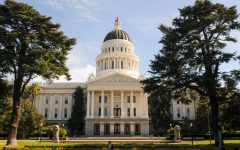
California State Capitol. (Photo: Katy Grimes for California Globe)
Chart of Main Canons of Statutory Construction
Different words in the same statute cannot have the same meaning
By Chris Micheli, July 8, 2026 2:03 pm
This chart sets forth the major canons of statutory construction used by California courts:
| Principle | Explanation |
| Constitutional Avoidance Canon | Statutes will be construed, if possible, to avoid questions about their constitutionality. The fundamental principle of the Constitutional Avoidance Canon is that a court should interpret the Constitution only when it is strictly necessary to do so. |
| Rule of Lenity | Penal (or criminal law) statutes whose purpose is to punish offenders must be construed strictly or narrowly. The Rule of Lenity is a canon used in criminal law, sometimes called the “rule of strict construction,” that an ambiguous statute is to be construed against the state. |
| Rule of the Last Antecedent | “Referential and qualifying phrases, where no contrary intention appears, refer solely to the last antecedent.” This means that any qualifying words are to be applied to the words or phrases immediately preceding the qualifying word or words, and are not interpreted as extending to other words. |
| Serial Comma Rule | In a series of three items where each is set off by a comma, each item should be viewed as independent of each other. |
| Whole Act Rule | Statutory provisions should be interpreted so they have a whole, coherent meaning. In other words, identical words in the same or related statutes should have the same meaning ascribed to them. The Whole Act Rule is a textual canon that provides, when construing a statute, the text of the entire statute as a whole must be considered by the court. |
| Rule Against Surplusage | Different words in the same statute cannot have the same meaning. In other words, one word is not duplicative or redundant of another word found in the statute. |
| Ejusdem Generis | Guides the courts to interpret catch-all phrases to be limited by the specific words around them. This canon is used for interpreting loosely written statutes. Again, it is used if the statute lists certain things and the list ends with a general statement to include other things (which legislative drafters refer to as a “catch-all”), then a court will assume that the general statement only includes things that are similar to the items listed. |
| Expressio Unius | Provides that a list of words with no catch-all means that the inclusion of specific words suggests the exclusion of other words. In other words, when a statute includes a list of specific items, that list is presumed to be exclusive and, therefore, the statute applies only to the listed items and not to other that are not listed. |
| In Pari Materia | It means “on the same subject or matter.” This is a doctrine of statutory construction that statutes that are on the same subject must be construed together. In other words, if a statute is ambiguous, the court may apply this canon and look to the rest of the statute, or the surrounding statutory scheme, in order to determine the meaning of the ambiguous statute. |
| Noscitur a Sociis | Interpret words or phrases in light of the other words around it in the statute. In other words, the courts should interpret an ambiguous word or phrase by taking into account the words used and phrases used in their textual context. Noscitur a sociis is used for interpreting questionable words in a statute. |


Chris Micheli is an attorney and lobbyist with Snodgrass & Micheli, LLC, as well as an Adjunct Professor at McGeorge School of Law.
Latest posts by Chris Micheli (see all)
- General Principles of Nuisance - October 17, 2026
- Guidance on California Judicial Branch - October 17, 2026
- Sales Tax Presumptions - October 17, 2026
RELATED ARTICLES
-
-
 October 25, 2022
 -
October 30, 2022