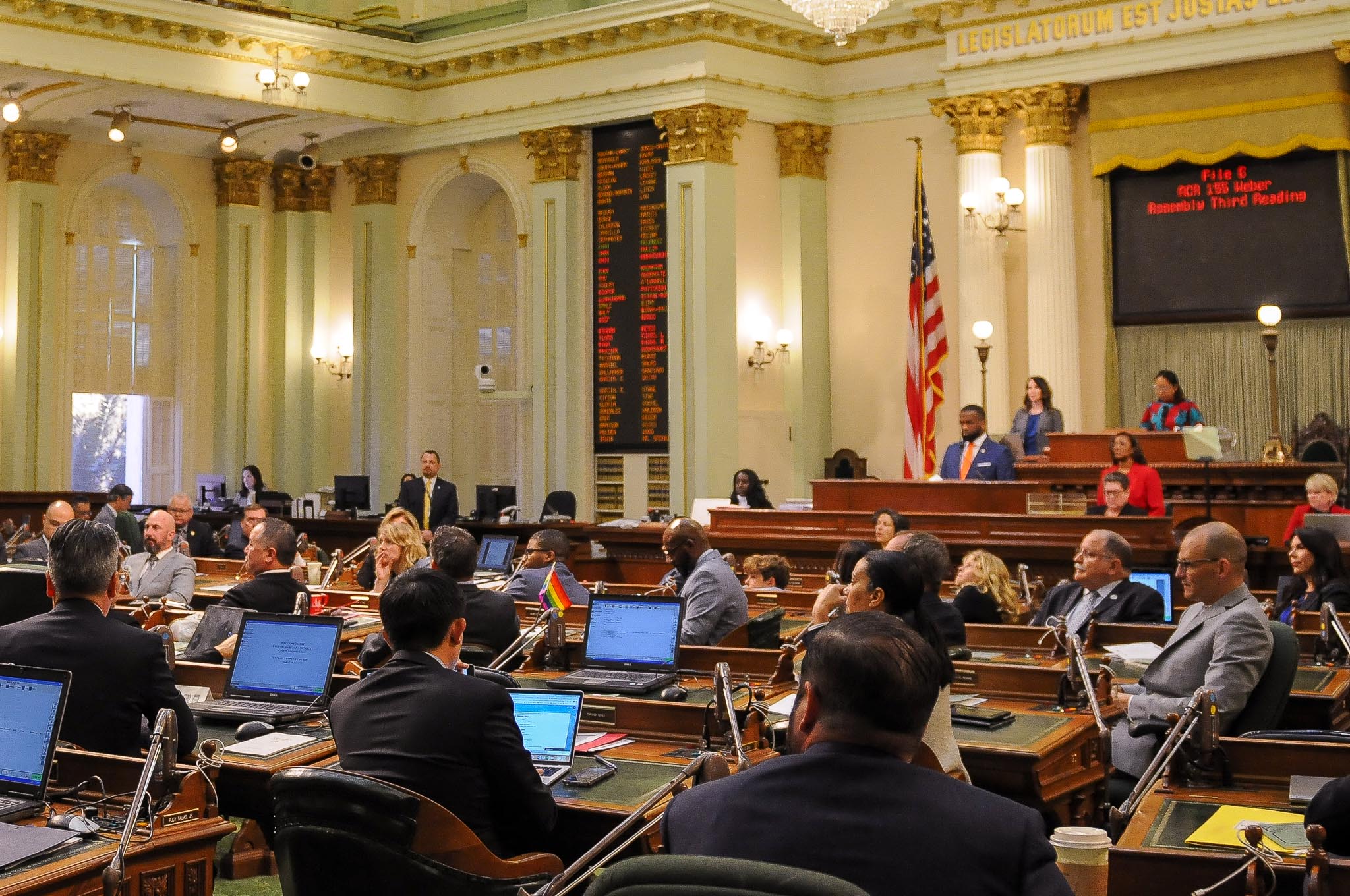
The Legislative Bill Room, California State Capitol. (Photo: ca.gov)
Chart on Types of California Bills
18 different types of bills in the California Legislature
By Chris Micheli, June 25, 2026 2:00 pm
The following chart sets forth the main types of bills used in the California Legislature:
| Type of Bill | Purpose |
| Appropriation | This bill contains language that appropriates funds for expenditures by the state. |
| Author-sponsored | This bill is the idea of the author, who is the official sponsor. |
| Backed | This bill is ready for introduction because it has a “backing” (formally called a jacket) that shows who the author is. |
| Budget | This bill is the main budget bill that makes appropriations for implementation of the state’s fiscal year spending (the secondary bill is referred to as the “budget bill junior”). |
| Budget Bill Junior (BBJ) | This bill amends the main budget bill that makes changes to appropriations for implementation of the state’s fiscal year spending. |
| Clean-up | This bill “cleans-up” changes to a law following enactment of a prior bill that needs to be modified. |
| Committee | This bill is authored by a majority of a committee; usually used for enacting non-controversial law changes. |
| District | This bill only applies to the legislator’s own district, such as benefiting his or her transit district. |
| Fiscal | This bill must go through the fiscal committee after it has passed the policy committee. |
| Intent | This bill makes a statement of intent of the Legislature that the bill will do something on a topic specified in the intent statement; it is a placeholder for a later bill. |
| Omnibus | This bill is a measure that contains numerous changes to the law, generally suggested by a group, such as civil law changes recommended by the Judicial Council. |
| Special Interest | This bill has a sponsor that is a particular interest group. |
| Sponsored | This bill usually comes from an interest group or individual as the sponsor. |
| Spot | This bill makes a technical, non-substantive change in the law as a placeholder for a later bill; neither house’s Rules Committee will refer spot bills to a policy committee until they are substantively amended. |
| Technical corrections | This bill makes a technical correction in the law. |
| Trailer | This bill implements statutory changes as part of the budget adoption; these bills “trail” the main budget bill. |
| Two-year | This bill carries over from the first year of session into the second year of the session. |
| Unbacked | This bill does not yet have an author and no “backing” (also called a “jacket”) for introduction. |


Chris Micheli is an attorney and lobbyist with Snodgrass & Micheli, LLC, as well as an Adjunct Professor at McGeorge School of Law.
Latest posts by Chris Micheli (see all)
- Specific Statute Trumps the General Statute - October 27, 2026
- Allocating Corporate Income - October 27, 2026
- Cooperative Corporations - October 26, 2026
RELATED ARTICLES
-
 September 25, 2024
 -
September 21, 2024
-