
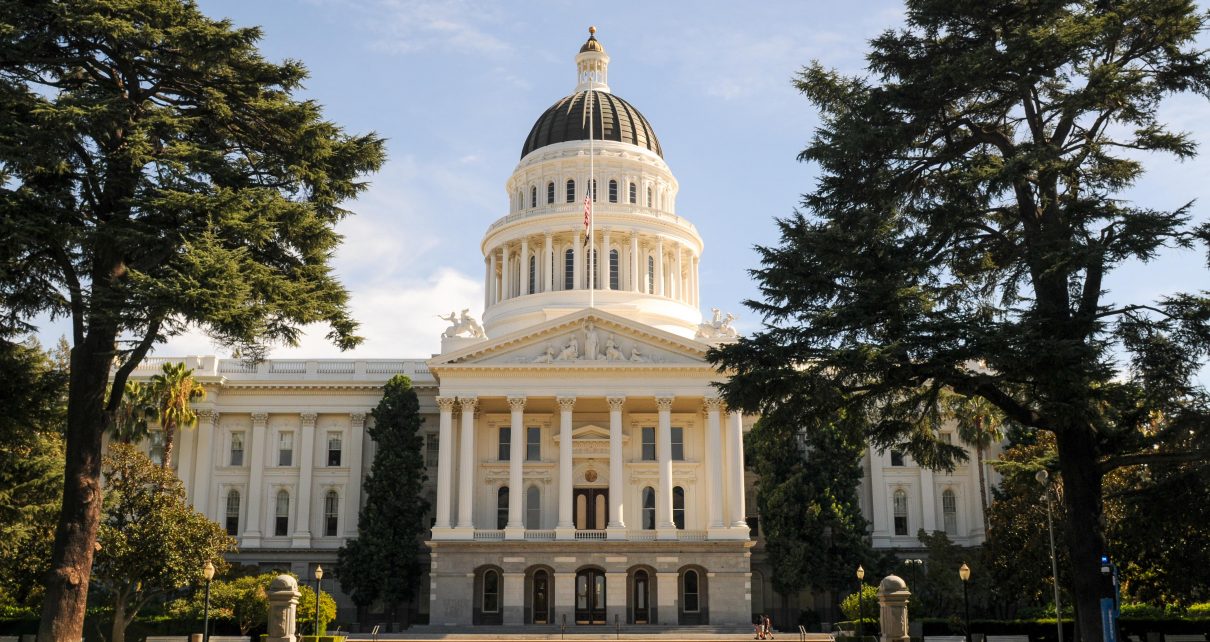
California State Capitol. (Photo: Kevin Sanders for California Globe)
Computation of Taxable Income
Deals with the computation of taxable income under the Personal Income Tax Law
By Chris Micheli, July 17, 2026 2:00 pm
Revenues and Taxation Code Division 2, Part 10, Chapter 3 deals with the computation of taxable income under the Personal Income Tax Law. Article 1 deals with the definition of gross income, adjusted gross income, and taxable income.
Section 17071 provides that Section 61 of the Internal Revenue Code, relating to gross income defined, applies.
Section 17072 states that Section 62 of the Internal Revenue Code, relating to adjusted gross income defined, applies. Section 62(a)(2)(D) of the Internal Revenue Code, relating to certain expenses of elementary and secondary school teachers, does not apply. Section 62(a)(21) of the Internal Revenue Code, relating to attorneys fees relating to awards to whistleblowers, does not apply.
Section 17073 states that Section 63 of the Internal Revenue Code, relating to taxable income defined, applies. The deduction allowed by Section 17208.1, relating to interest on loans or financed indebtedness obtained from a publicly owned utility for the purchase and installation of energy efficient products or equipment, may not be treated as a miscellaneous itemized deduction under Section 67(a) of the Internal Revenue Code, relating to the 2-percent floor on miscellaneous deductions.
Section 17073.5 allows a taxpayer to elect to take a standard deduction as specified. The standard deduction is in lieu of all deductions other than those which are to be subtracted from gross income in computing adjusted gross income. The provisions of this section are applied in lieu of the provisions of Sections 63(c) and 63(f) of the Internal Revenue Code, relating to standard deductions. The FTB is required to recompute the standard deduction amounts prescribed and that computation is made as specified.
Section 17074 states that Section 64 of the Internal Revenue Code, relating to ordinary income defined, applies.
Section 17075 states that Section 65 of the Internal Revenue Code, relating to ordinary loss defined, applies.
Section 17076 states that Section 67 of the Internal Revenue Code, relating to the 2-percent floor on miscellaneous itemized deductions, applies. A deduction allowable under this part that exceeds $3,000, relating to computation of tax where the taxpayer restores a substantial amount held under claim of right, may not be treated as a miscellaneous itemized deduction under Section 67 of the Internal Revenue Code.
Section 17077 states that Section 68 of the Internal Revenue Code, relating to overall limitation on itemized deductions, applies as specified. Section 68(b)(2) of the Internal Revenue Code, relating to inflation adjustments, does not apply. Section 68(f) of the Internal Revenue Code, relating to phaseout of limitation, does not apply. Section 68(g) of the Internal Revenue Code, relating to termination, does not apply.
Section 17078 states that Section 988 of the Internal Revenue Code, relating to treatment of certain foreign currency transactions, applies. Section 988(a)(3) of the Internal Revenue Code, relating to source, does not apply.


- Credit for Taxes Paid - October 27, 2026
- Key Court Decisions in California Statutory Interpretation - October 27, 2026
- Specific Statute Trumps the General Statute - October 27, 2026
RELATED ARTICLES
-
 May 17, 2026
 -

-
 January 30, 2022