

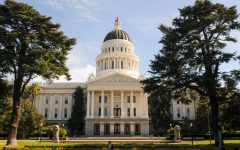
California State Capitol. (Photo: Katy Grimes for California Globe)
California Taxpayers Bill of Rights
Deals with administering the sales and use tax in this state
By Chris Micheli, August 6, 2026 2:01 pm
Article 3 of Chapter 8 of Part 1 of Division 2 deals with administering the sales and use tax in this state. Section 7080 names this article “The Harris-Katz California Taxpayers’ Bill of Rights.”
Section 7081 contains legislative findings and declarations, as well as legislative intent statements.
Section 7082 requires the board to administer this article.
Section 7083 required the board to establish the position of the Taxpayers’ Rights Advocate. The advocate or his or her designee is responsible for facilitating resolution of taxpayer complaints and problems. Applicable statutes of limitation must be tolled during the pendency of a stay. Any penalties and interest which would otherwise accrue cannot be affected by the granting of a stay. The advocate is required to report directly to the executive officer of the board.
Section 7084 requires the board to develop and implement a taxpayer education and information program directed at all of the three specified groups. The education and information program must include all of the specified items.
Section 7085 requires the board to perform annually a systematic identification of areas of recurrent taxpayer noncompliance and report its findings in its annual report. The board do two specified actions. The must include in its report recommendations for improving taxpayer compliance and uniform administration, including three specified changes.
Section 7086 requires the board to prepare and publish brief but comprehensive statements in simple and nontechnical language which explain procedures, remedies, and the rights and obligations of the board and taxpayers.
Section 7087 states that the total amount of revenue collected or assessed pursuant to this part cannot be used for evaluating officers or employees, or improve or suggest revenue quotas or goals. The board is required to certify in its annual report revenue collected or assessed is not used in a manner prohibited by law. Nothing in this section prohibits the setting of goals and the evaluation of performance with respect to productivity and the efficient use of time.
Section 7088 requires the board to develop and implement a program which will evaluate an individual employee’s or officer’s performance with respect to his or her contact with taxpayers. The development and implementation of the program must be coordinated with the Taxpayers’ Rights Advocate. The board is required to report to the Legislature on the implementation of this program in its annual report.
Section 7090 provides that procedures of the board, relating to protest hearings before board hearing officers, must include all three of the specified hearings.
Section 7091 provides that every taxpayer is entitled to be reimbursed for any reasonable fees and expenses related to a hearing before the board if all of the three specified conditions are met. To determine whether the board staff has been unreasonable, the board is required to consider whether the board staff has established that its position was substantially justified. The amount of reimbursed fees and expenses is limited as specified.
Section 7092 states that an officer or employee of the board acting in connection with any law administered by the board cannot knowingly authorize, require, or conduct any investigation of, or surveillance over, any person for nontax administration related purposes. Any person violating this law is subject to disciplinary action in accordance with the State Civil Service Act, including dismissal from office or discharge from employment.
This section does not apply with respect to any otherwise lawful investigation concerning organized crime activities. The provisions of this section are not intended to prohibit, restrict, or prevent the exchange of information where the person is being investigated for multiple violations which include sales and use tax violations. The terms “investigation” and “surveillance” are defined.
Section 7093.5 expresses a statement of legislative intent. No recommendation of settlement is allowed to be submitted to the director for approval unless that recommendation has been submitted by the chief counsel to the Attorney General. Within 30 days of receiving that recommendation, the Attorney General is required to review the recommendation and advise the chief counsel in writing of their conclusions as to whether the recommendation is reasonable from an overall perspective.
Section 7093.6 authorizes the director of the department, or their delegates, to compromise any final tax liability. The term “a final tax liability” is defined. Offers in compromise are considered only for liabilities that were generated from a business that has been discontinued or transferred, where the taxpayer making the offer no longer has a controlling interest or association with the transferred business or has a controlling interest or association with a similar type of business as the transferred or discontinued business.
Section 7094 requires the Department of Tax and Fee Administration to release any levy or notice to withhold issued pursuant to this part on any property in the event that the expense of the sale process exceeds the liability for which the levy is made.
Section 7094.1 states that, except in any case where the board finds collection of the tax to be in jeopardy, if any property has been levied upon, the property or the proceeds from the sale of the property must be returned to the taxpayer if the board determines any one of the three specified items.
Section 7095 states that exemptions from levy under Chapter 4 (commencing with Section 703.010) of Title 9 of the Code of Civil Procedure are adjusted for purposes of enforcing the collection of debts under this part to reflect changes in the California Consumer Price Index whenever the change is more than 5 percent higher than any previous adjustment.
Section 7096 allows a taxpayer to file a claim with the board for reimbursement of bank charges and any other reasonable third-party check charge fees incurred by the taxpayer as the direct result of an erroneous levy or notice to withhold, erroneous processing action, or erroneous collection action by the board.
Section 7097 explains that, at least 30 days prior to the filing or recording of liens, the department is required to mail to the taxpayer a preliminary notice. The notice must contain specified items. The preliminary notice does not apply to jeopardy determinations issued.
Section 7098 provides that the board is prohibited from revoking or suspending a person’s permit unless the board has mailed a notice preliminary to revocation or suspension which indicates that the person’s permit will be revoked or suspended by a date certain pursuant to that section. The board is required to mail the notice preliminary to revocation or suspension to the taxpayer at least 60 days before the date certain.
Section 7099 states that, if any officer or employee of the board recklessly disregards board-published procedures, a taxpayer aggrieved by that action or omission may bring an action for damages against the State of California in superior court. In any action brought, upon a finding of liability on the part of the State of California, the state is liable to the plaintiff in an amount equal to the sum of all of the specified damages and costs.
Section 7099.1 states that, with respect to tax advice, the protections of confidentiality that apply to a communication between a client and an attorney also apply to a communication between a taxpayer and any federally authorized tax practitioner to the extent the communication would be considered a privileged communication if it were between a client and an attorney. A federally authorized tax practitioner has the legal obligation and duty to maintain confidentiality with respect to such communication. This section defines the terms “federally authorized tax practitioner,” “tax advice,” and “tax shelter.”


- Credit for Taxes Paid - October 27, 2026
- Key Court Decisions in California Statutory Interpretation - October 27, 2026
- Specific Statute Trumps the General Statute - October 27, 2026
RELATED ARTICLES
-
 January 18, 2023
 -
 January 12, 2023
 -
 January 30, 2023