

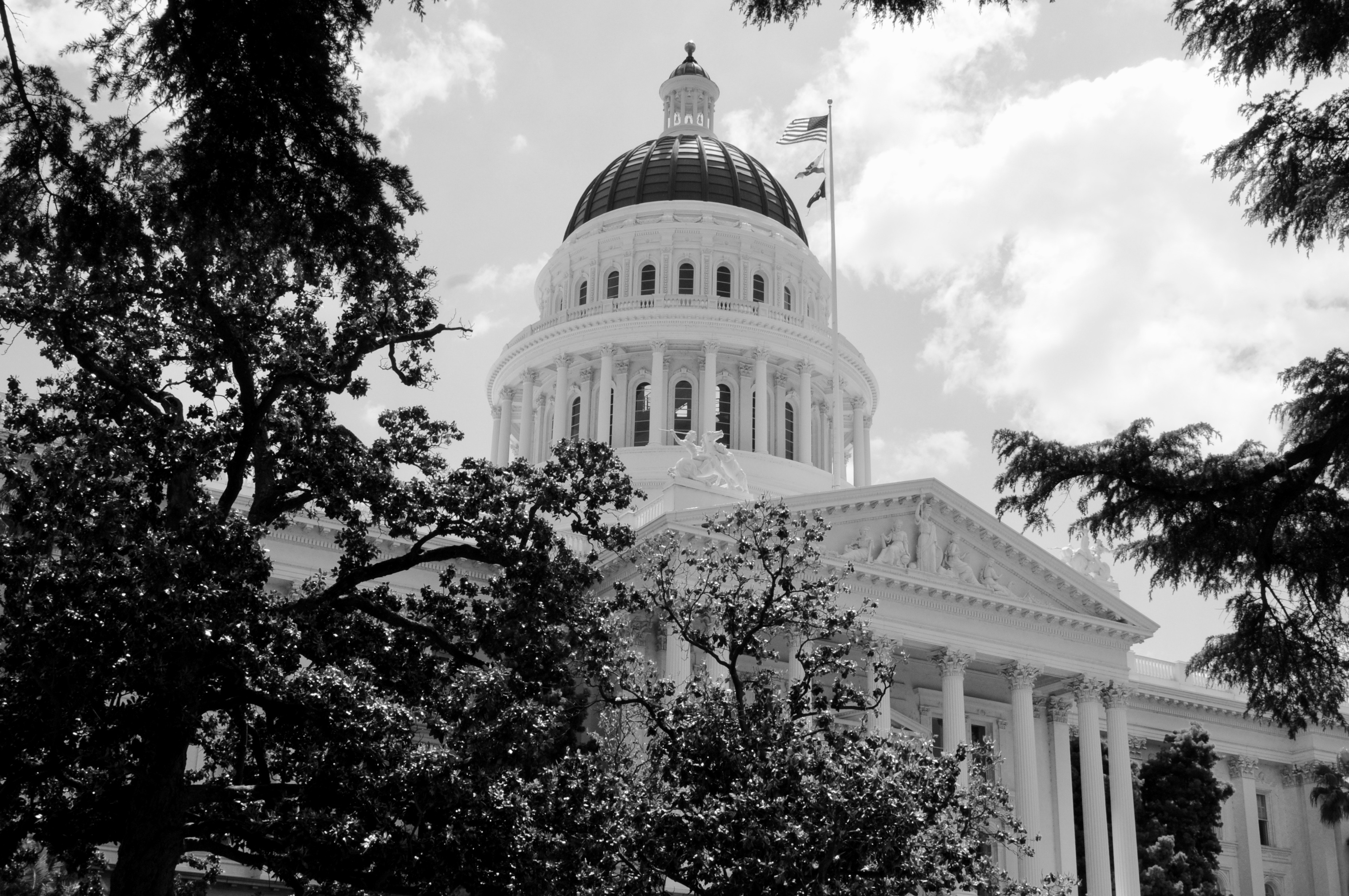
California State Capitol. (Photo: Katy Grimes for California Globe)
Consumer Warranty Protections
Deals with consumer warranty protection
By Chris Micheli, May 26, 2026 5:02 pm
Civil Code Division 3, Part 4, Title 1.7 deals with consumer warranties. Chapter 1 deals with consumer warranty protection. Article 2 contains definitions.
Section 1791 defines the terms: “consumer goods,” “buyer,” “retail buyer,” “clothing,” “consumables,” “distributor,” “independent repair or service facility,” “independent service dealer,” “lease,” “lessee,” “lessor,” “manufacturer,” “place of business,” “retailer seller,” “seller,” “return to the retailer seller,” “sale,” “service contract,” “assistive device,” “catalog or similar sale,” “home appliance,” “home electronic product,” “Member of the Armed Forces,” “clear and conspicuous,” “motor home,” “mobilehome,” and “travel trailer.”
Section 1791.1 defines the phrases “implied warranty of merchantability,” “implied warranty that goods are merchantable,” and “implied warranty of fitness.” The duration of the implied warranty of merchantability and where present the implied warranty of fitness must be coextensive in duration with an express warranty which accompanies the consumer goods, provided the duration of the express warranty is reasonable.
In no event can the implied warranty have a duration of less than 60 days nor more than one year following the sale of new consumer goods to a retail buyer. Where no duration for an express warranty is stated with respect to consumer goods, or parts thereof, the duration of the implied warranty is the maximum period prescribed above.
Section 1791.2 defines the term “express warranty.” It is not necessary to the creation of an express warranty that formal words such as “warrant” or “guarantee” be used, but if these words are used then an express warranty is created. An affirmation merely of the value of the goods or a statement purporting to be merely an opinion or commendation of the goods does not create a warranty.
Section 1791.3 defines the terms “as is” and “with all faults.”


- Unruh Act - October 19, 2026
- Some Suggestions for Those New to the California Executive Branch - October 19, 2026
- Support Services and the Sales Tax - October 19, 2026
RELATED ARTICLES
-
 May 7, 2023
 -
 May 14, 2026
 -
 May 16, 2023