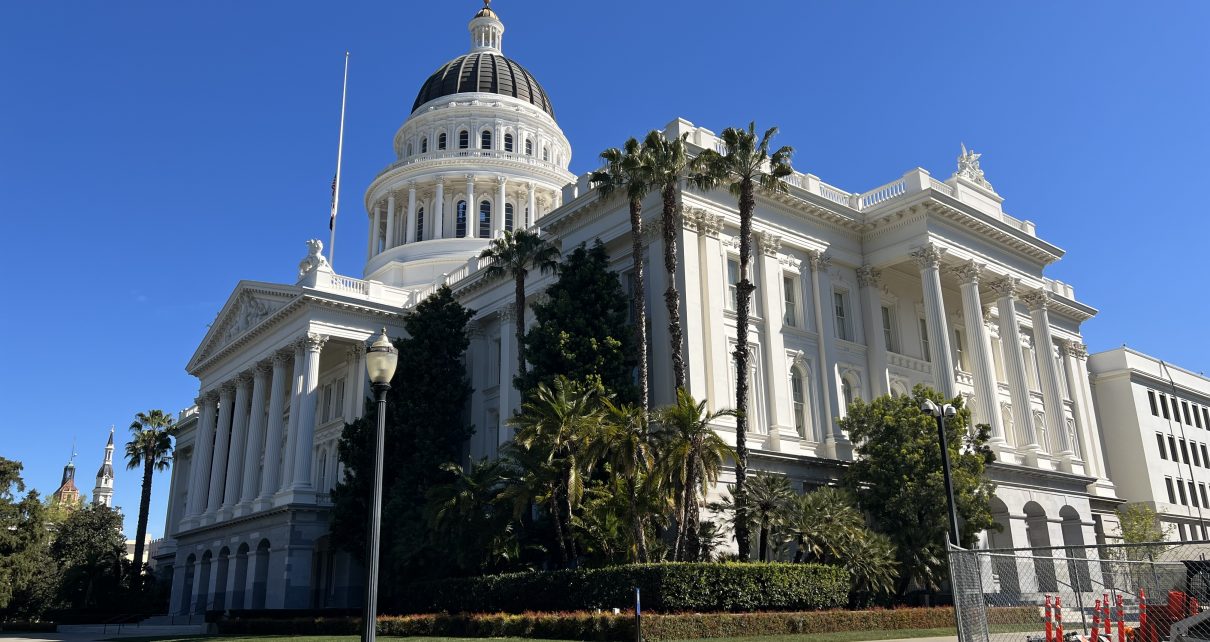
California State Capitol. (Photo: Kevin Sanders for California Globe).
Disapproval vs Withdrawal of Regulations
What roles do these two procedures play in the California rulemaking process?
By Chris Micheli, November 28, 2025 2:00 pm
What is a disapproval of a regulation? What is the withdrawal of a regulation? What roles do these two procedures play in the California rulemaking process?
The Office of Administrative Law (OAL) can either approve a rulemaking package or they can disapprove it. OAL is required to use six statutory standards of review found in the California Administrative Procedure Act (APA), which is contained in the state’s Government Code.
If one of California’s over 200 rulemaking entities does not comply with one or more of those six standards, then OAL notifies the rulemaking entity that it is facing a disapproval (i.e., a rejection of the submitted rulemaking). At that time, the rulemaking entity (an agency, department, board, commission, or bureau) may choose to accept the disapproval and make required changes, or withdraw the proposed rulemaking from OAL to fix it.
The withdrawal gives the rulemaking entity an opportunity to fix the violation(s) of the APA rulemaking process, but the entity must do so before the expiration of the one-year period for completion. The entity can also make required changes after receiving the disapproval notification. For example, a state entity earlier this year explained that they had corrected required changes in half a dozen prior rulemaking projects, and all were thereafter approved by OAL.
In either of these cases, the additional time allotted generally is sufficient in order to make the changes requested by OAL. The most common reason for disapproval is violation of the statutory clarity standard, followed by the necessity standard. OAL’s disapproval letter will specify any sections of the regulation that lack clarity, etc.
As a result, the rulemaking entity knows what change(s) need to be made in order to obtain approval from OAL. The revised rulemaking package must be completed by the specified date in the OAL notice.
Disapproval and withdrawal, although they are not common (occurring about a dozen or so times each year out of 600 to 700 rulemaking projects adopted each year). Nonetheless, they are important aspects of the rulemaking process in California and are obviously intended to ensure compliance with the state’s APA requirements.


- Uniform Rule Against Perpetuities - April 8, 2026
- Limited Liability Partnerships in California - April 8, 2026
- Exemptions from Securities Regulation - April 7, 2026
RELATED ARTICLES
-
 November 13, 2022
 -
 November 16, 2022
 -