
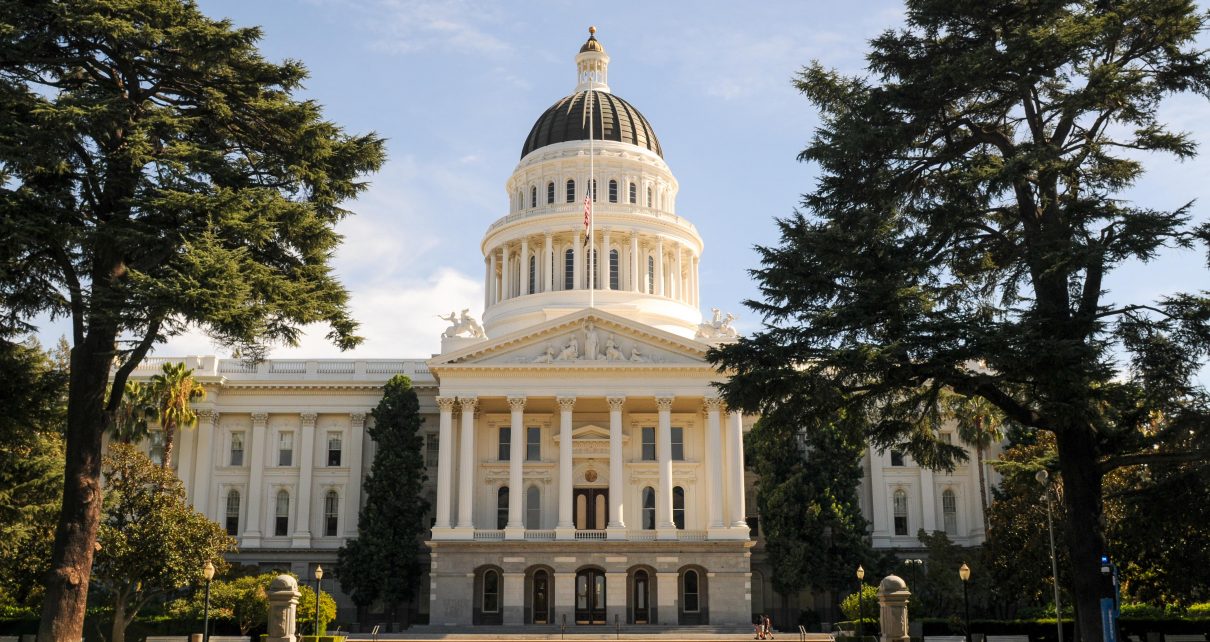
California State Capitol. (Photo: Kevin Sanders for California Globe)
Judicial Proceedings on Powers of Attorney
Provides a power of attorney is exercisable free of judicial intervention
By Chris Micheli, August 19, 2026 2:00 pm
Division 4.5, Part 4 of the Probate Code deals with judicial proceedings concerning powers of attorney. Section 4500 provides a power of attorney is exercisable free of judicial intervention, subject to this part.
Section 4501 states that the remedies provided in this part are cumulative and not exclusive of any other remedies provided by law.
Section 4502 says that this part is not subject to limitation in the power of attorney.
Section 4503 allows a power of attorney to expressly eliminate the authority of a person listed in Section 4540 to petition the court for any one or more of the purposes enumerated in Section 4541 if both of the specified requirements are satisfied. A power of attorney may not limit the authority of the attorney-in-fact, the principal, the conservator of the person or estate of the principal, or the public guardian to petition under this part.
Section 4504 provides there is no right to a jury trial in proceedings under this division.
Chapter 2 deals with jurisdiction and venue. Section 4520 provides that the superior court has jurisdiction in proceedings under this division. The court in proceedings under this division is a court of general jurisdiction and the court, or a judge of the court, has the same power and authority with respect to the proceedings as otherwise provided by law for a superior court, or a judge of the superior court.
Section 4521 authorizes the court to exercise jurisdiction in proceedings under this division on any basis permitted by the Code of Civil Procedure.
Section 4522 states that a person who acts as an attorney-in-fact under a power of attorney governed by this division is subject to personal jurisdiction in this state with respect to matters relating to acts and transactions of the attorney-in-fact performed in this state or affecting property or a principal in this state.
Section 4523 provides that the proper county for commencement of a proceeding under this division must be determined in the specified order of priority set forth in this section.
Chapter 3 deals with petitions, orders, and appeals. Section 4540 provides that a petition may be filed under this part by any of the eleven specified persons.
Section 4541 authorizes a petition to be filed under this part for any one or more of the ten specified purposes.
Section 4542 states that a proceeding under this part is commenced by filing a petition stating facts showing that the petition is authorized under this part, the grounds of the petition, and, if known to the petitioner, the terms of the power of attorney.
Section 4543 allows the court to dismiss a petition if it appears that the proceeding is not reasonably necessary for the protection of the interests of the principal or the principal’s estate and must stay or dismiss the proceeding in whole or in part when required by law.
Section 4544 states that, at least 15 days before the time set for hearing, the petitioner is required to serve notice of the time and place of the hearing, together with a copy of the petition, on the two specified persons.
Section 4545 provides that, in a proceeding under this part commenced by the filing of a petition by a person other than the attorney-in-fact, the court may in its discretion award reasonable attorney’s fees to either of the specified parties.


- General Provisions for Common Interest Developments - October 21, 2026
- What Are Some Unique Aspects of Statutory Interpretation in California? - October 21, 2026
- Corporate Net Income - October 21, 2026
RELATED ARTICLES
-
 January 31, 2026
 -
 October 11, 2024
 -
 May 13, 2026