

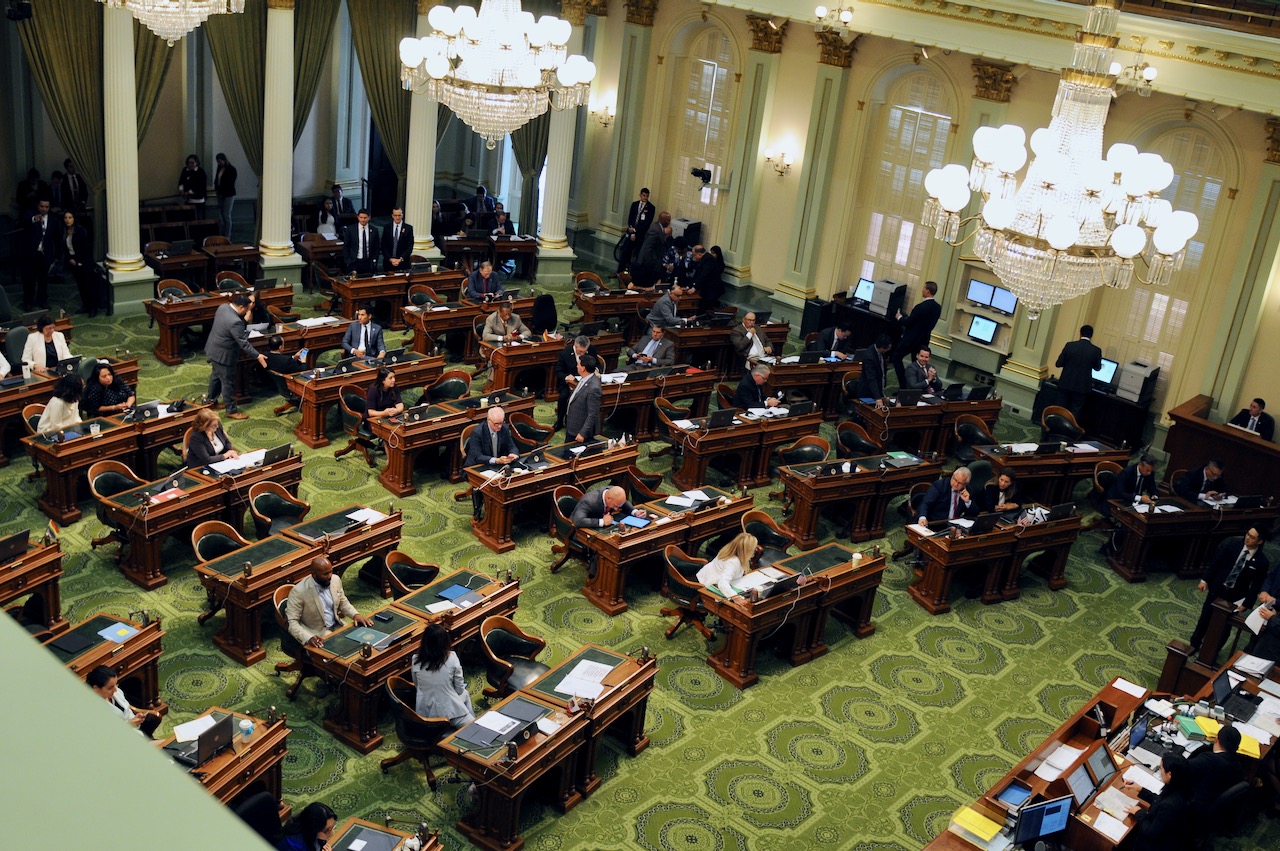
California State Capitol. (Photo: Katy Grimes for California Globe)
Judicial Review of Workers Comp Proceedings
Deals with judicial review of workers’ compensation proceedings
By Chris Micheli, April 24, 2026 6:15 am
Article 2 of Chapter 7 of Part 4 of Division 4 of the Labor Code deals with judicial review of workers’ compensation proceedings.
Section 5950 provides that any person affected by an order, decision, or award of the appeals board may, within the time limit specified in this section, apply to the Supreme Court or to the court of appeal for the appellate district in which he resides, for a writ of review, for the purpose of inquiring into and determining the lawfulness of the original order, decision, or award or of the order, decision, or award following reconsideration.
The application for writ of review must be made within 45 days after a petition for reconsideration is denied, or, if a petition is granted or reconsideration is had on the appeal board’s own motion, within 45 days after the filing of the order, decision, or award following reconsideration.
Section 5951 requires the writ of review to be made returnable at a time and place then or specified by court order and direct the appeals board to certify its record in the case to the court within the time therein specified.
Section 5952 prohibits the review by the court from being extended further than to determine, based upon the entire record which it is to be certified by the appeals board, whether five conditions have been fulfilled. Nothing in this section permits the court to hold a trial de novo, to take evidence, or to exercise its independent judgment on the evidence.
Section 5953 explains that the findings and conclusions of the appeals board on questions of fact are conclusive and final and are not subject to review. Questions of fact include ultimate facts and the findings and conclusions of the appeals board. The appeals board and each party to the action or proceeding before the appeals board have the right to appear in the review proceeding. Upon the hearing, the court must enter judgment either affirming or annulling the order, decision, or award, or the court may remand the case for further proceedings before the appeals board.
Section 5954 applies the provisions of the Code of Civil Procedure relating to writs of review to proceedings in the courts under the provisions of this article. A copy of every pleading filed pursuant to the terms of this article must be served on the appeals board and upon every party who entered an appearance in the action before the appeals board and whose interest therein is adverse to the party filing such pleading.
Section 5955 provides that no court of this state, except the Supreme Court and the courts of appeal, has jurisdiction to review, reverse, correct, or annul any order, rule, decision, or award of the appeals board, or to suspend or delay the operation or execution thereof, or to restrain, enjoin, or interfere with the appeals board in the performance of its duties but a writ of mandate shall lie from the Supreme Court or a court of appeal in all proper cases.


- Prudent Management of Institutional Funds - October 10, 2026
- Aquatic Invasive Species - October 9, 2026
- Bills in California Special Sessions - October 9, 2026
RELATED ARTICLES
-
 January 31, 2026
 -
 November 29, 2022
 -
 January 8, 2024