
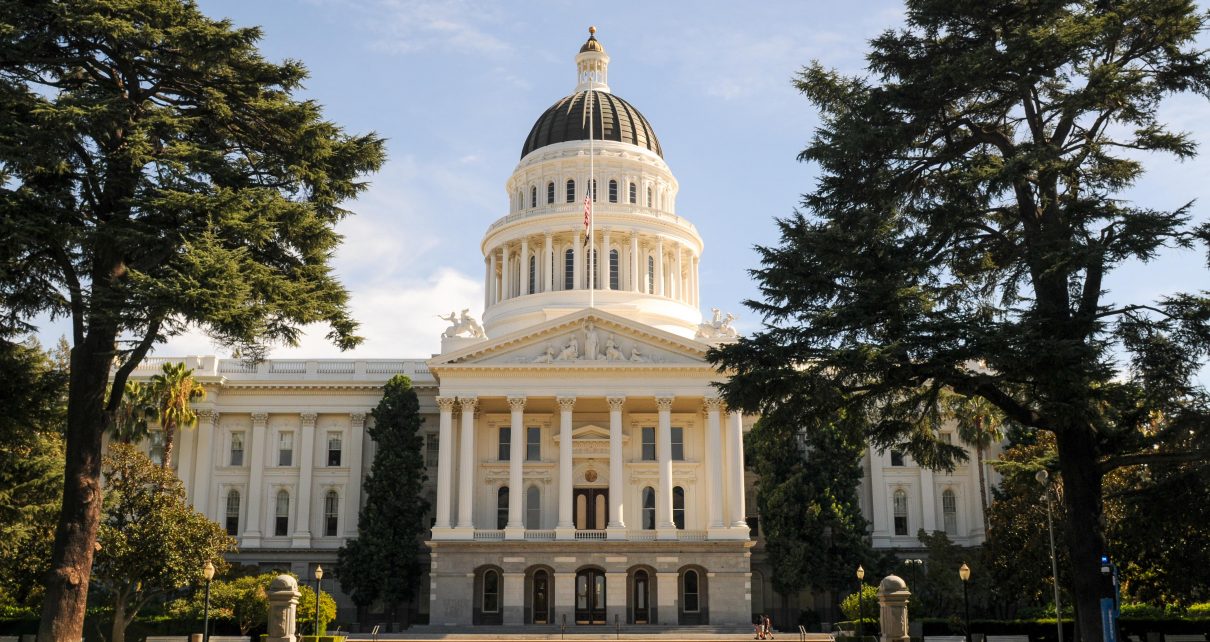
California State Capitol. (Photo: Kevin Sanders for California Globe)
Probate of a Will
Deals with the probate of a will
By Chris Micheli, September 5, 2026 2:30 am
Division 7, Part 2, Chapter 3 of the Probate Code deals with the probate of a will. Article 1 concerns the production of a will.
Section 8200 provides that, unless a petition for probate of the will is earlier filed, the custodian of a will is required to take two specified actions within 30 days after having knowledge of the death of the testator.
Section 8201 states that, if on petition to the superior court of the county in which the estate of the decedent is being or may be administered alleging that a person has possession of a decedent’s will, the court is satisfied that the allegation is true, the court must then order the person to produce the will.
Section 8202 says that, if the will of a person who was domiciled in this state at the time of death is detained in a court of any other state or country and cannot be produced for probate in this state, a certified photographic copy of the will may be admitted to probate in this state with the same force and effect as the original will.
Section 8203 provides that, if a will has been delivered to the clerk of the superior court in a county in which no proceeding is pending to administer the testator’s estate, that court may order the will transferred to the clerk of the superior court in a county in which such a proceeding is pending. A petition for the transfer may be presented and heard without notice, but cannot be granted without proof that a copy of the petition has been delivered.
Article 2 deals with proof of a will. Section 8220 provides that the will may be proved on the evidence of one of the subscribing witnesses only, if the evidence shows that the will was executed in all particulars as prescribed by law.
Section 8221 explains that, if no subscribing witness is available as a witness, the court may, if the will on its face conforms to all requirements of law, permit proof of the will by proof of the handwriting of the testator and one of the specified documents.
Section 8222 provides that a holographic will may be proved in the same manner as other writings.
Section 8223 requires the petition for probate of a lost or destroyed will to include a written statement of the testamentary words or their substance. If the will is proved, the provisions of the will are set forth in the order admitting the will to probate.
Section 8224 explains that the testimony of each witness in a proceeding concerning the execution or provisions of a will, the testamentary capacity of the decedent, and other issues of fact, may be reduced to writing, signed by the witness, and filed, whether or not the will is contested.
Section 8225 specifies that, when the court admits a will to probate, that fact must be recorded in the minutes by the clerk and the will is to be filed.
Section 8226 provides that, if no person contests the validity of a will or petitions for revocation of probate of the will within the time provided in this chapter, admission of the will to probate is conclusive.
Article 3 deals contesting of a will. Section 8250 provides that, when a will is contested, the contestant is required to file with the court an objection to probate of the will. Thereafter, a summons must be issued and served, with a copy of the objection, on the persons required to be served with notice of hearing of a petition for administration of the decedent’s estate.
Section 8251 specifies that the petitioner and any other interested person may jointly or separately answer the objection or demur to the objection within the time prescribed in the summons. Demurrer may be made on any of the grounds of demurrer available in a civil action.
Section 8252 states that, at the trial, the proponents of the will have the burden of proof of due execution. The contestants of the will have the burden of proof of lack of testamentary intent or capacity, undue influence, fraud, duress, mistake, or revocation. If the will is opposed by the petition for probate of a later will revoking the former, it must be determined first whether the later will is entitled to probate.
Section 8253 states that, at the trial, each subscribing witness must be produced and examined.
Section 8254 allows the court to make appropriate orders, including orders sustaining or denying objections, and must render judgment either admitting the will to probate or rejecting it, in whole or in part, and appointing a personal representative.
Article 4 deals with revocation of probate. Section 8270 provides that, within 120 days after a will is admitted to probate, any interested person, other than a party to a will contest and other than a person who had actual notice of a will contest in time to have joined in the contest, may petition the court to revoke the probate of the will. The petition must include objections setting forth written grounds of opposition.
Section 8271 requires, upon the filing of the petition, a summons to be directed to the personal representative and to the heirs and devisees of the decedent, so far as known to the petitioner. The summons must contain a direction that the persons summoned file with the court a written pleading in response to the petition within 30 days after service of the summons.
Failure of a person timely to respond to the summons precludes the person from further participation in the revocation proceeding, but does not otherwise affect the person’s interest in the estate. The summons must be issued and served with a copy of the petition and proceedings had as in the case of a contest of the will.
Section 8272 provides that, if it appears on satisfactory proof that the will should be denied probate, the court is required to revoke the probate of the will. Revocation of probate of a will terminates the powers of the personal representative.


- Sales Tax Presumptions - October 17, 2026
- A Unique Aspect of California Lobbying: Local Governments - October 16, 2026
- Some Suggestions for Those New to California Legislative Drafting - October 16, 2026
RELATED ARTICLES
-
 February 25, 2026
 -
 April 20, 2026
 -
 April 10, 2022