
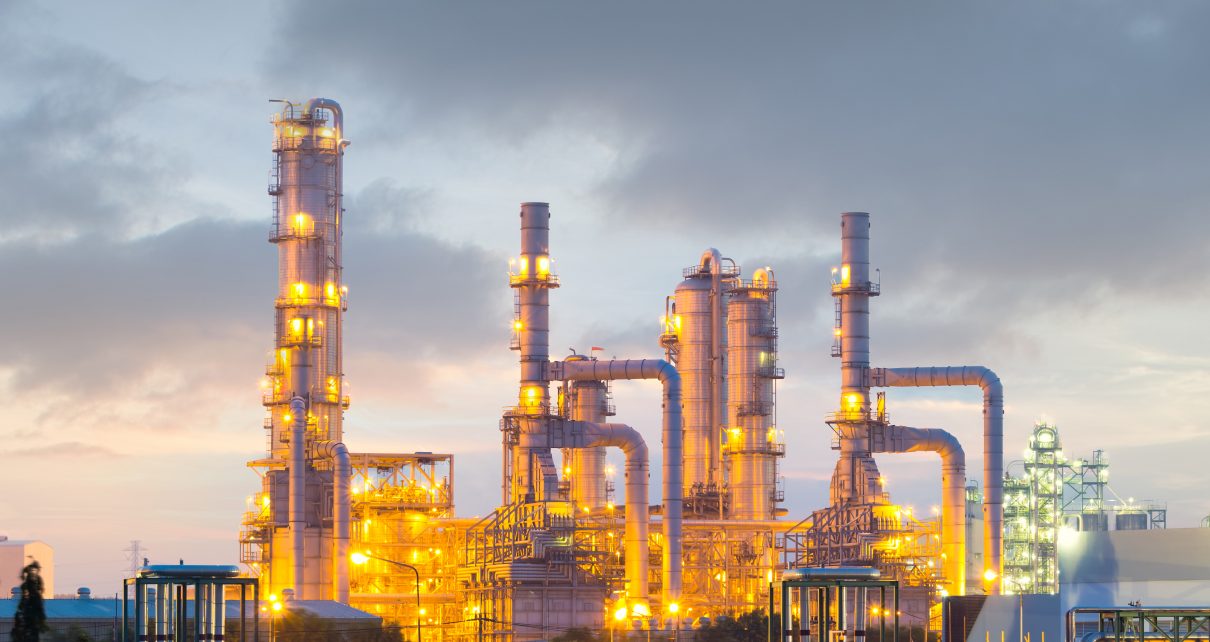
Oil Refinery Plant (Photo: chuyuss/Shutterstock)
Newsom’s Green Dreams Meet Reality
California residential rates now run 34 to 36 cents per kilowatt-hour—roughly double the national average
By Jay Rogers, April 20, 2026 1:30 pm
I remember the day the lights went out. January 2001, middle of a trading session, and California’s rolling blackouts killed the power on the floor. We time-stamped tickets by hand and surrendered them to operations for manual reconciliation. My book took thousands in losses. That was the inconvenient version. The real cost landed on ICU patients, families with home oxygen equipment, and first responders praying the grid came back before tragedy struck. Twenty-five years later, the stakes are bigger. Energy Secretary Chris Wright said so in March 2026, invoking the Defense Production Act to restart the Santa Ynez offshore oil unit off Santa Barbara. His message was unambiguous: California’s energy policies under Governor Gavin Newsom have crossed from expensive into a threat to national security.
The numbers explain why. More than 60% of the oil refined in California now arrives from overseas, much of it through the Strait of Hormuz. The Santa Ynez restart can replace nearly 1.5 million barrels of foreign crude monthly and deliver 50,000 barrels per day to local refineries. Wright didn’t sugarcoat it. Some state leaders, he said, have ignored basic energy security with potentially disastrous consequences for residents and national defense. From a cabinet secretary, that’s a gut punch.
I’ve watched this fragility build for 30 years while serving on my community board in Orange County. The state’s leaders dismantled its reliable energy base piece by piece. San Onofre went offline in 2013 after a steam generator leak, erasing 2,200 megawatts of carbon-free baseload and forcing the grid onto more natural gas. Emissions jumped. Then Sacramento spent a decade running refineries out with taxes, cap-and-trade mandates, and regulatory hostility that sent a clear message to industry. Phillips 66 ceased crude processing at its Wilmington plant in October 2025. Valero’s Benicia refinery, which had planned to idle by April 2026, shut down January 31—four months early—after the company cancelled its crude contracts and walked away rather than negotiate further with Sacramento. Those two exits erased approximately 18% of California’s refining capacity. The state now fills the gap with imports from Asia and the Middle East. If the goal was maximum geopolitical exposure, mission accomplished.
The electricity side is no better. Solar was sold as the fix that would make conventional generation irrelevant. Instead, California residential rates now run 34 to 36 cents per kilowatt-hour—roughly double the national average. Demand keeps climbing as data centers multiply and electrification mandates push more load onto a grid that can’t keep pace. Fiscal rot makes everything worse. CalPERS alone carries $166 billion in unfunded liabilities; aggregate state and local plans exceed $265 billion. That capital cannot harden substations or build reserve generation. It is legally pledged to retiree promises before any infrastructure budget survives a court challenge. My ultra-high-net-worth clients see the same numbers I do. Capital is leaving.
The Ivanpah Solar Power Facility in the Mojave encapsulates the whole problem. The $2.2 billion project has underperformed since opening in 2014, kills an estimated 6,000 birds annually through incineration, and costs ratepayers far more than modern photovoltaic solar. PG&E reached an agreement with the owner to terminate its contracts. The U.S. Department of Energy, under both Trump and Biden, supported termination. The CPUC unanimously rejected the closure in December 2025, citing grid reliability concerns. That ruling is the honest confession California’s policymakers won’t make publicly: the grid is now too fragile to decommission even a facility nobody wants. We are all paying the installments on that admission.
None of this is climate leadership. It is self-inflicted fragility executed while China locks up the supply chains for solar panels, batteries, and rare-earth minerals. Beijing is content to watch California import both refined petroleum and the green hardware we insist will replace it. I spent enough time in uniform at Marine Officer Candidate School to recognize the difference between sound operational planning and a concept built on wishful thinking. This is the latter. The fix is not complicated: keep natural gas online, restart nuclear where safety allows, restore hydroelectric capacity, maintain domestic oil assets like Santa Ynez, and apply DOGE-style discipline to green slush funds so those dollars go to actual grid resilience. Shift new public hires to defined-contribution plans and stop letting pension debt crowd out infrastructure capital. These are not radical ideas. They are the merit-based thinking that built California in the first place.
Americans deserve leaders who deliver peace through strength—energy stability included. Wayne Gretzky said you miss 100% of the shots you don’t take. California has been refusing the practical shots—nuclear, hydro, domestic oil—while the lights flicker and national security rides on a grid that cannot meet current load, let alone the mandates already written into law. The rest of the country should pay attention before the same policy architecture migrates east.


- Sacramento Flunks Civics Again - October 19, 2026
- Class President by Appointment - October 14, 2026
- Fewer Kids, More Payroll: LAUSD’s Math Problem - October 11, 2026
RELATED ARTICLES
-

-
 October 1, 2025
 -
 February 28, 2022