
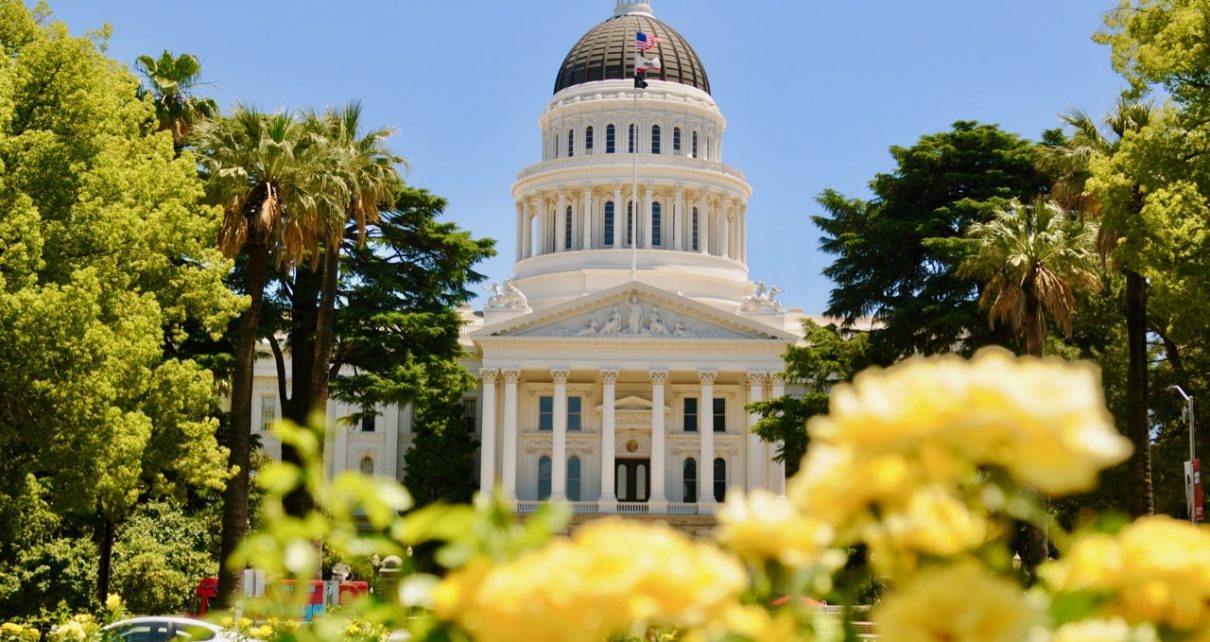
California State Capitol (Photo: Kevin Sanders for California Globe)
Pension Shenanigans: The ‘Soft Fraud’ Burdening California Taxpayers
Pension costs are one of the fastest-growing expenses for local governments
By Herb Morgan, February 7, 2026 8:49 am
California’s pension crisis isn’t a mystery, and it isn’t just bad luck. It is the predictable outcome of decades of optimistic assumptions that lowered contributions in the short term while pushing massive costs onto future taxpayers.
Call it what you want — accounting games, political convenience, or wishful thinking — but the result looks a lot like soft fraud: a system that may be legal on paper yet consistently shifts risk away from decision-makers and onto the public.
Across California, rising pension contributions are squeezing school districts, cities, and counties. Labor disputes and service cuts are often blamed on politics or economic cycles, but the real pressure comes from retirement costs growing faster than revenues.
The Math Everyone Knows — But Few Admit
Public pension systems such as CalPERS and CalSTRS determine contribution rates based on long-term investment return assumptions. Higher assumed returns mean lower contributions today. When reality falls short, unfunded liabilities grow — and taxpayers make up the difference.
CalPERS reports roughly $563 billion in assets against about $716 billion in liabilities, leaving about $153 billion unfunded. CalSTRS carries another $88.7 billion in unfunded obligations, with funded ratios in the mid-70% range. Together, that’s roughly $240+ billion in pension debt — more than $6,000 for every Californian.
Long-term investment performance has averaged closer to the low-6% range over 20 years — solid, but below the optimistic assumptions that shaped earlier funding decisions. That gap compounds into higher employer contributions later, crowding out spending on current services.
David Crane Saw It Coming
Few insiders were willing to challenge the system publicly — but David Crane did.
As a Governor Schwarzenegger appointee to the CalSTRS board, Crane warned that aggressive return assumptions masked growing risks and would eventually drive costs higher for school districts. He pushed for more conservative projections and greater honesty about long-term liabilities.
For raising those concerns, his confirmation was blocked by the state Senate after strong opposition from teachers’ unions — a reminder of how politically sensitive pension math has become. Nearly two decades later, rising employer contribution rates suggest those warnings were not theoretical.
The Incentive Problem No One Wants to Discuss
Public-sector unions play a central role in shaping pension policy. Their mission is to protect member benefits — and they do it effectively. But the structure of California law creates a powerful incentive: when assumptions prove too optimistic, the plan sponsor — ultimately taxpayers — absorbs the majority of the financial risk.
That means unions can advocate for higher benefits or optimistic projections without bearing proportional downside risk. The rhetoric often emphasizes “50-50 cost sharing,” yet in practice the arrangement rarely ends up balanced over time. When markets underperform or assumptions change, employer contributions rise dramatically while employee rates remain relatively stable.
The result is a system where the public shoulders far more than half of the risk — even when the messaging suggests equal partnership.
Nothing about this is illegal. But when stakeholders push assumptions they know are likely to understate long-term costs because the law shifts shortfalls onto taxpayers, it begins to resemble a form of soft fraud — a structure that hides risk behind technical language and delayed consequences.
How We Got Here
Major benefit expansions in the late 1990s — including the well-known “3% at 50” formula for public safety workers — were justified by projections of strong market performance. Those decisions lowered immediate contribution pressure while increasing long-term obligations.
When markets normalized and demographics shifted, the math changed — but the liabilities remained.
Today, pension costs are one of the fastest-growing expenses for local governments. Every dollar required to service unfunded liabilities is a dollar unavailable for classrooms, infrastructure, or public safety.
This is not an attack on public workers. Pensions are earned compensation. The real problem is a system that rewards optimistic assumptions today while leaving taxpayers responsible for tomorrow’s bill.
Until Californians confront that reality — and stop pretending that risk is shared equally when it clearly isn’t — the cycle will continue.


- California’s Unclaimed Property Regime Turns Private Assets into a State Revenue Stream - August 13, 2026
- California Needs a Controller Who Puts Classrooms and Cops Before Bureaucracy - July 15, 2026
- Asymmetric Pension Smoothing: A Prudent Reform to Strengthen CalPERS and CalSTRS Funded Ratios - June 26, 2026
RELATED ARTICLES
-
-
 January 18, 2023
 -
 June 9, 2019
Didn’t the California administration just lose a TON of our PERS / STRS funds through POORLY investing in Green Energy scams??????
This article does not touch on other areas of pension abuse such as the system being rigged so government employees can double or even triple dip pensions. Then there is the accumulation of potentially Years worth of vacation and sick time that is cashed out when they retire. Another scam is to retire on full pension and then come back after a couple of days as a “consultant” at the same desk and job. My county used to allow FULL medical benefits after only 5 years on the job?
Did I mention they are all rat-b*stards too?
One way to look at this long known retiring baby boomer employee problem, is we must now fund two government employees for every one government job.
(1) fund the one who just retired for the rest of their lives and and (2) fund the one who now must be newly hired to replace the one who just retired.
Or we can operate a leaner, meaner and 100 times more efficient government operations, and not replace 50% of the current government workforce.
Close the borders and 50% of all teachers union members would no longer be needed. Cut off all the welfare programs for illegals and all the Homeless Inc “support staffers” and we massively cut the current state workforce again. Fewer employees means fewer life time pensions that elected officials never bothered to fund.
BTW, there are no “innocent victims” of this intentional pension shell game, since the government employee unions fought hammer and tong ALL attempts to reform this known and predictable fiscally ruinous outcome.
Starting with Kamala Harris as AG re-writing two different pension reform ballot measures, to make sure they would not pass. This was after state residents got enough signatures to put this critical issue before the voters, twice. In cahoots with the government employee unions, she alone as AG ensured nothing would get reformed when it still could have mattered. “Do you support unconstitutionally taking money from widows and orphans ….. (or words to that effect).” Yes or no.
State Supreme Court also mandated there can be no changes to these original pension promises either, regardless of pending pension fund insolvencies . But judges and their staffers are government employees too, so their own conflict of interests to even rule on this matter directly personal to them, was off the charts.
If even one penny is lacking paying off government pensions in full , every union member will scream they are innocent victims and they are not getting what they were promised. They were not innocent. They worked like crazy to stop this pension train wreck, when it still could have mattered.
We are now stuck having to pay off decades of Democrats and union recklessness. Just never let them also whine ……… ” they only want what they were promised”. The unsustainable promises were exposed from day one that they would be fiscally ruinous, and they knew this all along. No claiming innocent victim now, when they get to laugh all the way to the bank after all.
But I am sure they will play the victim card if anyone dares complain, now that the predicted short falls get thrust on current taxpayers, which was known and staring us in the face 20 years ago. Back when Democrats and their government employee union interests, started sweeping up every single elected office in the state for one reason only …….to have enough compromised votes in their own favor to protect their very own promised government pensions.
The whole government pension thing stunk to high heaven when it was first put place. Then it got gamed beyond all recognition once the government employee union interests backed the current Democrat super-majority in Sacramento.
These long-known pension actuarial realities bite a new generation of state taxpayers, who played no role in this entire Ponzi scheme when it was first put in place. Have at it Gen Z, this is what was done in your name, but without your consent. Pay up. And be sure to keep voting Democrat and ignore what their past decades of prior Democrat vote- buying did to your own future.
THIS!!!!👆
Green investments? Yes, particularly the teachers unions (CalSTRS) did a lot of social justice preening demanding the pension funds shed every investment they found socially unacceptable (guns, tobacco, defense industry) or socially justified but fiscally ruinous industries (the green nonsense).
These demands violated the pension funds primary loyalty to maximize returns for the beneficiaries only – the final pension recipients – not any outside social justice cause du jour. But not for lack of trying.
But as Alfred E. Newman would always say ..what, me worry? ……when taxpayers were forced to make up all investment losses and the government employees were by law contracted to get every single promised penny regardless of investment returns. All gain and no pain was demanded by our preening government employee teachers, who were infecting entire generations of K-12 students with this same attitude at the same time .
And THIS!!!👆