

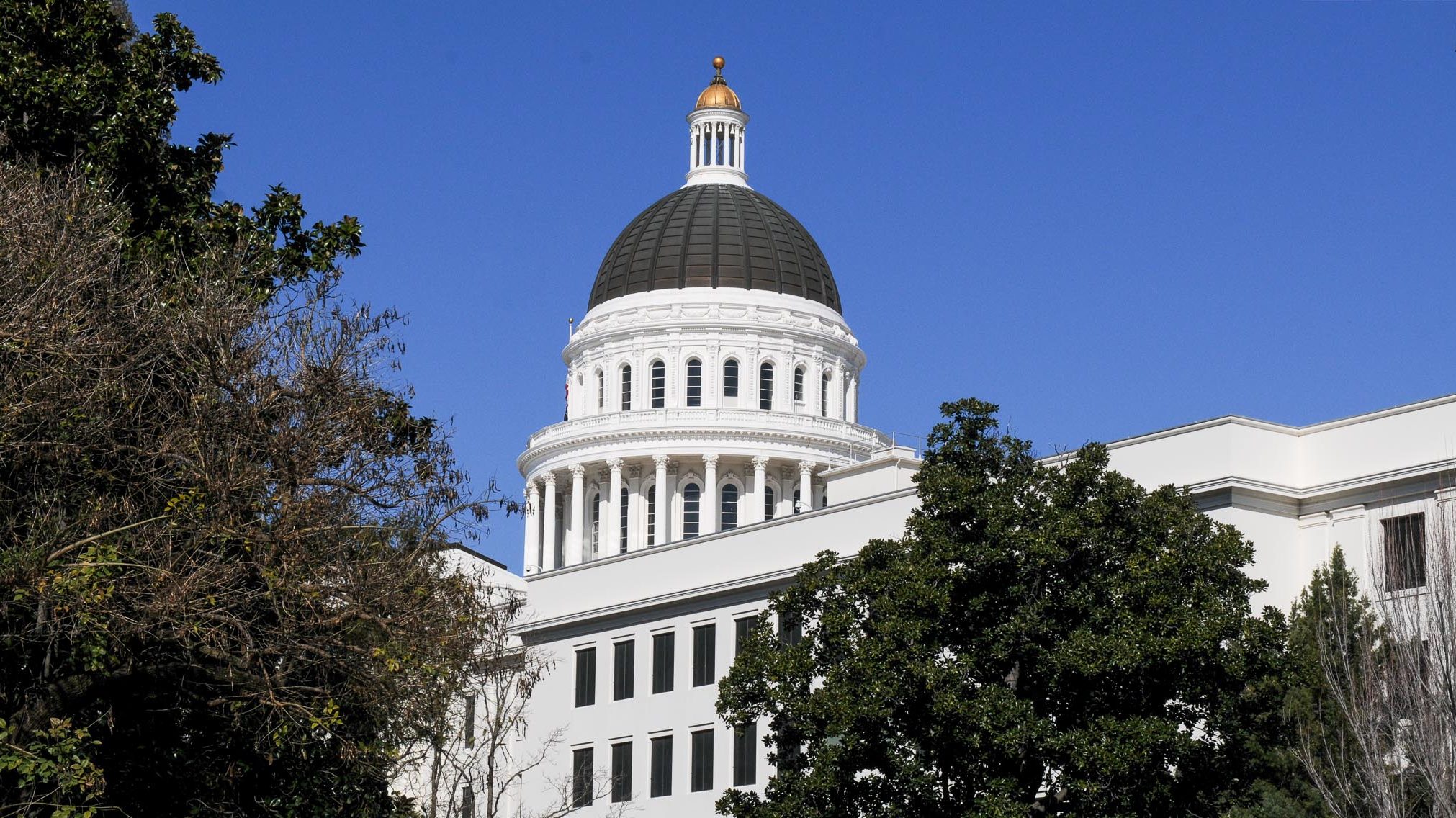
California State Capitol. (Photo: Katy Grimes for California Globe)
Socialist Insurance: A Government Insurance Monopoly Doesn’t Make Risk Disappear
Californians already know how this ends, because we are already living in the pilot program
By Stacy Korsgaden, August 14, 2026 7:12 am
Three months ago I was traveling the state running for California Insurance Commissioner. I finished a near third out of eleven candidates and first among Republicans. I lost the Primary, but I will never stop caring about insurance.
I remain deeply grateful for the time I spent meeting people in communities large and small. I listened to their concerns, visited neighborhoods, and shared moments of laughter and heartbreak with individuals and families who spoke candidly about the rising cost of insurance and the growing difficulty of getting meaningful coverage.
Those conversations reinforced what I have believed throughout my 38 years as a licensed insurance professional: insurance is not an abstract policy debate. It is a matter of financial security, family stability, public safety, and economic survival. When coverage becomes unavailable or unaffordable, Californians pay the price through higher premiums, fewer choices, and greater dependence on government.
Perhaps this is what Sacramento had planned all along. And now California is so poorly managed that we now have a leading candidate for Insurance Commissioner asking us to turn toward socialism. I have a strong suggestion: let’s not.
My own campaign has ended, but on November 3, voters will choose between Jane Kim and State Senator Ben Allen. I believe voters deserve a candid explanation of why a socialist political philosophy would be harmful if applied to the office of Insurance Commissioner.
The Commissioner’s responsibility is to protect consumers while preserving a stable, competitive insurance marketplace, one capable of attracting private capital, encouraging risk reduction, and providing coverage to California families and businesses. That responsibility requires practical experience, sound judgment, and a clear understanding of how insurance actually works. It cannot be fulfilled through theory, hostility toward the private sector, or policies that ignore the economic realities facing insurers and policyholders alike.
Ms. Kim’s candidacy concerns me for two reasons.
When a reputable reporter asked her, repeatedly, if she had direct experience relevant to the job of Insurance Commissioner she couldn’t, or wouldn’t, answer. I would like to think a person spends a year asking for the job because she already knows what to do with it.
But the experience gap is the smaller problem. The bigger one is the plan.
Kim wants to build a state-run disaster insurance authority, “insurance for all,” modeled on New Zealand’s public scheme, that would take wildfire and flood coverage off the private market and put it in Sacramento’s hands.
Californians already know how this ends, because we are already living in the pilot program. The FAIR Plan is the state’s own insurer of last resort. It has ballooned. It has raised rates. It is thinly capitalized against catastrophe, and when it runs short, the shortfall gets passed to policyholders across the state. That is the state-run model, in miniature, and it is not a success story worth scaling up.
Then there’s the double payment. Kim’s authority would fund mitigation out of premiums — but Californians already fund mitigation out of taxes. We’ve handed Sacramento the money for forest management, fuel breaks and community hardening for years. The money was squandered or diverted, the fires came anyway, and the proposal on offer is to bill us a second time for the job the first bill was supposed to cover.
A government monopoly doesn’t make risk disappear.
There is a better answer, and it is old enough to be boring. Benjamin Franklin’s mutual, America’s first insurer, didn’t just write policies — it refused to insure hazardous construction and pushed the city to reduce fire risk in the first place. Insurance and prevention were the same business. We inverted that. We restricted pricing and abandoned the prevention.
Fix the risk and the market comes back. Manage the forests. Harden the homes. Enforce defensible space and hold the agencies that were paid to do it accountable. Crack down on crime. Let carriers price accurately and use catastrophe modeling honestly, so the reward for mitigating actually shows up on the bill.
That is how you lower premiums and create more insurance for all Californians. Not by nationalizing the product and calling it consumer protection.
I believe whole-heartedly Socialism is not the answer. California needs responsible leadership, competitive markets, public safety, and practical solutions that protect consumers without taking away their freedom of choice. Californians deserve a healthy insurance marketplace that answers to competition rather than to Sacramento.


- Socialist Insurance: A Government Insurance Monopoly Doesn’t Make Risk Disappear - August 14, 2026
- Relentless Excellence Is the Way Forward - September 30, 2025
- CA Department of Insurance: A Warning Shot to Every Free Market Believer - May 18, 2025
RELATED ARTICLES
-
 August 26, 2020
 -
 May 17, 2025
 -
Oh how I wish you had made it to November, and won then, Stacy!!!
Thank you for running, and especially now writing this important article, that SHOULD be read by every voter before they vote this November.
That Jane Kim effectively “won” the primary should be DEEPLY CONCERNING for every homeowner in California because we already HAVE an incompetent Insurance Commissioner in Ricardo Lara!
Look where that has gotten us!
We are nervously (and unhappily) on the FAIR plan because we live too close to wildland open space.
That is the one complaint I have about the article content…
So many people see the word “forests” and immediately think coniferoua mountain locales not suburban chapparal wildland interfaces like the San Fernando Valley foothills and much of Ventura County.
This area has been painted with a giant red coloration on the CalFire maps, thanks to the Woolsey, Thomas and Palisades fires, plus other smaller fires. Commercial insurers have now fled the state, thanks to Democrat policies that placate their rabid environmentalist constituents (or provide cover for their grifting programs, or both) but leave homeowners no affordable, viable commercial insurance coverage because these idiot Democrat politicians refuse to mitigate the fuel load, and write stupid legislation to tax the goat herders into oblivion, again killing an industry that would HELP homeowners. Goats dont pay union dues that get funneled to Democrats like unionized firefighters do, apparently.
California is SO corrupt on so many levels, but in the short run, Ben Allen is the lesser of the two evils and should be the thinking person’s choice this November, as Kim would be even worse than Lara is…
manage brush, thin the forest and don’t build in flood zones
TThe California Insurance Commissioner should not be an elected position. Instead, it should be an appointed role filled by a highly qualified insurance professional with a deep understanding of the complex relationship among the California Department of Insurance, insurance companies, and consumers.
Too often, these stakeholders are viewed as competing interests when, in reality, a healthy insurance marketplace requires a balanced approach that serves all three. Effective regulation should promote consumer protection while also fostering a stable and financially sound insurance industry.
The mutual insurance model is a proven success story that deserves renewed attention in California. Mutual insurers are owned by their policyholders, aligning the interests of the company directly with those of its customers rather than outside shareholders.
The Insurance Commissioner holds significant influence over the California insurance market. That authority should be exercised with a long-term focus on the needs of consumers, insurers, and policyholders alike, rather than being viewed as a stepping stone to higher elected office. Sound insurance regulation requires expertise, independence, and a commitment to maintaining a sustainable marketplace for all participants.