
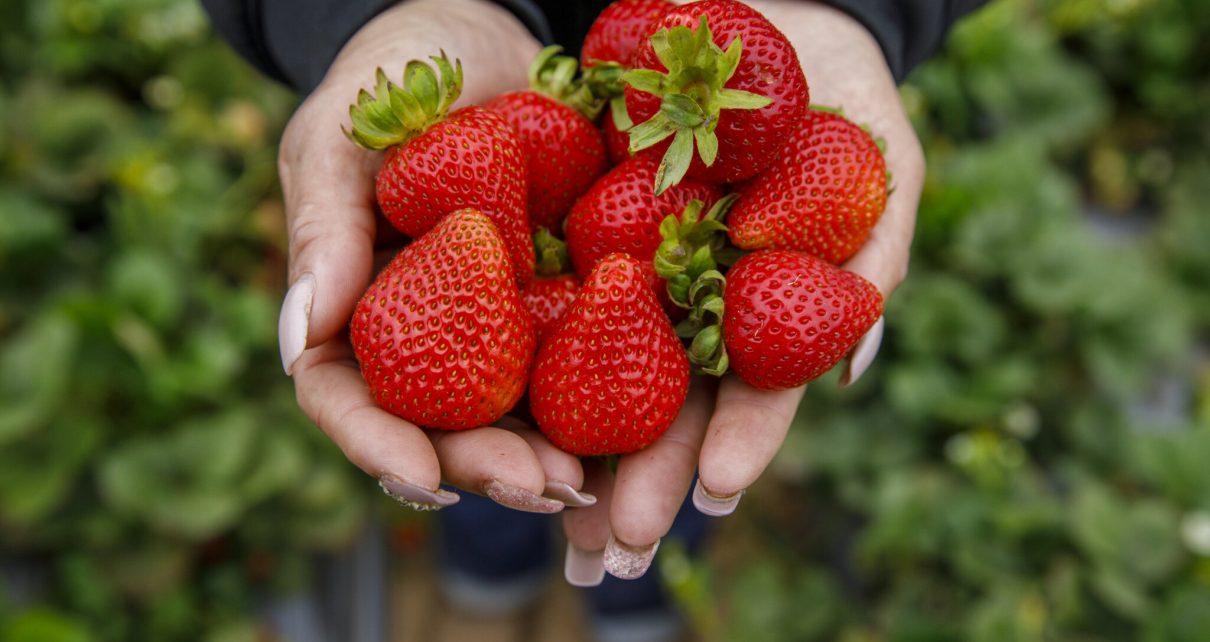
California Strawberries. (Photo: californiastrawberries.com)
The People, Science, and Fields Behind Every Strawberry
This year we also recognize the International Year of the Woman Farmer
By Chris Christian, April 21, 2026 6:00 am
Each year on California Agriculture Day, lawmakers, staffers, farmers, farmworkers, and families unite to recognize and celebrate the contributions of California agriculture to our daily lives. The food on our tables starts long before it reaches the grocery store. It begins in fields across California, cared for by people whose work feeds not only this state but much of the nation and the world.
This year, as we also recognize the International Year of the Woman Farmer, we honor the extraordinary women shaping that story. Across California’s strawberry fields and research centers, women from diverse backgrounds, including many immigrants, are transforming their lives and communities through agriculture. Some began as field workers and have advanced into leadership roles; others are leading groundbreaking research, owning and operating farms, and creating new opportunities across the industry.
California produces about 90 percent of the strawberries consumed in the United States. From the Santa Cruz, Pajaro, and Salinas valleys to Ventura County, strawberry fields are more than just a popular fruit. They embody innovation, sustainability, opportunity, and the efforts of a network of people whose leadership is increasingly shaping the industry and who have built one of the world’s most productive agricultural systems.
Strawberries symbolize the best of California agriculture. They show how farmers can produce abundant, healthy food while continually focusing on improving growing methods. The modern strawberry field combines generations of experience with years of research, careful planning, and technology designed to boost food production while conserving natural resources.
Leading with Innovation
Water management provides a clear example. Drip irrigation, which began in California’s strawberry industry, allows farmers to deliver water directly to plant roots. This reduces evaporation and runoff and makes sure each plant gets exactly what it needs. In a state where water is one of the most valuable resources, that level of precision matters. In fact, today an acre of strawberries uses less water than an acre of homes in Los Angeles.
The innovation doesn’t stop there. Many growers now use soil sensors, satellite data, and plant-monitoring tools to make better decisions about irrigation and nutrient management. These technologies provide real-time data on soil moisture and plant health, helping farmers cut unnecessary inputs while keeping crops healthy and increasing yields.
Advancing Sustainability
Pest management systems have also advanced. Strawberry growers rely heavily on sustainable pest management methods that combine monitoring, biological controls, mechanical pest removal, and targeted treatments. Beneficial insects, crop covers, and close field observation also help farmers address issues while reducing broader environmental impacts.
Behind these innovations are strong partnerships between farmers and research institutions, including the University of California, the California State University system, and Cal Poly’s Strawberry Center. This center connects research, education, and industry through applied work and programs such as its annual Field Day.
California strawberry growers have also invested more than $17 million in research to advance sustainable farming practices, support plant science, increase sustainability, and help prepare the next generation of agricultural leaders. Many of those future leaders are women, scientists, growers, and entrepreneurs who are helping drive new ideas and approaches across the industry. New strawberry varieties are continuously studied and developed to enhance resilience to weather, pests, and changing environmental conditions. The goal is simple: produce high-quality food while supporting long-term sustainability.
The advantages extend well beyond the farm.
Economic Contributions
California’s strawberry industry generates billions of dollars in economic activity each year and supports tens of thousands of jobs. Farmworkers, packers, truck drivers, researchers, and local businesses all contribute to getting these berries from the fields to families across the nation.
In many coastal communities, strawberries are more than just an agricultural product; they form the backbone of local economies and livelihoods, creating pathways of opportunity for generations of families, including many women who have built careers and taken on leadership roles within the industry.
Nourishing, Vibrant Strawberries
For consumers, strawberries remain one of the most beloved and recognizable fruits in the grocery cart. What is often unseen are the people behind every berry: farmers making careful decisions in the field, farmworkers harvesting fruit with skill and precision, researchers and scientists developing the next generation of crops, and families whose livelihoods depend on agriculture continuing to succeed.
Strawberries symbolize what California agriculture embodies when it succeeds: innovation, hard work, land stewardship, and a commitment to nourishing people and communities for generations to come, led in part by the women shaping its future.


- The People, Science, and Fields Behind Every Strawberry - April 21, 2026
- The Women Who Build, Sustain, and Will Define California Agriculture - March 13, 2026
RELATED ARTICLES
-
 January 4, 2023
 -

-

SUPPORT California farmers and ranchers – VOTE REPUBLICAN and STOP the Democrat takeover of California…
Democrats want to sell the farmland to CCP-related entities on the cheap – VOTE REPUBLICAN to save California agriculture and DO NOT believe the Democrat LIES!!!
OK, I’m a strawberry fan! Didn’t know California was so big in strawberries! Do know that the quality of the fruit has improved hugely since I was a kid, bigger, much less spoilage – flavor and sweetness can be a bit compromised but in days of yore it was so rare to get them ripe and undamaged, it’s a good tradeoff. And now we also see these HUGE strawberries, good for chocolate dipping and all.