
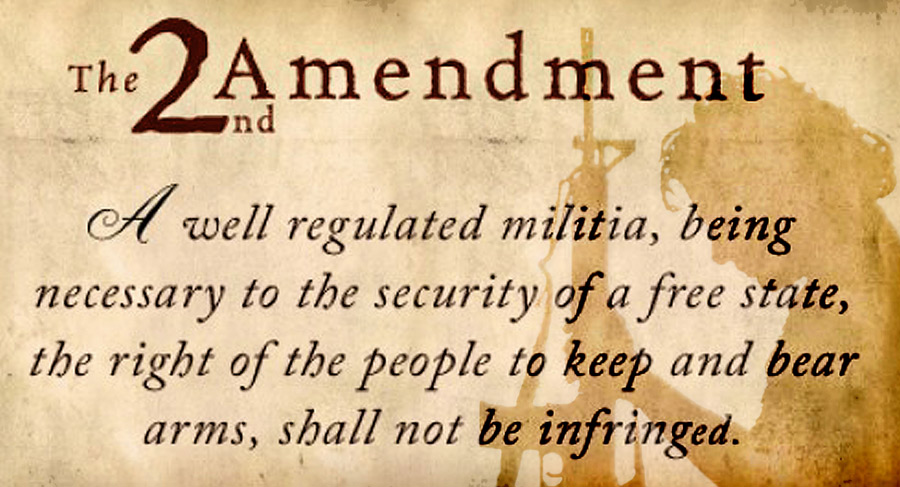
Second Amendment
The Social Utility of Firearms, Revisited
Guns have costs, and they also have benefits – an honest public-policy debate has to count both
By Chuck Michel, November 3, 2026 6:30 am
More than a decade ago, I wrote an article called The Social Utility of Firearms. My point was fairly simple: much of the gun-control debate looks through the wrong end of the telescope. It focuses intensely on the harms associated with firearms while routinely ignoring, minimizing, or simply assuming away the benefits that lawful firearm ownership provides.
Twelve years later, I would change some of the statistics in that article. We have better data now. Some empirical questions remain genuinely disputed. And I would be more cautious today about several broad claims—particularly concerning suicide and the precise number of defensive gun uses. But the central problem I identified in 2014 remains.
When policymakers talk about the “cost” of private gun ownership, they count virtually everything: homicides, suicides, accidents, medical expenses, police costs, fear, psychological consequences, lost productivity. When they discuss the other side of the ledger, however, the accounting often stops. What is the value of a woman who prevents a sexual assault by displaying a handgun without firing it? What is the value of a store owner who persuades an armed robber to flee? What is the value of the homeowner whose firearm causes an intruder to leave before anyone is injured? What is the value of an armed citizen who stops an attacker before the incident becomes a mass killing? Those events have social utility too. You cannot conduct a serious cost-benefit analysis while entering every debit and refusing to record the credits.
Start With the Costs Honestly
There is no reason for Second Amendment advocates to pretend firearms cannot be misused. CDC data show 44,447 firearm deaths in the United States in 2024. Of those, 27,593 were suicides. There were 15,364 firearm homicides. Those are serious numbers and serious human tragedies.
But even those numbers illustrate why precision matters. Suicide and criminal homicide are different social problems. They have different causes, different perpetrators, different victims, and potentially different solutions. Combining them under the rhetorical heading “gun violence” may be politically useful, but it can obscure more than it explains.
I would also modify something I argued too categorically in 2014. I wrote then that suicidal people deprived of a firearm would simply substitute another method. The current research does not justify stating the proposition that broadly. Firearms can be highly lethal, and easier access to a particular method can matter during a suicidal crisis. Firearm suicide therefore deserves to be confronted seriously.
But that does not mean every firearm restriction is an effective suicide-prevention measure. A policy directed at a suicidal person during a period of acute crisis; secure firearm storage, mental-health intervention, or temporary separation from lethal means raises a very different policy question from banning a commonly owned rifle or imposing burdens on millions of people who present no suicide risk. Honest analysis requires separating problems rather than using the overall number of “gun deaths” to justify whatever gun-control proposal happens to be on the legislative agenda.
Defensive Gun Use: Measured Differently, Not Unmeasurable
The most obvious social benefit of firearm ownership is defensive use, and this is where the statistical argument becomes especially interesting. There is no universally accepted number for defensive gun uses in America.
A National Academies report commissioned as part of the federal government’s post-Sandy Hook firearms-research initiative described defensive gun use by crime victims as a “common occurrence,” while emphasizing that estimates varied substantially. It summarized national-survey estimates ranging from roughly 500,000 to more than 3 million defensive uses annually, while also discussing much lower estimates derived from the National Crime Victimization Survey.
More recently, William English’s National Firearms Survey estimated approximately 1.67 million defensive firearm uses annually. His survey found something especially important: in more than 80 percent of reported defensive incidents, the defender did not fire the gun.
GunFacts has collected the results of numerous defensive-gun-use surveys conducted over the years. According to GunFacts, those survey estimates average just under two million defensive gun uses per year. Individual estimates vary considerably, but that variation does not mean defensive gun use cannot be measured. It means researchers are not always measuring exactly the same thing in exactly the same way.
Some surveys ask only about defensive uses connected with a recognized crime. Others ask more broadly whether a firearm was displayed, mentioned, retrieved, or otherwise used to protect a person or property. Some use different recall periods. Some employ different screening questions. Researchers also differ in how they define a qualifying defensive use and in the populations they survey. Question wording, screening criteria, survey populations, definitions, and methodology can all materially affect the final estimate.
That is precisely what the accompanying GunFacts chart illustrates.

Defensive-gun-use estimates vary substantially among surveys because researchers use different definitions, questions, populations, and methodologies. GunFacts reports that the surveys it has compiled average just under two million defensive gun uses annually. The chart also displays an FBI UCR firearm-crime figure for comparison. Because the defensive-use estimates and crime statistics come from different methodologies and datasets, the comparison is best understood as an illustration of scale rather than a precise apples-to-apples statistical ratio. Source: GunFacts.info.
The chart is useful for another reason. It makes clear that the disagreement is not between researchers who find defensive gun use and researchers who find none. The disagreement is largely about how much defensive gun use occurs.
Surveying is particularly important because administrative crime databases cannot capture the full universe of defensive firearm uses. Many incidents never involve a shot. Some never generate a police report. A criminal may flee when the victim displays a firearm, announces that he is armed, or simply reaches for one. Nothing is stolen. Nobody is shot. Nobody goes to the hospital. The successful outcome may consist primarily of something that did not happen.
A homicide leaves a body, a death certificate, a police investigation, and usually records in multiple databases. A defensive encounter that causes an attacker to walk away may leave no comparable government record at all. The reasonable conclusion is not that every survey estimate is equally reliable or that we should automatically accept the largest number. We should not. The reasonable conclusion is that variation among estimates requires examining how each survey was designed and exactly what it measured, rather than treating disagreement over the precise number as evidence that the defensive benefit does not exist.
There is also an instructive history concerning the government’s own presentation of these numbers. For years, the CDC website discussed estimates of defensive firearm use drawn from the National Academies research. In 2022, the agency removed numerical estimates after gun-control advocates privately urged CDC officials to do so. Emails later obtained through public-records requests showed that one concern raised was that those figures were being cited in opposition to gun-control legislation.
In 2026, the CDC restored discussion of defensive-gun-use estimates to its website, again acknowledging that estimates vary substantially depending on methodology. Whatever one believes the precise number to be, that episode illustrates the larger problem: uncertainty about the magnitude of a firearm’s defensive benefit should be a reason to study the issue more carefully—not a reason to pretend the benefit does not exist.
Americans Tell Us Why They Own Guns
There is another clue that should not be ignored: gun owners themselves overwhelmingly identify protection as the principal utility of their firearms. Pew Research Center found that 72 percent of American gun owners say protection is a major reason they own a firearm. Eighty-one percent say owning a gun makes them feel safer. Roughly one-third of American adults personally own a firearm, while another significant portion live in a household where someone else does.
That does not prove that every owner’s perception of safety at any given time is objectively correct. But it tells us something important about the role firearms actually play in American life. For tens of millions of Americans, a firearm is not primarily a political symbol, a hunting implement, a recreational tool, or a collector’s object. It is a means of protection. And that protection has a characteristic that other forms of personal security cannot duplicate: it is immediately available to the person who needs it.
Police Are Essential. They Are Not Omnipresent.
Police officers perform an indispensable public function. But no police department can place an officer inside every home, beside every woman walking to her car, behind every convenience-store counter, or next to every person targeted by a violent ex-partner.
The police usually arrive because someone has already called them. That is not a criticism of law enforcement. It is a physical limitation on government protection. There is inevitably a period between the beginning of an attack and the arrival of professional help. Sometimes that interval is measured in minutes. Sometimes seconds determine the outcome.
During that interval, the victim is the first responder. A firearm changes the victim’s capabilities during those critical moments. That is especially significant because violent encounters are not contests among physically equal opponents. A firearm can give a smaller woman a means of resisting a larger male attacker. It can allow an elderly homeowner to defend himself against a younger intruder. It can reduce the significance of physical strength, age, disability, numbers, and other disparities that otherwise favor an aggressor. That equalizing function is part of the social utility of firearms, even when the gun is never fired.
What About the Armed Citizen Who Stops a Public Attack?
The same disagreement over definitions and classifications appears in the debate over armed citizens stopping active shooters. FBI reports recognize that civilians, along with law-enforcement and security personnel, have played roles in ending or attempting to end attacks.
John Lott’s Crime Prevention Research Center points out that the FBI substantially undercounts incidents stopped by armed citizens. CPRC’s database identifies hundreds of active-shooter incidents and says armed citizens stopped a substantial number of them, while the FBI’s narrower count credits armed citizens with stopping far fewer incidents. CPRC publishes its underlying case list so the disagreement can be examined case by case.
Those competing counts should not simply be collapsed into a single “true” percentage. Definitions differ. Classifications matter. Researchers disagree. But again, notice the asymmetry in the public debate. When a criminal uses a firearm to kill people, the event properly becomes part of the argument over the social costs of firearms. When an armed citizen stops that criminal, critics frequently debate whether the incident qualifies for inclusion in the defensive-use statistics at all. The methodological scrutiny should run both ways.
Gun Ownership and Violent Crime Are Not the Same Variable
The original version of this article argued against the proposition that the mere prevalence of guns somehow generates criminal intent. I would state the point more carefully today.
Firearms can make a violent criminal more dangerous. That proposition is hardly controversial. But the existence of a firearm does not explain why a person decides to rob, rape, assault, or murder someone. Criminal intent and access to a particular instrument are different variables. The trigger does not pull the finger.
Current crime data also caution against simplistic claims that widespread firearm ownership inevitably means continuously increasing violent crime. Gun ownership remains widespread, yet violent-crime and homicide rates can rise or fall substantially from year to year. That does not prove guns cause crime to decline. It establishes a more modest but still important point: the prevalence of privately owned firearms cannot, by itself, explain fluctuations in violent crime.
Crime is driven by people, places, incentives, social conditions, policing, prosecution, demographics, drug markets, gang behavior, and many other variables. Treating the object as the cause is tempting because objects can be regulated more easily than human behavior. But easy regulation is not necessarily effective regulation.
Social Utility Is Broader Than Defensive Gun Use
There is another problem with the way this debate is normally framed. A firearm’s social utility is not exhausted by the number of crimes it prevents.
Americans use firearms for hunting, competition, recreation, collecting, training, and the preservation of skills associated with responsible gun ownership. Those activities have value even though they do not show up in a public-health database.
We understand this principle everywhere else. Automobiles provide social utility even though they also kill people. Alcohol, swimming pools, motorcycles, prescription drugs, skiing, football, and countless other activities impose measurable risks while providing benefits that society values. We do not assess their utility by counting only fatalities. Yet firearms are frequently subjected to exactly that kind of analysis. The social value of an activity is not eliminated because misuse of the same instrument can cause harm.
There Is Also a Civic Function
The Second Amendment recognizes another form of utility that modern policy discussions rarely take seriously at all. The armed citizen historically had a civic function.
The militia was not conceived simply as another government agency staffed by professional soldiers. It drew upon ordinary citizens who were expected to possess arms and the competence to use them. That history matters even if most modern firearm owners never serve in an organized militia.
A population in which ordinary citizens possess firearms, understand them, train with them, and remain capable of using them reflects a different allocation of power than a society in which the state possesses an effective monopoly on arms. One does not have to predict imminent tyranny to understand the constitutional significance of that distinction. Fire extinguishers retain value even when the building is not burning. Constitutional safeguards can have utility precisely because circumstances requiring their ultimate use are rare.
The Policy Debate Has a Built-In Accounting Problem
None of this means gun ownership has no costs. It plainly does. The stronger argument is that both sides of the ledger have to be counted.
If a firearm is used in a homicide, we count the death. If a firearm is used in a suicide, we count the death. If a child is injured in an accidental discharge, we count the injury. We should.
But when the presence of a firearm causes a burglar to run away, there may be no government record. When it allows a woman to prevent an assault, there may be no injury to count. When an armed citizen causes a potential shooter to abandon an attack, the body count may be zero precisely because the gun worked. When a homeowner sleeps more securely because she has the means to protect herself, no statistic captures that benefit at all.
This does not mean every asserted defensive gun use should be accepted uncritically. It means a serious researcher should be just as interested in identifying benefits that administrative data fail to capture as costs that are easy to count. Otherwise, the methodology itself can predetermine the conclusion.
And Then There Is the Constitution
There is a final problem with treating gun policy as a conventional public-health cost-benefit exercise. The Constitution does not make the Second Amendment contingent on winning that exercise.
In District of Columbia v. Heller, Justice Scalia acknowledged the serious problem of handgun violence and the arguments supporting handgun prohibition. But the Court then said something that often disappears from today’s gun-policy debate:
“The enshrinement of constitutional rights necessarily takes certain policy choices off the table.”
The Court did not say that social consequences are irrelevant to policymakers. It said that an enumerated right limits what government may do in response to them.
Bruen made the point even more explicit. Courts are not supposed to decide Second Amendment cases by making contemporary judgments about the “costs and benefits of firearms restrictions.” The Second Amendment itself reflects a judgment made by the people who adopted it.
That distinction matters enormously. I believe the social benefits of lawful firearm ownership are substantial and routinely underestimated. But the constitutional right does not disappear if a future academic study claims otherwise.
Free speech is not protected because economists have proved that offensive speech produces a positive net social return. The Fourth Amendment does not depend on demonstrating that warrants maximize public welfare. And the Second Amendment does not survive only so long as gun owners can win an actuarial debate.
Count the Whole Ledger
The question of firearm policy deserves better than slogans from either side. There are genuine costs associated with firearms. There are genuine benefits. Some can be measured reasonably well. Others are much less visible in government administrative records. Some empirical questions will probably remain disputed for a long time.
But one methodological principle should not be controversial: If you are going to conduct a social cost-benefit analysis, you have to count both costs and benefits.
Do not count the criminal shooting and ignore the defensive display. Do not count the completed homicide and ignore the crime that never occurred. Do not count every misuse of a firearm while assuming every lawful possession has zero social value. And do not confuse disagreement over the precise magnitude of a benefit with evidence that the benefit does not exist.
Twelve years after I first wrote about the social utility of firearms, I would frame the issue somewhat differently. The evidence has become richer. Some of the arguments have become more complicated. And some claims deserve more caution than I gave them then.
But the fundamental point has held up remarkably well:
A society cannot intelligently decide what firearms cost while refusing to ask what they are worth.


Mr. Michel has represented many of the most prominent shooting sports and self-defense civil rights associations in the world, including the National Rifle Association and the California Rifle & Pistol Association.
- The Social Utility of Firearms, Revisited - November 3, 2026
- The Supreme Court’s AR-15 Cases Reveal What America Is Really Fighting About - October 30, 2026
- California Rifle & Pistol Association Clarifies Law-Abiding Citizens Who Legally Carry to Protect Themselves are Not the Problem - February 4, 2026
RELATED ARTICLES
-
 April 3, 2023
-
 April 18, 2024
-
 August 14, 2026