

Gas prices, Sacramento, CA April 3, 2025. (Photo: Katy Grimes for California Globe)
Want Cheaper Gas? End California’s Special Recipe
California is not connected to the major refining hubs east of the Rockies
By Mike Garcia, December 10, 2025 10:00 am
Every Californian knows the feeling of dread at the gas pump. As prices climb past five, six, or even seven dollars a gallon, we are told it’s the fault of distant wars or greedy oil companies. If only that were true. The fact is that California’s sky-high gas prices are a self-inflicted wound, the direct result of state policies that intentionally make our fuel supply expensive, fragile, and artificially scarce.
At the heart of the issue is a government mandate that forces Californians to use a special “boutique” blend of gasoline that almost no one in the world produces. This single policy decision made by our leaders has deliberately cut us off from the abundant and affordable fuel available to the rest of the country. This isn’t just bad economics; it is a policy that actively harms the ability of millions of people to live prosperous lives. We must judge our state’s energy policies by a simple, moral standard: do they make people’s lives better?
By that measure, our current approach is a catastrophic failure.
California’s unique gasoline blend, known as CARBOB, places us on a “energy island.” Because its specifications differ from those used elsewhere, many refineries across the United States and abroad do not make it, which chokes off competition and leaves us dependent on a smaller set of in-state refineries and specialty imports, especially as our energy-hostile government in Sacramento makes it impossible for our refiners to stay in business.
Adding to the complications, California requires special, warm weather gasoline in the summer, which raises production costs because refiners must remove components like butane and use costlier inputs. As many of us know, the summer season runs well into the fall in many parts of California. The longer, stricter summer-blend period amplifies price spikes when there are hiccups in the supply chain.
When one of our refineries retires, has an outage, or undergoes maintenance, as happened earlier this year, there is no cavalry coming via pipeline from the Gulf Coast. California is not connected to the major refining hubs east of the Rockies, so relief often means paying top dollar for tankers to bring in specialty barrels that meet California’s unique standards. This is a key part of the chain of bad policies that have widened our state’s gas price gap with the rest of the country from +$0.30/gallon in 2010 to +$1.55/gallon in 2022.
Meanwhile, California’s regulatory assault on energy production is destroying our remaining capacity. Since 2015, California has lost roughly 350,000 barrels per day of operable refining capacity. Phillps 66 and Valero have announced additional closures that would remove about 17% more capacity through 2026.
These are not accidents. This is a deliberate dismantling of the industrial base powering our lives and providing high-paying jobs. Instead of fostering an environment where producers are free to innovate and compete to provide affordable energy, our state punishes them. The result is predictable: less supply, higher costs, and greater dependence on foreign sources.
When you punish producers, you get less energy. When you get less energy, prices go up. And when prices go up, ordinary families get crushed. High gas prices function as a brutally regressive tax. For wealthy Californians in coastal cities, an extra dollar at the pump is an annoyance. For a farm worker in the Central Valley or a construction worker in the Inland Empire with a long commute, it can be a devastating blow.
Low-income families in California spend about 11% of their income on fuel, compared to less than 2% for the wealthiest households. When gas prices soar, that money has to come from somewhere, it means less food on the table, a missed doctor’s appointment, or a delay in paying rent. A policy that makes energy unaffordable is a policy that keeps people in poverty.
Defenders say the special fuel is necessary for clean air. Yet, decades of cleaner and newer vehicle technology have delivered California’s biggest improvements. Any incremental gains to air quality from California’s special gas blend now come at a high cost to drivers. Others will say that it is the greed of oil companies that causes high prices, but that couldn’t be farther from the truth. The state of California uses gas taxes to make a profit, with California making more money off a gallon of gas than the refiners themselves. Sometimes refineries find themselves losing money on a sale.
The goal should be to improve the total human environment, which includes not only clean air, but economic opportunity, mobility, and an affordable cost of living. We can have all of this. What we can’t have is a fuel policy that sacrifices the well-being of millions for a minimal environmental benefit. Forcing a fuel recipe that impoverishes working families is not an environmental victory; it is a moral failure.
The solution is simple: California should abandon its go-it-alone approach and rejoin the national fuel market. That means embracing energy freedom – allowing producers to deliver the fuel Californians need and giving consumers the chance to buy it at competitive prices. If we want cheaper gas, stronger supply, and a fairer economy, it’s time to end California’s special fuel recipe and put working families first.


- Want Cheaper Gas? End California’s Special Recipe - December 10, 2025
- California Farmers are Being Left Out to Dry - September 18, 2025
- Fueling Poverty, Not Progress: Why Extending Cap and Trade to 2045 Is a Bad Deal - August 1, 2025
RELATED ARTICLES
-
 January 15, 2023
 -
-
Of course, the state should move to the same gasoline blend as the rest of the country, but Democratd don’t care about the effect on the population. Everything they have done to this point has been to reduce the quality of life. Water is rationed. Electricity is second highest in the nation, only behind a state that isn’t on the continent, Hawaii.
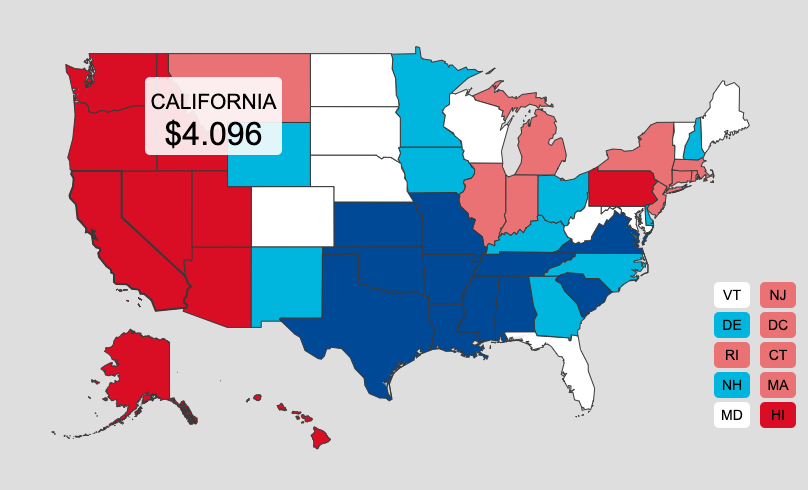
As of December 11, 2025, California has the highest average gas prices in the United States, according to the most recent data from AAA, with an average price of $4.51 per gallon. California’s high prices are driven by a combination of factors, including the state’s highest gasoline tax of $0.709 per gallon, strict environmental regulations requiring a unique fuel blend, and additional fees such as those from a cap-and-trade program and a low-carbon fuel program.
Vote in Republicans if you want this to change. Otherwise, enjoy being ripped off.
In regards to air pollution, it’s not just the high price of gasoline but the high cost of cars due to regulations, that is causing old, polluting cars to remain on the road. Cars pollute more as they get older. It’s only going to get worse.
I think it is time to nationalize the gas formulas. One standard for all. Sounds sorta Constitutional don’t you think?
I thought you folk were all for ‘state’s rights’!
Do you still have to pay for electricity and gasoline?
Not us, we invested in a solar system and electric cars and have lived and driven with free electricity for ten years now.
The PV solar system paid back in three years in gasoline savings alone.
Liberal Economics.
Nope. All fossil-fueled engines must pass emissions checks every year.
I guess they do not have them in Moscow.
george, smog checks are every other year.. not sure you know what your talking about in general, but I bet you are getting paid for comments.