
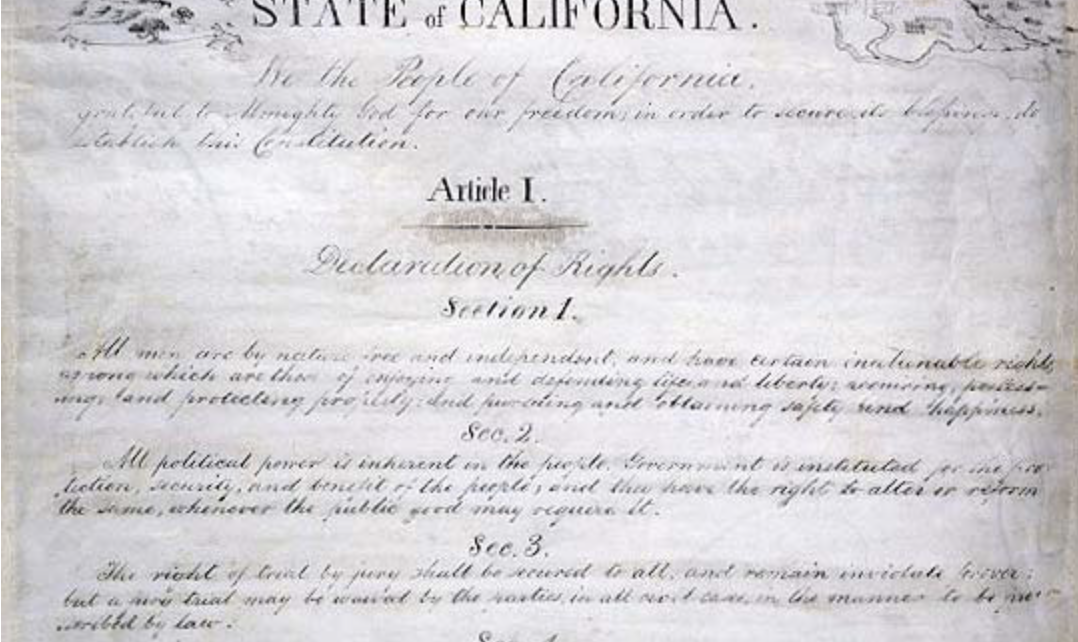
California Constitution. (Photo: www.sos.ca.gov)
What Is an ‘Organic Law’?
You may not be surprised to learn that this term is not used anywhere else in the state Constitution
By Chris Micheli, July 27, 2026 2:00 pm
In Article XI (dealing with local governments) of the California Constitution, Section 9(b), the term “organic law” is used. Section 9(b) states: “(b) Persons or corporations may establish and operate works for supplying those services upon conditions and under regulations that the city may prescribe under its organic law.” What is an organic law?
You may not be surprised to learn that this term is not used anywhere else in the state Constitution; nor is this term defined in the California Constitution. However, it is used in two state statutes.
In Code of Civil Procedure (CCP) Section 1895 (which was enacted in 1872, it states: “Laws, whether organic or ordinary, are either written or unwritten.” In CCP Section 1897 (also enacted in 1872), it explains: “The organic law is the Constitution of Government, and is altogether written. Other written laws are denominated statutes.”
As a result, the CCP defines organic law as the state’s written Constitution (and not the statutes, whether codified or uncodified). Returning to Article 11, Section 9(b), we would assume that the organic law is a city charter (which is akin to a local jurisdiction’s “constitution”).
By the way, according to Wikipedia, “an organic law is a fundamental rule, statute, or system of laws that establishes the basic framework, powers, and structure of a government, agency, or organization. It acts as the core foundation upon which all other lower-level rules and ordinary laws are built.”


- A Unique Aspect of California Lobbying: Local Governments - October 16, 2026
- Some Suggestions for Those New to California Legislative Drafting - October 16, 2026
- Transfers in General - October 16, 2026
RELATED ARTICLES
-
 February 26, 2026
 -
February 13, 2026
-
 February 10, 2026