
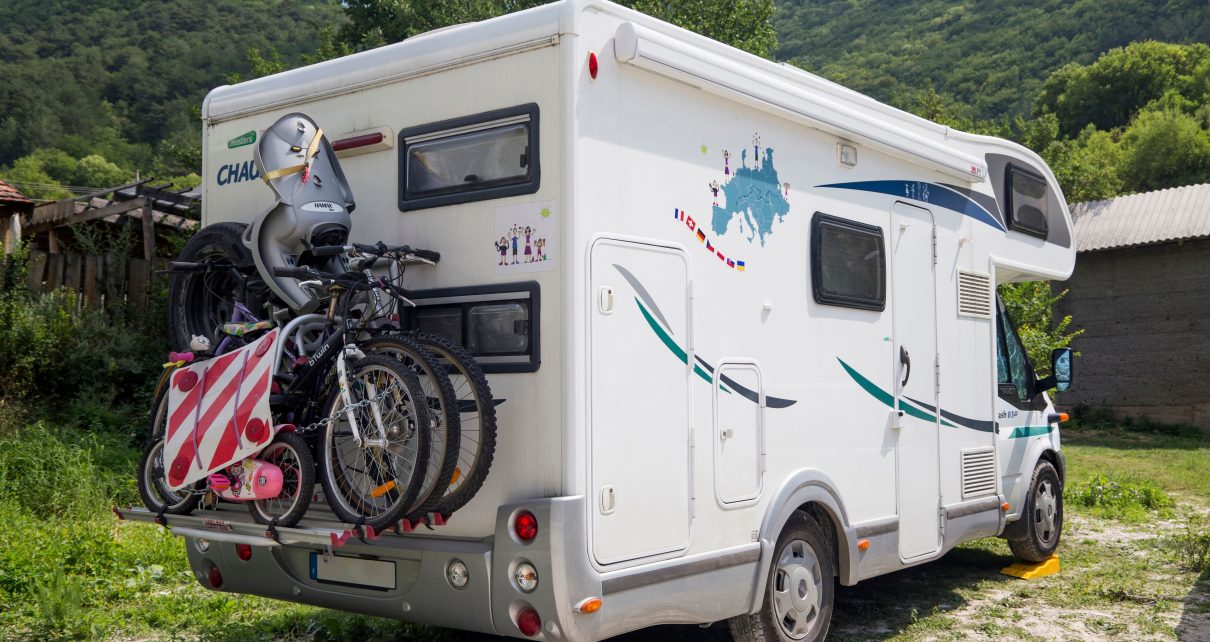
RV living (Photo: Pexels)
When the RV Becomes Home: American Families Take to the Road Amid Affordability Crisis
Housing costs helped shape the economic debate in the 2026 midterms. For one Arizona family, the question was where to live when the insurance money for a rental ran out
By Matthew Holloway, November 25, 2026 10:57 am
When the house next door to mine burned down in 2024, Aaron and Rachel still owned the land and expected to rebuild. Insurance covered a temporary rental for the couple and their three children for almost a year. Then the rental coverage ran out. The house was still gone. The family moved into their RV.
Over the following year, Aaron and Rachel described how the cost of rebuilding, difficulties with their insurer, and the county permitting process simply put a new house beyond their reach. They sold the property. A solar rig allowed them to stay in places without electrical hookups as they moved between campgrounds. Several times they parked on our property, next door to the land where they had been homeowners.
By the time Americans voted in the 2026 midterms, the cost of keeping a household running had become one of the election’s defining issues. The economy ranked first when voters were asked to choose their most important issue, according to CBS News exit polling. About one voter in five described the hardship inflation had caused their family as severe. The Associated Press’ voter survey found that dissatisfaction with President Donald Trump’s handling of inflation weighed on Republicans as Democrats won control of Congress.
Housing was already claiming more than half the income of 12.1 million American renter households in 2024. Another 10.6 million spent more than 30 percent and up to half their income on housing, bringing the total to 22.7 million, or nearly half of all renters, according to Harvard’s Joint Center for Housing Studies. Buying presented a separate hurdle. In California, a household needed an annual income of $228,000 to qualify for a median-priced existing single-family home in the third quarter of 2026 under the California Association of Realtors affordability calculation.
An independent analysis of Census Bureau microdata estimated that nearly 360,000 Americans lived in a boat, RV, van, or similar dwelling in 2024. About 17,600 of those households included children. California had roughly 22,100 such homes and Arizona had 12,900. Relative to the number of occupied homes, the arrangement was more common in Arizona: about one in 230, compared with one in 620 in California. The survey records the kind of dwelling a family occupies. It leaves unanswered how many millennial and Gen Z families moved into one because they could no longer afford a house or apartment.
In 2018, The Washington Post’s Heather Long called full-time RV residents “modern nomads.” The pandemic subsequently expanded the number of Americans who could take their jobs on the road. In 2019, an estimated 7.3 million American workers described themselves as digital nomads. By 2022, that figure had reached 16.9 million, according to MBO Partners’ workforce research. Its definition turned on the ability to combine travel with remote work and encompassed people living in many kinds of accommodations.
Circumstances vary, however. A 2024 University of California, Riverside dissertation examining working-age residents at one Mesa RV resort found that all but two interviewees had stable housing before moving into their RVs. Some used the savings to work toward buying a home, indicating that many Americans live this way by choice, not necessity.
The older history behind the word nomad offers a parallel in how families earned a living as they moved. In Ireland, Traveller families followed familiar routes where they could trade horses, find seasonal farm work, or earn money making and repairing tinware. Skills, customers, and family connections gave those journeys a pattern. Irish Travellers are a distinct ethnic community whose heritage includes a language known as Cant, Gammon, or Shelta. The Donegal Travellers Project identifies that language, extended family ties, music, and trades such as tinsmithing among the traditions passed between generations.
The Roma have a separate history, including a long record of exclusion from places where families sought to settle. The Council of Europe has documented how Roma are routinely depicted as itinerant even though most live in settled communities. The report also describes forced expulsions, evictions, and discrimination affecting Roma communities. That history gives the modern discussion a practical question that the word nomad can obscure: how much say does a family have in where it stops, or how long it can stay?
For Aaron and Rachel, finding a legal place to park has become another housing hurdle. They say RV resort fees are often beyond their budget, while restrictions on older RVs and age requirements at 55-and-older communities further limit where they can stay with their children. Those barriers leave American families like theirs navigating municipal parking codes and public-camping ordinances as cities in California and Washington pursue tighter restrictions and debate how to accommodate people whose vehicles serve as their homes.
The legal landscape changed in June 2024 when the U.S. Supreme Court ruled in City of Grants Pass v. Johnson that enforcing generally applicable public-camping laws does not violate the Eighth Amendment’s prohibition on cruel and unusual punishment. The decision removed the constitutional restriction the Ninth Circuit had applied when sufficient shelter beds were unavailable. Other legal limits on enforcement remained outside that holding.
California Gov. Gavin Newsom subsequently encouraged local governments to strengthen their responses to encampments. His administration’s May 2025 model ordinance proposed prohibiting camping in the same public location for more than three consecutive days or nights, along with restrictions on structures and obstructed passageways. It also called for at least 48 hours’ notice before most clearances and reasonable efforts to identify and offer shelter and services. The document provides a template for local adoption.
San Francisco adopted restrictions specifically affecting vehicle residents. An ordinance approved in July 2025 established a two-hour parking limit for large vehicles, with exceptions including a temporary refuge-permit program for eligible residents experiencing vehicular homelessness.
In documents supporting the program, transportation officials cited blocked sidewalks, impaired visibility, fires, and illegal dumping among the problems associated with large vehicles parked on city streets. They also described citations and towing as enforcement tools. The permit framework tied exemptions to accepting services, complying with neighborhood rules, and accepting an offer of non-congregate interim or permanent housing when available.
Seattle’s effort produced a division between its council and mayor. On October 20, 2026, the City Council approved a package combining outreach, vehicle storage, and safe-parking assistance with a proposed permit system. Under the parking measure, motorhomes and travel trailers without permits would have been limited to two hours on public streets. Permits would have allowed qualifying vehicle residents to remain while following program requirements and awaiting appropriate shelter.
Mayor Katie Wilson vetoed the permit measure on November 2, citing enforcement costs, legal concerns about impoundment, and the risk that permit violations could increase unsheltered homelessness. She also questioned how a one-time census would account for people who began living in vehicles later. Wilson signed four accompanying ordinances, including legislation intended to accelerate the opening of safe lots and vehicle-storage facilities.
The council’s November 12 override attempt failed: five members supported overriding the veto, one short of the six required. Councilmember Dan Strauss, the package’s sponsor, maintained that the proposal would establish a route into housing while setting boundaries for vehicles on residential streets. The two-hour restriction did not become law.
Aaron and Rachel, both older members of Gen Z, had already bought the home where they wanted to raise their children; a tragic fire took it from them, and a mix of economic conditions, lending restrictions, and government bureaucracy kept them from rebuilding. More than a year into full-time RV living, they are staying temporarily in a trailer park. Aaron has since lost his tech-industry job and is looking for another. Their search for somewhere to stay has taken them through campgrounds, places without hookups, and the property next door to their former home. For their family, the date that set life on the road in motion was the day the rental coverage ended.
These American Nomads represent an evolving segment of the American population. This group is well represented in a broad cross-section of economic statuses. They range from the very wealthy, secure in their posh, coach-bus-sized 2026 model mobile homes, towing ‘toys’ and new cars, to families straining to eke out another hundred miles from Winnebagos long past their prime, to those who have become immobilized in places chosen out of necessity or desperation. They’re often lumped in with the homeless in most political discourse, but many of them work, or are seeking work. They live, educate their children, and vote.
When American politicians discuss affordability, families living in vehicles deserve a place in that conversation. The rules governing where they can park, sleep, and remain have immediate consequences for their daily lives. Aaron and Rachel give the affordability debate a face—and a question that survives every election: where can their family afford to live?
Affordability emerged as a crucial fault line in the 2026 midterms. Before the election, KFF found that 90 percent of voters considered the cost of living a very or extremely important campaign issue. The AP Voter Poll subsequently found that roughly half considered it crucial to their congressional vote. Many of these American Nomads give that fault line a face.


- When the RV Becomes Home: American Families Take to the Road Amid Affordability Crisis - November 25, 2026
- UN-Aligned Donor Network That Bankrolled Arizona Democrats Now Positioned to Shape State Policy - November 21, 2026
- Arizona Submits Bid To Host US Space Academy Proposed by President Trump - November 18, 2026
RELATED ARTICLES
-
 December 5, 2025
-

-

-

-

Don’t expect cities and states controlled by Democrats to do anything about the affordability crisis. Although Democrats pretended to be concerned about affordability during the last election, once they were installed into office (mostly via voter fraud and rigged voting machines) they immediately pivoted to attacking ICE, opening the borders to the illegal migrant hordes, and waging lawfare against President Trump and Republicans. Democrats will only make the affordability crisis worse by imposing oppressively high taxes and crushingly burdensome regulations.