
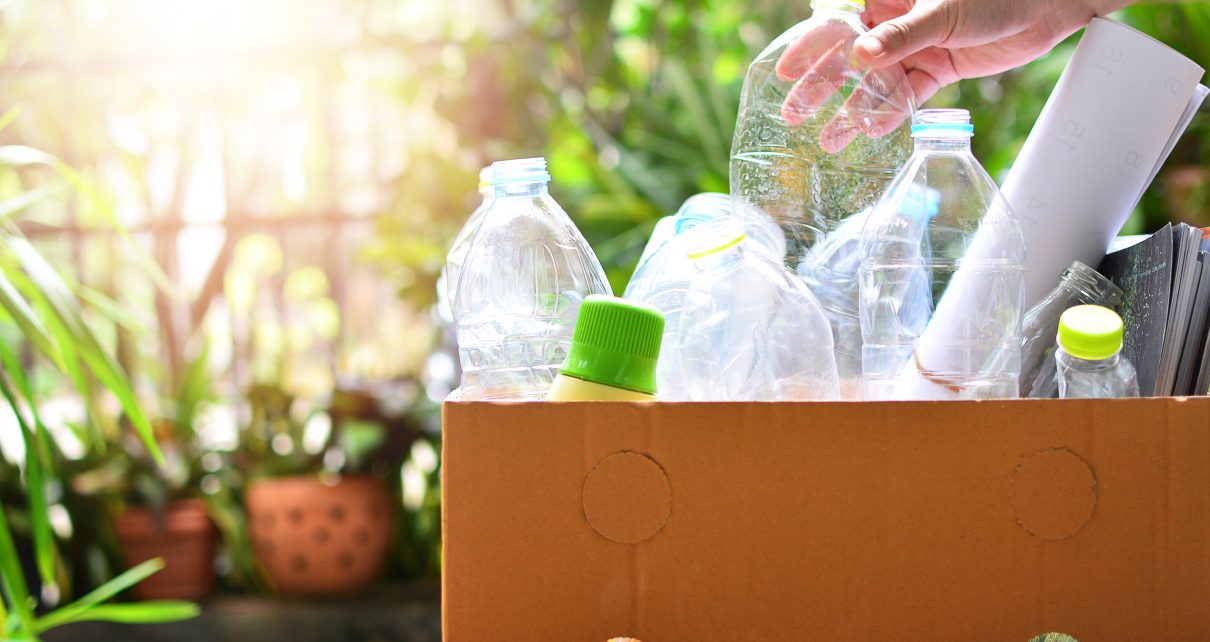
Plastic bottle garbage for recycling concept reuse. (Photo: ITTIGallery/Shutterstock)
Crazifornia: 17 States Sue California to Block Plastic Packaging Recycling Law
Arrogant California tries to dictate national recycling policy
By Katy Grimes, June 23, 2026 8:30 am
Nebraska Attorney General Mike Hilgers is leading a coalition of 17 Republican state attorneys general, and the National Association of Wholesaler-Distributors in suing California over Senate Bill 54, the Plastic Pollution Prevention and Packaging Producer Responsibility Act.
The law was signed by Governor Gavin Newsom in 2022. It requires producers to reduce single-use plastic for packaging and food service items by 25%, and ensure that all such items are recyclable or compostable by 2032.
According to CalRecycle, SB 54 requires 25% reduction in single-use plastic packaging, 65% recycling rate for covered plastics, and 100% of such packaging must be recyclable or compostable.
All packaging producers and manufacturers must join a Producer Responsibility Organization, pay fees, fund recycling infrastructure, and redesign packaging to meet California’s standards, regardless of where the product originates.
A Producer Responsibility Organization is a nonprofit organization designated to help implement the state’s extended producer responsibility program for single-use packaging and plastic food service ware. Notably,
Circular Action Alliance was selected by CalRecycle in January 2024 as the state’s inaugural and currently only Producer Responsibility Organization.
Circular Action Alliance was founded in 2022 by a group of producers (initially around 20 companies from food, beverage, consumer goods, and retail sectors, with additional founding members joining later, such as Campbell’s, IKEA, Starbucks, Clorox, Colgate-Palmolive, SC Johnson, Target, Kraft Heinz, and Walmart).
The California law applies to products sold in California, regardless of where the business or production is located.
The suit was filed in U.S. District Court in Sacramento June 23, 2026, the Los Angeles Times reports.
You can see the problem, and reason for the lawsuit, which accuses California of trying to “impose its own policy preferences on the entire nation” with the plastic packaging law.
California claims the state law addresses plastic pollution overwhelming waterways, oceans, and landfills, shifting costs from taxpayers and local governments to producers and encouraging innovation in sustainable materials.
The law prohibits producers of expanded polystyrene food service ware from selling, offering for sale, distributing, or importing expanded polystyrene food service ware in or into the state unless the producer demonstrates that expanded polystyrene meets California’s recycling rates, according to SB 54 Assembly Appropriations analysis.
The law says that violations of the plastics recycling Act by the producer, wholesaler, or retailer shall be subject to penalties. And, it authorizes CalRecycle to conduct investigations, including inspections and audits, to determine compliance with the Act. It also authorizes CalRecycle to issue notices of violation and penalties up to $50,000 per day per violation.
Yah right.
The lawsuit says California can’t regulate or burden interstate commerce this way by effectively setting national packaging standards. Businesses nationwide must redesign packaging, labels, or supply chains just to access California’s large market, or segment production, which is extremely costly.
The law imposes compliance costs, which get passed to consumers through higher prices on groceries, packaged goods, and everyday items. The states claim this hits lower-income families hardest and creates a “backdoor national mandate.”
“Once again, California is trying to enact a policy that negatively impacts the rest of the country,” said AG Hilgers in a news release. “If California goes unchecked, consumers will be forced to pay more for basic necessities.”
The other states in the lawsuit are Alabama, Florida, Georgia, Idaho, Indiana, Iowa, Louisiana, Missouri, Montana, North Dakota, Oklahoma, South Carolina, South Dakota, Texas, Utah and West Virginia.

A California native and Navy mom, Katy lives in Sacramento, CA.
- California Voters: Howard Jarvis Taxpayers Association’s 2026 Voting Guide - October 23, 2026
- Newsom Gaslights Over California’s Bad Student Test Scores - October 22, 2026
- How the DMV Enabled Voter Fraud in California - October 21, 2026
RELATED ARTICLES
-
 May 18, 2026
 -
 May 31, 2025
 -
 January 12, 2023
I hope they succeed! I am so tired of these microtyrants. their similar policies impacting retail businesses and residential homes, requiring people to have separate containers for organics because green waste containers allow too much green house gases to escape (!!), have special carveouts for homeless people. they can dump 1000s of lbs of organic waste and trash into a river bed that is used for a city’s drinking water and get off scotfree!
Dig a tad deeper to find into whose pockets all the dues and fines will be funneled. You can rest assured that there are government cronies and “elected” (selected) lawmakers and the DMC crime syndicate exclusively designated to benefit from this law, just as with every greenatic law that dirty Dingbatcrats who unilaterally rule CA by theft of every election in the State impose upon we the sheeple.
DNC, not DMC
hope you win and save us from the crazy communist in Sacramento
If I was a company or state that has business with California I would quit doing business with California…Screw California…