

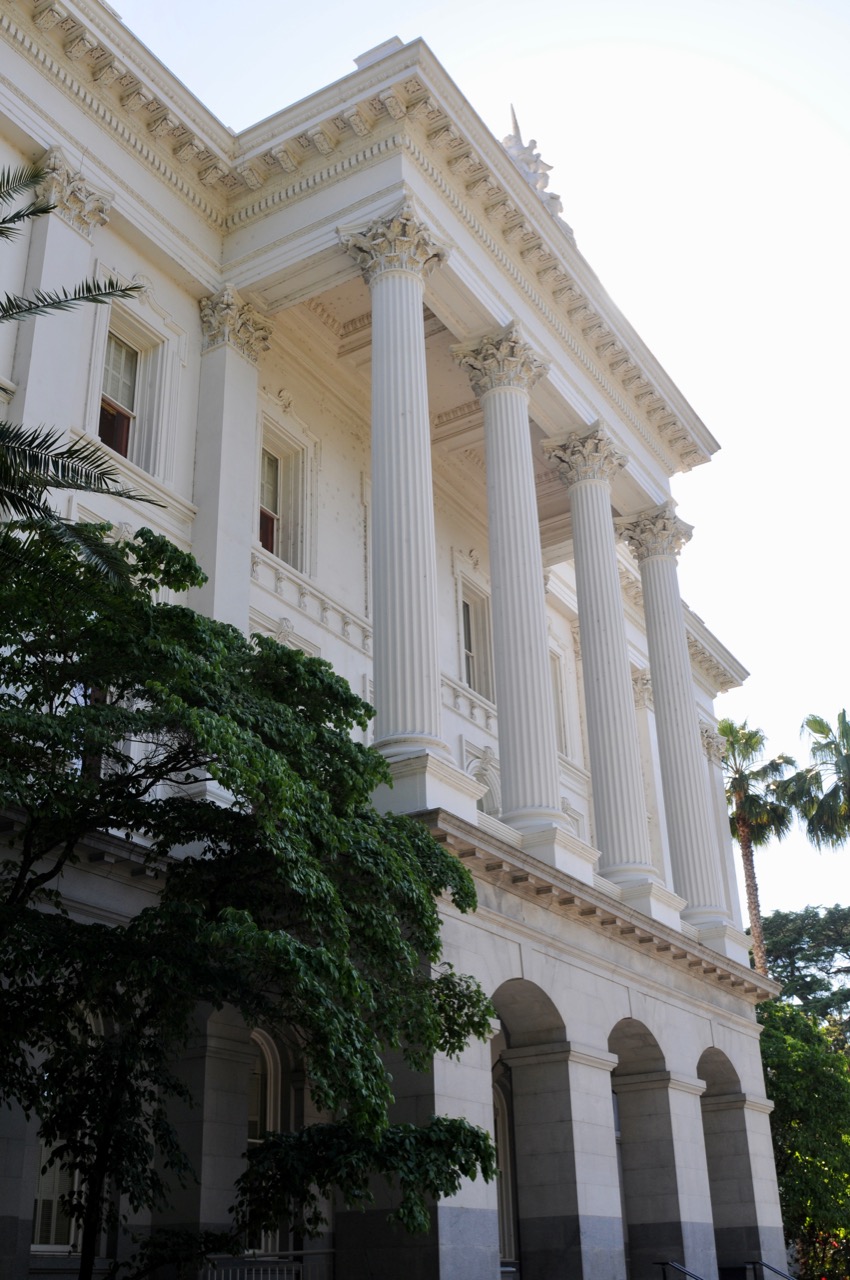
California State Capitol. (Photo: Katy Grimes for California Globe)
Chart on Types of Amendments
Legislative measures considered in the California Legislature
By Chris Micheli, August 7, 2026 2:00 pm
The following chart lists the main types of amendments that can be made to legislative measures considered in the California Legislature:
| Type | Explanation |
| Author | Upon request of the author of a measure, the chairperson of the committee to which the measure (bill, resolution or constitutional amendment) has been referred may report to the full house (i.e., the Assembly or Senate) with the recommendation that amendments submitted by the author be adopted and the measure be reprinted as amended and re-referred to that committee. |
| Committee | Amendments proposed by a committee or a committee member in a committee hearing. Such amendments are adopted by roll call vote of the committee. They may or may not be hostile to the author. Committee amendments to bills are considered upon their second reading, and the amendments may be adopted by a majority vote of the Members present and voting. Assembly and Senate bills amended on second reading by committee amendments are usually ordered reprinted and returned to the second reading file. |
| Floor | Any Member may move to amend a measure during its second or third reading, and that motion to amend may be adopted by a majority vote of the Members present and voting. Amendments to a measure offered from the Floor, except committee amendments reported with them, amendments offered with a motion to amend and re-refer a measure to committee, amendments deleting any number of words, or amendments previously printed in the Daily Journal, are not in order unless a copy of the proposed amendments has been placed upon the desks of the Members on the Floor. |
| Germane | Under the Joint Rules, an amendment must relate to the same subject as the original bill, constitutional amendment, or resolution under consideration by the respective house. An amendment is not in order when all that would be done to the measure is the addition of a coauthor or coauthors, unless the Committee on Rules of the house in which the amendment is offered grants prior approval. |
| Friendly | These are amendments proposed by another Member in committee or on the Floor that are acceptable to the measure’s author. |
| Hostile | Amendments proposed by another Member in committee or on the Floor that are not supported by the bill’s author are considered to be “hostile.” |
| Gut-and-Amend | Amendments to a measure remove the current contents in their entirety and replace them with different provisions. This type of amendment does raise the issue of germaneness, which refers to whether a proposed amendment is relevant to the subject matter currently contained in the measure. |
| Double-Jointing | Amendments to address the problem of “chaptering-out,” which is when two bills during the same Session would amend the same Code section. Without this amendment, the last enacted statute would chapter-out or prevail over the earlier enacted statute. |


Chris Micheli is an attorney and lobbyist with Snodgrass & Micheli, LLC, as well as an Adjunct Professor at McGeorge School of Law.
Latest posts by Chris Micheli (see all)
- CA Supreme Court Cited a Lobbyist’s Memo as Legislative History - October 7, 2026
- Chart of Bill Signing Messages thru 2026 - October 7, 2026
- Some Statistics from the 2025-26 California Legislative Session - October 7, 2026
RELATED ARTICLES
-
 June 28, 2026
 -
 October 11, 2022
 -
 October 20, 2024