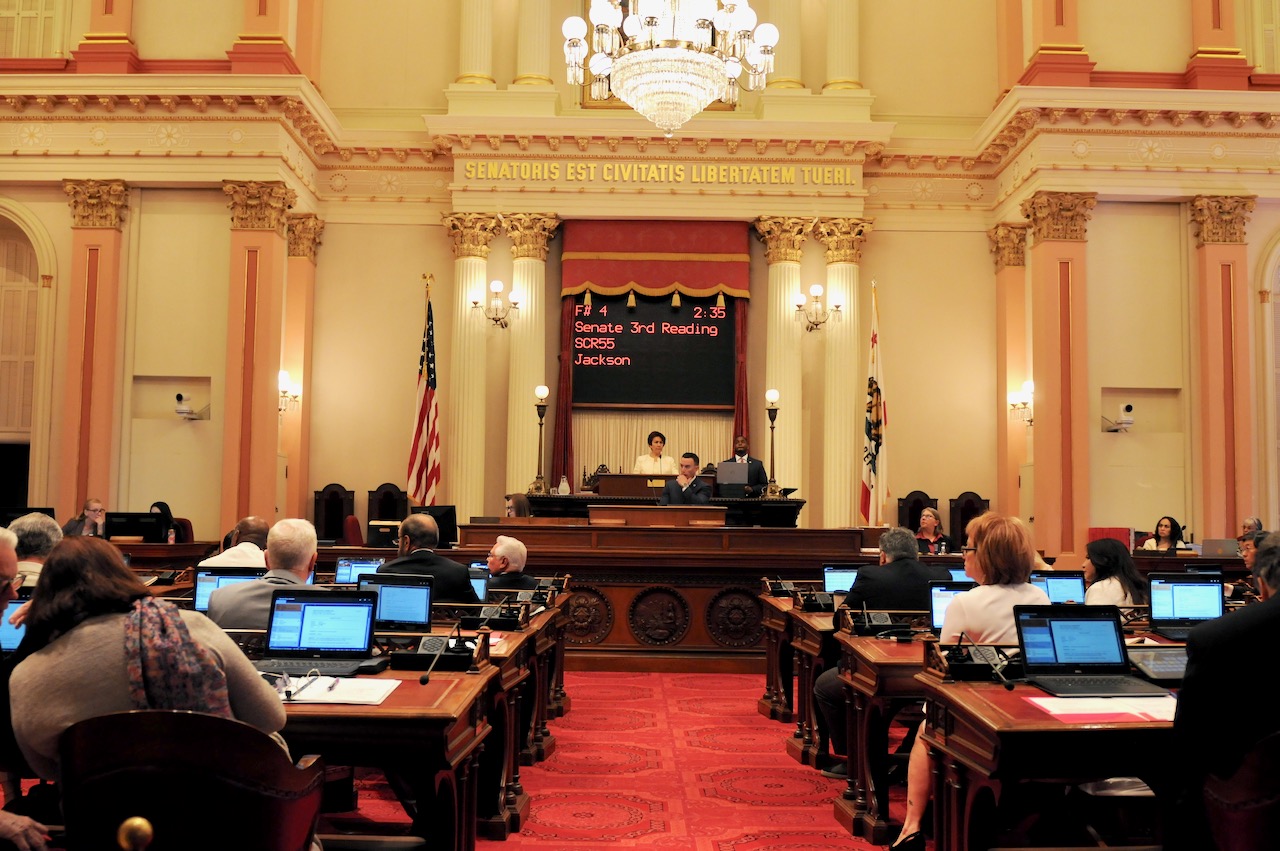
California State Capitol. (Photo: Katy Grimes for California Globe)
Petitions for California Rulemaking: An Underutilized Tool for Regulatory Change
Businesses, advocacy groups, and individuals pour immense resources into lobbying for new statutes
By Chris Micheli, November 16, 2026 6:46 am
In California’s vast and complex legal ecosystem, public attention frequently zeroes in on the State Legislature. Businesses, advocacy groups, and individuals pour immense resources into lobbying for new statutes, tracking bills through committee hearings, and attempting to influence the governor’s desk. Yet, an equally powerful lever for systemic, statewide change remains largely overlooked: the formal petition for administrative rulemaking.
Under California’s Administrative Procedure Act (APA), any interested person has the statutory right to petition a state executive agency to adopt, amend, or repeal a regulation. Despite its potential to reshape the regulatory landscape across sectors—ranging from environmental compliance and labor standards to professional licensing and consumer privacy—the rulemaking petition remains one of the most underutilized tools in California administrative law.
The foundation of this mechanism rests in California Government Code Section 11340.6. The statute explicitly guarantees that, unless a specific agency is expressly exempted by law, any individual or entity can formally request regulatory intervention.
To initiate the process, a petitioner must draft a formal document directed to the relevant agency or department. While individual agencies may maintain specific procedural variations, a standard petition must contain several key components:
- A clear statement of the substance or nature of the regulation, amendment, or repeal requested.
- The explicit reasons and justification for the proposed change.
- A reference to the agency’s statutory authority to take the requested action.
What transforms the California rulemaking petition from a mere suggestion box into a potent legal tool is the strict statutory timeline mandated by Government Code Section 11340.7. Once an agency receives a formal petition, the clock begins ticking immediately. The agency has exactly 30 days to respond in writing.
Within this tight window, the agency must choose one of two paths:
Deny the petition: The agency must issue a formal, written denial that explicitly outlines the reasons for the refusal on its merits.
Schedule a public hearing: The agency can grant the petition and set a formal public hearing to begin the official rulemaking process.
Regardless of the outcome, the agency’s written response cannot simply be buried in a file drawer. By law, the agency must send its decision to the California Office of Administrative Law (OAL) for publication in the California Regulatory Notice Register. This publication requirement elevates the issue into the public record, creating immediate transparency and alerting industry peers, competitors, and advocacy networks to the agency’s stance.
For many seeking policy modifications, the administrative petition offers distinct advantages over traditional legislative lobbying.
It could circumvent political gridlock because moving a bill through the California Assembly and Senate requires navigating intense political infighting, committee gatekeepers, and fiscal constraints. A rulemaking petition sidesteps the Legislature entirely, placing the issue squarely in front of the technical experts and administrators who manage the program daily.
It is cost-efficient because mounting a full-scale legislative lobbying campaign can cost hundreds of thousands of dollars. In contrast, drafting a comprehensive, evidence-backed rulemaking petition requires legal and technical expertise but carries zero filing fees and bypasses the need for long-term investments.
It is fact-driven, as opposing to legislative debates which are frequently driven by political optics and emotional appeals. Administrative agencies, however, are bound by the evidence before them. A meticulously researched petition packed with empirical data, economic impact analyses, and technical arguments forces regulators to engage on the facts.
Winning an administrative change is not as simple as pointing out a problem; it requires handing the agency a ready-made solution. Unverified assertions or vague policy requests carry minimal weight. To maximize success, savvy petitioners structure their submissions as an irresistible blueprint for the agency.
A highly effective petition should include the exact, specific proposed wording for the new or amended regulation. Furthermore, the petition must align cleanly with the six core standards of the Office of Administrative Law: necessity, authority, clarity, consistency, reference, and non-duplication.
If a petitioner can conclusively demonstrate that a rule change is legally authorized, internally consistent, and absolutely necessary to solve a real-world problem, the agency faces a high burden to justify a denial.
Even when a petition is denied, the exercise is rarely a failure. A formal denial provides an invaluable peek into the agency’s legal rationale and defense mechanisms. This information can be weaponized in subsequent actions.
Under California law, any interested person can seek a judicial declaration in Superior Court regarding the validity of an existing regulation. While a petitioner does not strictly have to exhaust administrative remedies by filing a rulemaking petition before bringing a declaratory relief action, doing so builds a robust administrative record.
The agency’s written, published denial forces them to commit to a legal position early, exposing potential vulnerabilities or arbitrary reasoning that can be systematically picked apart by counsel in court.
As California’s regulatory state continues to expand, relying solely on traditional legislative battles or defensive litigation is an incomplete strategy. The formal petition for rulemaking offers a proactive, cost-effective, and transparent pathway to shape state policy from the ground up.
For businesses seeking regulatory clarity, trade groups eyeing market barriers, and public interest advocates pushing for reform, it is time to dust off Government Code Section 11340.6 and leverage this highly effective, underutilized mechanism for legal change.


- Petitions for California Rulemaking: An Underutilized Tool for Regulatory Change - November 16, 2026
- Textualism v. Purposivism in California Courts - November 16, 2026
- How Do California Courts Define an Ambiguous Statute? - November 15, 2026
RELATED ARTICLES
-
 November 12, 2026
-
October 18, 2026
-