

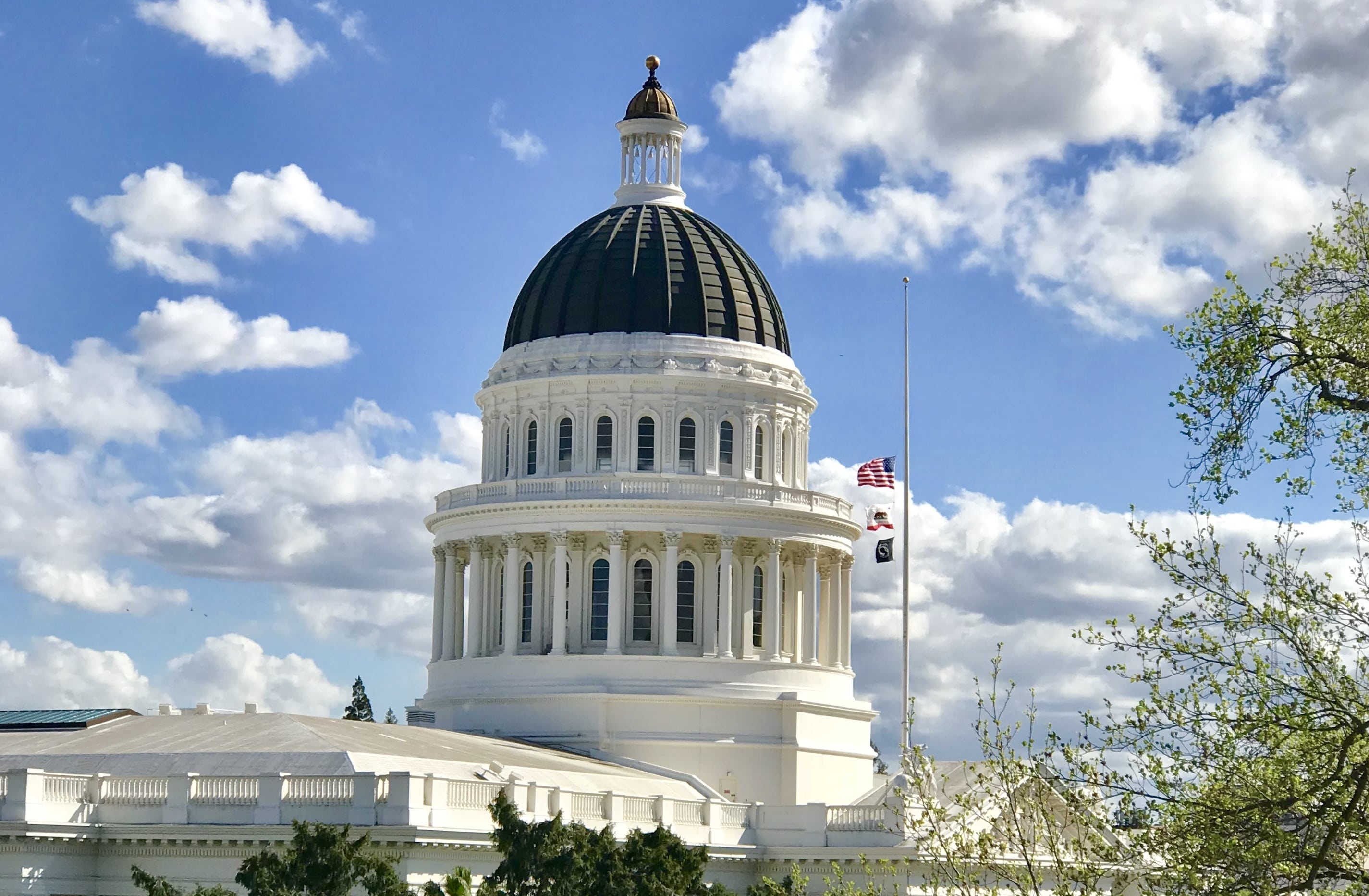
California State Capitol. (Photo: Katy Grimes for California Globe)
Agency Deference in California
California has long charted its own course
By Chris Micheli, November 6, 2026 11:25 am
Unlike federal courts, which historically used the Chevron doctrine, California has long charted its own course, relying on its own landmark jurisprudence to settle ambiguities and how much to rely upon (or defer to) state agency interpretations.
Since Yamaha Corp. of America v. State Board of Equalization (1998) 19 Cal.4th 1 was decided, California has operated under two key principles (while federal courts spent decades using Chevron deference that was overturned in 2024 by its Loper Bright decision):
- The California Supreme Court ruled that a state agency’s interpretation of a statute is not entitled to binding deference.
- Instead, courts exercise independent judgment, evaluating agency interpretations along a continuum. The agency’s view is given weight only based on its “power to persuade,” depending on the agency’s specialized expertise and thoroughness of reasoning.
As a result, California courts do not grant automatic or mandatory deference to state agencies or departments (as well as boards, commissions, and bureaus) in the executive branch when interpreting statutes, applying instead an independent judgment standard similar to federal Skidmore deference.
The doctrine followed in California, referred to as the Yamaha Standard, is focused on independent judgment. In other words, state courts treat statutory interpretation as a judicial function and act as the final arbiters of what a law means. Under Yamaha, courts do not defer blindly to an agency’s legal views. Instead, an agency’s interpretation is treated as one of several helpful tools.
The level of deference depends on the agency’s “proportional power to persuade” based on factors like technical expertise, thoroughness of consideration, and consistency over time. In addition, California courts afford greater deference to formal, quasi-legislative rules (where the legislature has explicitly delegated rulemaking power to the agency), than to informal staff interpretations or guidance.
Note that, if an agency issues regulations or guidance without complying with the state Administrative Procedure Act (APA), California courts typically afford them no deference at all. Also, the California Supreme Court has repeatedly rejected claims that specialized bodies (such as the Public Utilities Commission) deserve a uniquely higher level of judicial deference than other administrative entities.
California’s approach is different than the federal courts. The Yamaha Standard is unaffected by the U.S. Supreme Court’s Loper Bright decision. While the U.S. Supreme Court ended federal Chevron deference in Loper Bright Enterprises v. Raimondo (2024), California’s legal landscape remains unchanged because the state’s judiciary operated under its own non-deferential framework for decades prior


- Agency Deference in California - November 6, 2026
- Probate Appeals - November 6, 2026
- Liability of Trustees to Third Persons - November 5, 2026
RELATED ARTICLES
-
 October 15, 2024
-
 October 15, 2026
-
November 14, 2022