

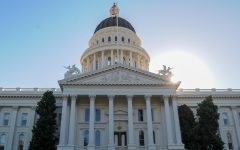
California State Capitol. (Photo: Katy Grimes for California Globe)
How to Draft a Legally Sound Special Statute Clause
All laws of a general nature must have uniform operation
By Chris Micheli, November 17, 2026 2:30 am
Drafting a legally sound special or local clause in the California Legislature requires strict adherence to the provisions of Article IV, Section 16 of the California Constitution. The default rule is clear: all laws of a general nature must have uniform operation, and a local or special statute is invalid if a general statute can be made applicable.
However, when a specific geographic area, entity, or distinct public interest faces truly unique circumstances that a statewide law cannot adequately resolve, the Legislature may pass a “special statute”. To withstand judicial scrutiny and survive an equal protection or uniform-operation challenge, a special statute must contain a specialized legislative clause that is known as a special statute plus section.
In the structural anatomy of a California bill, the special statute justification is placed at the end of the text in an uncodified “plus section.” This ensures the justification remains tied to the bill’s enactment history without cluttering the permanent statutory code. A legally sound clause requires a precise, multi-part architecture:
SECTION X (Plus Section)
├── 1. Constitutional Invocation (Article IV, § 16)
├── 2. Explicit Finding and Declaration
├── 3. Granular Factual Predicate (The “Unique Circumstances”)
└── 4. Nexus Statement (Why a general law fails)
The following are the primary drafting steps for a special or local statute, beginning with the invocation of the constitutional provisions. The bill drafter must explicitly invoke the specific constitutional restriction that is being circumvented. Courts give deference to legislative findings, but only if the Legislature clearly indicates it is actively exercising its discretion under Article IV, Section 16. There is form language that should match the Office of Legislative Counsel standard.
The second step is the core declaration and the factual basis. The bill drafter should state unequivocally that a special statute is necessary and that a general law cannot be made applicable, using mandatory rather than permissive language.
Thereafter, detail the specific facts setting forth the region or entity apart (such as geographic isolation, unique typography, or multi-jurisdictional environmental conditions). Avoid problems that could theoretically occur in other municipalities, as this undermines the special law. Then conclude by explicitly connecting these unique facts to why general statutory mechanisms would result in administrative failure or gridlock.
Successful drafting relies on concrete factual findings, rather than empty boilerplate conclusions that courts may invalidate. When targeting specific attributes, avoid arbitrary population brackets unless they directly correlate to a unique crisis, and always pair the special statute clause with findings and declarations in Section One of the bill.


- How to Draft a Legally Sound Special Statute Clause - November 17, 2026
- What Happens When a California Statute Has Grammatical Ambiguity? - November 16, 2026
- Petitions for California Rulemaking: An Underutilized Tool for Regulatory Change - November 16, 2026
RELATED ARTICLES
-
 February 16, 2023
-
 November 18, 2019
-
 September 12, 2022