

Assemblymember Cecilia Aguiar-Curry (D-Winters)
California’s Women’s Caucus Celebrates ‘Gender Parity’ in the Legislature, But Can’t Tell You What a Woman Is
Gender parity is the ultimate DEI standard
By Katy Grimes, November 16, 2026 2:44 pm
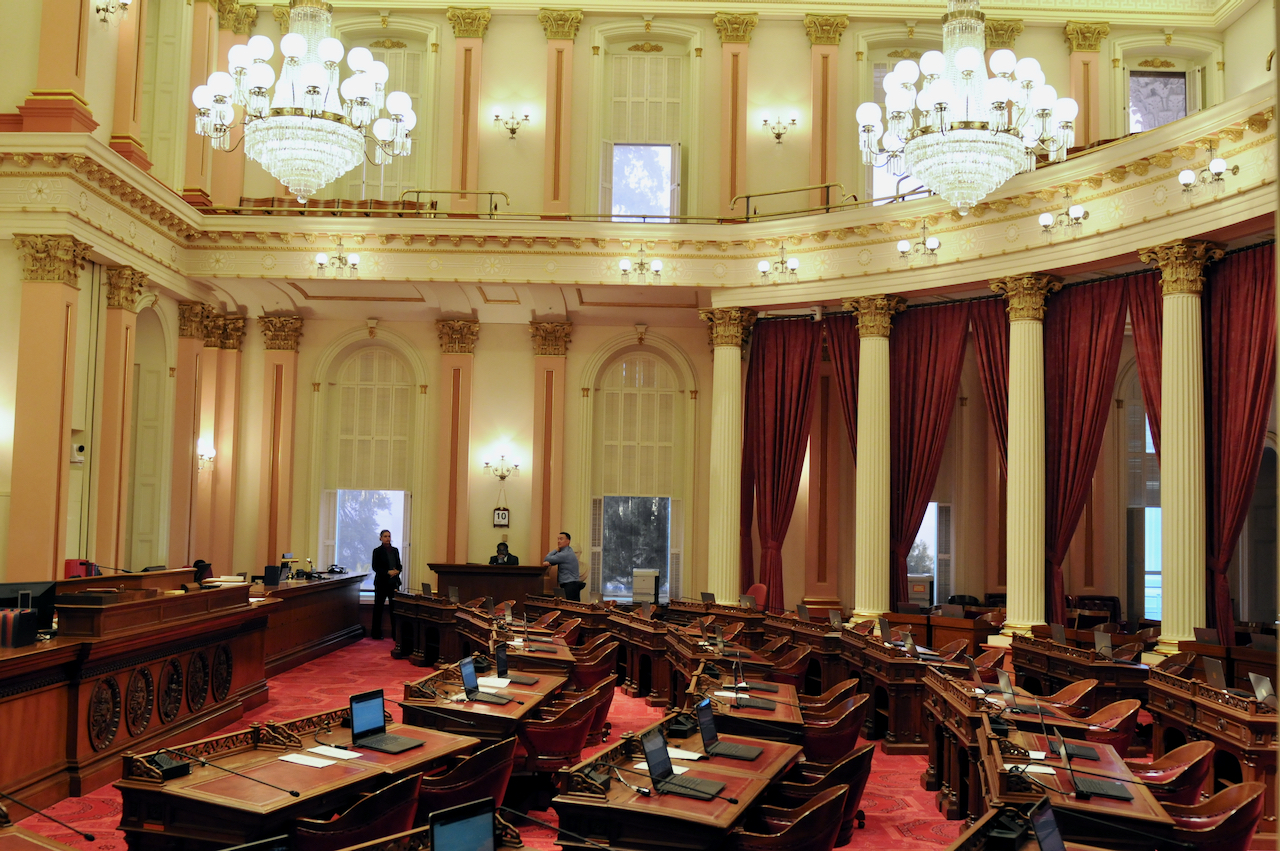
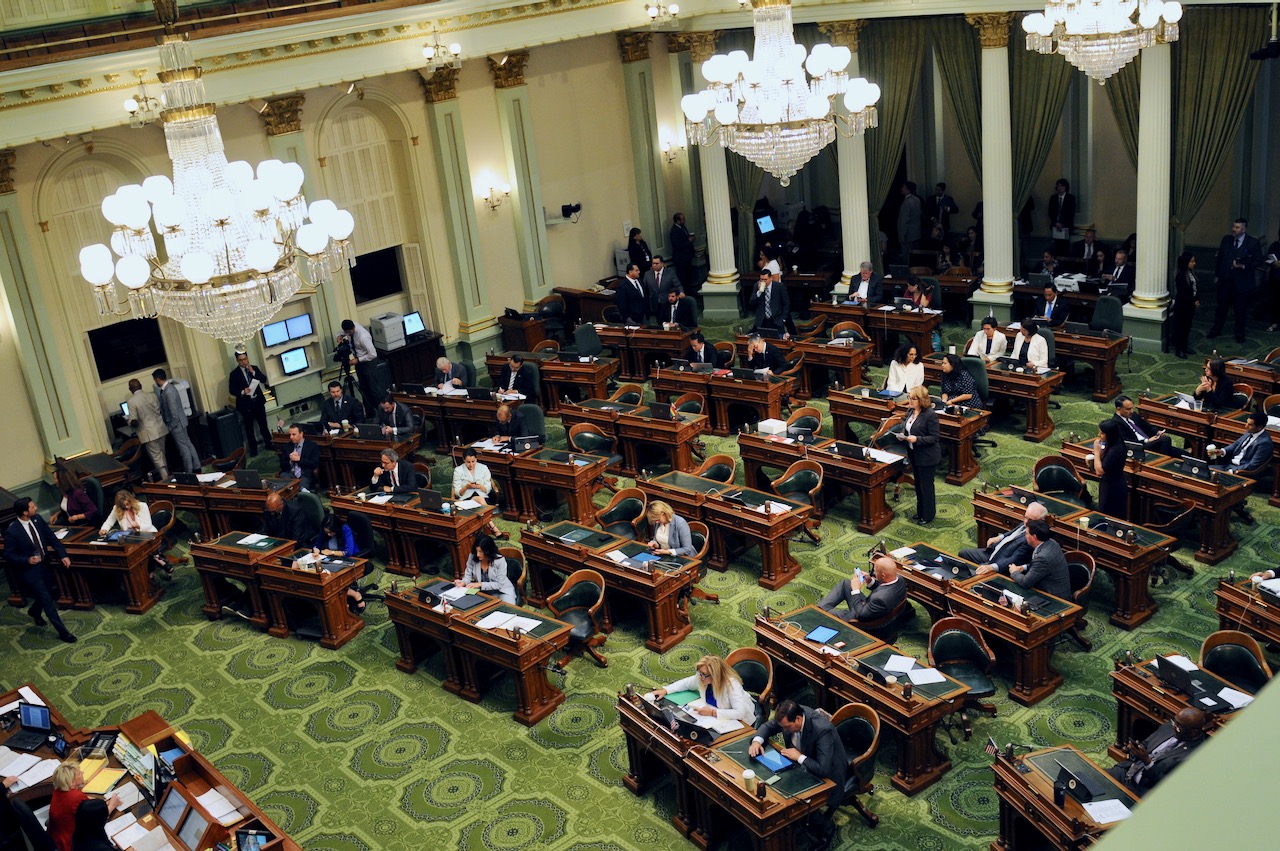
Assemblywoman Cecilia Aguiar-Curry (D-Winters), the Legislative Women’s Caucus Chairwoman, is super excited today. She released a press announcement that “We’ve reached gender parity in the California State Legislature—a significant historical milestone!”
“No joke,” said a former president. I am not kidding.
What is this odd thing called “gender parity?”
According to the European Union, gender parity is a statistical measure that describes the ratio of women to men for a specific indicator in a population.
The United Nations takes a stauncher, more comprehensive stance: “It is not simply about achieving quantitative goals, but about changing the institutional culture so that the Organization can fully deliver on its promises.”
This is the link to the UN website: UNITED for GENDER PARITY – الأمم المتحدة
Here is Assemblywoman Aguiar-Curry’s statement:
LWC Chair Aguiar-Curry on Gender Parity in California State Legislature: It’s About Time
“We have something to celebrate. We’ve reached gender parity in the California State Legislature—a significant historical milestone! That means more women are serving in elected office, bringing perspectives that truly reflect the people of California. It also means more young women can see themselves in positions of leadership.
There’s still work to do. The decisions made in the Legislature shape the lives of Californians every day, and women need to be part of those conversations. From the economy and healthcare to education, housing, and public safety, these issues touch all of us. All issues are women’s issues, and women’s issues are everyone’s issues.”
I am woman, Hear Me Roar?
“Gender parity is an important milestone, not the finish line. We have to keep working so women from all backgrounds have an opportunity to run, serve, and lead. I look forward to continuing that work with my colleagues in the Legislature.
When women help shape the decisions that guide our state, their communities benefit, and so does California.”
This is the ultimate DEI standard.
I’ve always found it telling that female lawmakers who push “gender parity” also don’t like being referred to as “Assemblywoman” and prefer the made-up generic, but grammatically incorrect “Assemblymember.” (hint: it’s two words)
They want gender parity, but shun the correct terminology. They want gender parity but support gender-neutral bathrooms… for the public. Lawmakers enjoy private men’s and women’s restrooms.
They want gender parity, but support boys invading women’s sports.
They want gender parity for themselves, but can’t tell you what a woman is.
This nonsense comes from the gender fluid international world of the UN, WEF and EU.
The World Economic Forum explains Why gender parity is now a macroeconomic imperative: “The economic math is unambiguous. Closing gender equity gaps in employment could boost global GDP by $12 trillion.”
The WEF links to its own paper, and claims, “When women hold political power, economies grow.”
Think about that statement.
“A 10 percentage point increase in women’s parliamentary representation is associated with a 0.7% percentage point increase in GDP growth.” Their study sample included the following countries: Albania, Armenia, Austria, Azerbaijan, Belgium, Bulgaria, Bosnia and Herzegovina, Belarus, Switzerland, Cyprus, Czech Republic, Germany, Denmark, Spain, Estonia, Finland, France, United Kingdom, Georgia, Greece, Croatia, Hungary, Ireland, Iceland, Italy, Kazakhstan, Kyrgyz Republic, Lithuania, Luxembourg, Latvia, Moldova, North Macedonia, Montenegro, Netherlands, Norway, Poland, Portugal, Romania, Russian Federation, Serbia, Slovak Republic, Slovenia, Sweden, Tajikistan, Turkey, Ukraine, and Uzbekistan.
What? No United States?
What a bunch of BS. Women who claim to really care about such ridiculous issues as gender parity are wasting everyone’s time on this drivel, rather than “affordability” – the word of this past midterm election: the price of groceries, California’s highest-in-the-nation gas prices, California’s highest-in-the-nation housing costs, California’s highest-in-the-nation energy costs… the list is very long, and has nothing to do with gender parity.
Get to work ladies – and preferably on something meaningful to your female constituents, who don’t care how many women are in the California Assembly.



A California native and Navy mom, Katy lives in Sacramento, CA.
- California’s Women’s Caucus Celebrates ‘Gender Parity’ in the Legislature, But Can’t Tell You What a Woman Is - November 16, 2026
- Criminal Justice Legal Foundation, Victims, Prosecutors and Law Enforcement Sue Governor Newsom to Stop Blanket Death Row Commutations - November 16, 2026
- Gavin Newsom’s Dark Legacy - November 16, 2026
RELATED ARTICLES
-
 July 11, 2026
-
 December 31, 2021
-
 October 6, 2020
Really, this particular part of the DEI madness is one of the dumbest, most useless, most annoying and pointless things EVER. Probably by design, to tick off normal people —- you might say even flip them the bird with contempt —- as these jerks make their way through their ridiculous, nonsensical, harmful, and destructive agenda. That’s the goal, it seems, as you look at the absurd items on the list. There is nothing noble or productive about any of this, the more-women or the result of more-women. I mean, come ON! Most of the Dem-Marxist women in the current CA legislature give all women a bad name! And the whole idea is contradictory and empty, as was mentioned. It’s such a good point. YES, how on earth can anyone be happy about and celebrate more women in the legislature when no one who is celebrating can define what a woman is?
“A 10 percentage point increase in women’s parliamentary representation is associated with a 0.7% percentage point increase in GDP growth.” Their study sample included the following countries: Albania, Armenia, Austria, Azerbaijan, Belgium, Bulgaria, Bosnia and Herzegovina, Belarus, Switzerland, Cyprus, Czech Republic, Germany, Denmark, Spain, Estonia, Finland, France, United Kingdom, Georgia, Greece, Croatia, Hungary, Ireland, Iceland, Italy, Kazakhstan, Kyrgyz Republic, Lithuania, Luxembourg, Latvia, Moldova, North Macedonia, Montenegro, Netherlands, Norway, Poland, Portugal, Romania, Russian Federation, Serbia, Slovak Republic, Slovenia, Sweden, Tajikistan, Turkey, Ukraine, and Uzbekistan.”
This is what AI says about this statement.
The statement “A 10 percentage point increase in women’s parliamentary representation is associated with a 0.7% percentage point increase in GDP growth” is statistically non-verifiable and does not establish cause and effect for several methodological and logical reasons:
1. Correlation Does Not Imply Causation
The word “associated with” explicitly denotes correlation, not causation. Even if the statistical relationship holds, it does not prove that increasing women’s representation causes GDP growth. There are numerous confounding variables that could explain both higher female representation and higher GDP growth, such as:
Overall economic development level (wealthier nations may both afford gender-equal policies and have more women in politics).
Strength of democratic institutions and rule of law.
Education levels, healthcare access, and infrastructure.
Cultural norms around gender equality that affect labor force participation broadly, not just in politics.
Without a rigorous causal identification strategy (e.g., instrumental variables, regression discontinuity, or randomized approaches), the claim remains speculative.
2. Sample Selection Bias
The study’s sample includes only European and post-Soviet states (e.g., Albania, Austria, Germany, Ukraine, etc.). It explicitly excludes:
* The United States
* Countries in Africa, Latin America, Southeast Asia, and most of the Global South
This means the finding cannot be generalized globally. Economic dynamics in Europe differ significantly from those elsewhere due to welfare states, industrial structures, trade integration (e.g., EU single market), and historical contexts. Applying the result to all countries is statistically invalid.
3. Aggregation Masks Heterogeneity
The analysis treats all 45 countries as part of a single homogeneous model, ignoring:
* Income level differences: High-income vs. low-income countries respond differently to political representation.
* Political system differences: Proportional vs. majoritarian electoral systems affect how women gain seats.
* Time period and data quality: GDP and political representation data vary in reliability across countries like Belarus, Russia, Tajikistan, and Uzbekistan versus Western Europe.
4. Reverse Causality Is Plausible
It is equally plausible that economic growth and development lead to greater women’s political representation, rather than the reverse. As countries develop, education and labor force participation for women increase, which in turn drives political participation. The study does not adequately address this directionality problem.
5. “10 Percentage Point” Increase Is Not a Natural Experiment
The claim assumes that a 10-point increase is a meaningful, comparable unit across all countries. In practice:
Moving from 10% to 20% is politically and socially very different from moving from 40% to 50%.
The mechanism by which representation increases (quotas, cultural shifts, electoral reform) matters enormously for economic outcomes, but the statement treats all increases as equivalent.
6. Lack of Mechanism
The study does not specify how women legislators cause GDP growth. Proposed mechanisms (e.g., different policy priorities, increased spending on education/healthcare) are themselves correlations that require independent verification. Without a clear, tested causal pathway, the statistical association remains an observation, not an explanation.
Summary
The statement is a descriptive correlation from a narrowly sampled, cross-sectional analysis. It does not:
* Control for confounding variables
* Establish temporal precedence
* Rule out reverse causality
* Generalize beyond a specific set of countries
* Provide a verified causal mechanism
Therefore, it is statistically non-verifiable as a causal claim and should not be interpreted as evidence that promoting gender parity directly boosts GDP growth.