
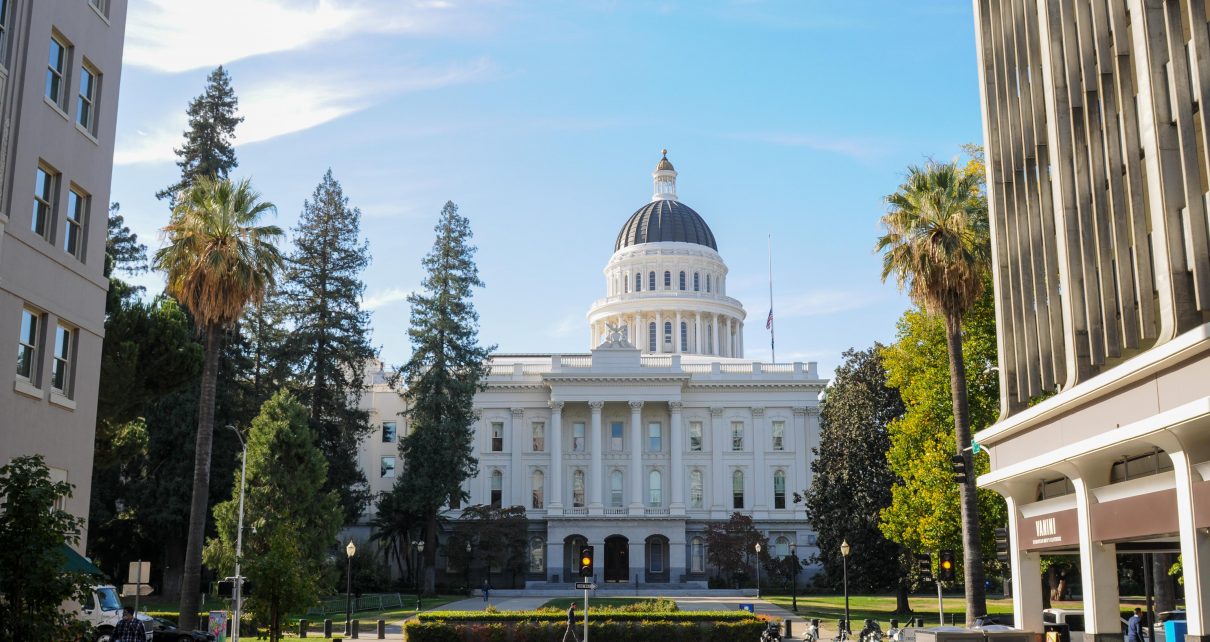
California State Capitol. (Photo: Kevin Sanders for California Globe)
Key Court Decisions in California Statutory Interpretation
There are a number of foundational appellate court decisions to be familiar with if you are involved in the drafting and consideration of legislation
By Chris Micheli, October 27, 2026 11:11 am
The interpretation or construction of statutes by the judicial branch of California is critically important not just to lawyers but also to those involved in the state’s legislative process. There are a number of foundational appellate court decisions to be familiar with if you are involved in the drafting and consideration of legislation.
The following is a list of key court decisions with a brief explanation of their importance for statutory interpretation in this state:
Halbert’s Lumber, Inc. v. Lucky Stores, Inc. (1992) 6 Cal.App.4th 1233
This case is viewed as an important “how-to” guide for California statutory construction. It explicitly maps out the three-step hierarchy of how judges in this state engage in statutory interpretation: First, judges examine the plain language of the statute; second, if the statutory language is ambiguous, then judges look to the legislative history and other extrinsic aids; and, third, judges then review the maxims of jurisprudence or the broader public policy behind the adoption of the statute to ascertain what the Legislature intended.
North American Title Co. v. Superior Court (2024) 15 Cal.5th 1233
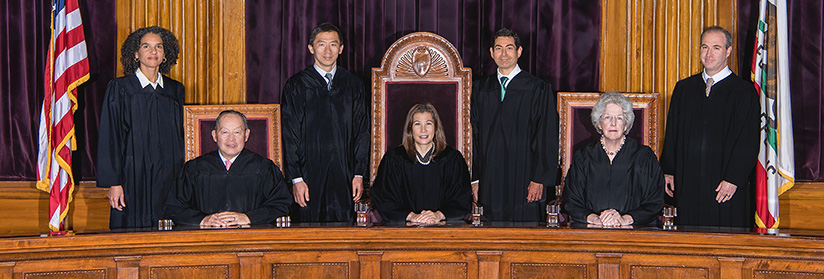
This decision was the most recent statutory interpretation case by a unanimous California Supreme Court, in a ruling written by Chief Justice Guerrero. It provides an excellent modern synthesis of how the court navigates plain meaning versus legislative intent.
People v. Coronado (1995) 12 Cal.4th 145
This case established that the “plain meaning” rule does not compel a court to follow the literal language of a statute if doing so would result in absurd consequences that the Legislature clearly did not intend.
Lockheed Aircraft Corp. v. Superior Court (1946) 28 Cal.2d 481
This early decision introduced principles of liberal construction demonstrating that, when terms are ambiguous or susceptible to multiple interpretations, they should be construed to accomplish the apparent objects and purposes of the statutory act.
Pineda v. Williams-Sonoma, Inc. (2011) 51 Cal.4th 524
This is an excellent case for exploring the statutory definition of words, the ordinary meaning rule, and how broad remedial statutes (e.g., consumer privacy laws) are to be liberally construed by the courts of this state.
Dynamex Operations West, Inc. v. Superior Court (2018) 4 Cal.5th 903
While famous for the “ABC test” in California labor and employment law, the case’s underlying analysis is a good read in how state courts interpret statutory definitions and the scope of broad regulatory terms in California law.
Elsner v. Uveges (2004) 34 Cal.4th 915
This is a key case on what constitutes reliable legislative history in California. It explicitly ranks the persuasiveness of different materials (e.g., committee reports vs. individual legislator statements) and deals with the presumption against retroactivity.
Butcher v. Brouwer (1942) 21 Cal.2d 354
This case discusses the presumption of statutory amendments. It illustrates that, when the Legislature materially changes statutory language, that is evidence of an intent to change the rule. It also means the converse that minor phrasing updates might simply clarify existing law.
Yamaha Corp. of America v. State Board of Equalization (1998) 19 Cal.4th 1
This case establishes that, unlike federal deference, a state executive branch agency’s interpretation of a statute in California is not binding on California courts. This court decision outlines a framework where agency deference depends on the agency’s comparative expertise and thoroughness.
In re J.W. (2002) 29 Cal.4th 200
This case discusses the ejusdem generis canon, which means interpreting general catch-all phrases to be limited by the specific words surrounding them.
State Dept. of Public Health v. Superior Court (2015) 60 Cal.4th 940
This is viewed as a landmark case detailing how to resolve direct statutory conflicts using the specific-over-general rule.
People v. Superior Court (Romero) (1996) 13 Cal.4th 497
This decision is a good example of the Constitutional Avoidance Canon, where the Supreme Court interpreted a statute to preserve judicial discretion to avoid separation-of-powers issues.
In re Albert A. (2000) 80 Cal.App.4th 336
This case is a good explanation of the Rule of Lenity, which requires that ambiguous penal or criminal statutes be interpreted strictly or narrowly in favor of the defendant.
Smith v. Superior Court (2006) 39 Cal.4th 77
The case details California’s primary objective for the courts to ascertain legislative intent to effectuate the purpose of the law. It establishes the hierarchy of starting with the plain text, moving to extrinsic aids if ambiguous, and resorting to reason and practicality if needed.
Tarrant Bell Property, LLC v. Superior Court (2011) 51 Cal.4th 538
This is viewed as the definitive case on the linguistic canon governing mandatory versus permissive language, specifically evaluating the interaction of the words “may” and “shall” within a single statutory scheme.
White v. Ultramar, Inc. (1999) 21 Cal.4th 563
This case does a good job of Illustrating the use of the Ejusdem Generis canon (meaning “of the same kind”) to demonstrate how general catch-all phrases at the end of a list are restricted by the specific terms preceding them.
People v. Arias (2008) 45 Cal.4th 92
This case explains the Expressio Unius Est Exclusio Alterius canon (“the expression of one thing is the exclusion of another”) within California’s legislative frameworks.
Renee J. v. Superior Court (2001) 26 Cal.4th 735
This case covers the grammatical Rule of the Last Antecedent which details how qualifying words or phrases apply to the words immediately preceding them rather than more remote ones.
People v. Gutierrez (2014) 58 Cal.4th 1354
The case uses the Constitutional Avoidance Canon, which is the principle that California courts must construe an ambiguous statute to avoid doubts about its constitutionality if such a construction is reasonably possible.
People v. Avery (2002) 27 Cal.4th 49
This case explains the California application of the Rule of Lenity, which mandates that ambiguous penal statutes must be construed strictly in favor of criminal defendants.
Loeffler v. Target Corp. (2014) 58 Cal.4th 1081
The case illustrates the harmonizing of conflicting statutes (In Pari Materia canon) and the presumption against implied repeals when multiple California Codes overlap.
People v. Pieters (1991) 52 Cal.3d 894
A classic illustration of the Absurdity Doctrine (or Golden Rule). The case shows that, while plain language dominates, a court will depart from a literal reading of a statute if it would lead to absurd consequences that completely frustrate the Legislature’s clear intent.


- Can California’s Prop 40 Apply to Non-Billionaires? - October 27, 2026
- Credit for Taxes Paid - October 27, 2026
- Key Court Decisions in California Statutory Interpretation - October 27, 2026
RELATED ARTICLES
-
 December 19, 2022
-
 September 12, 2024
-
 March 18, 2022