
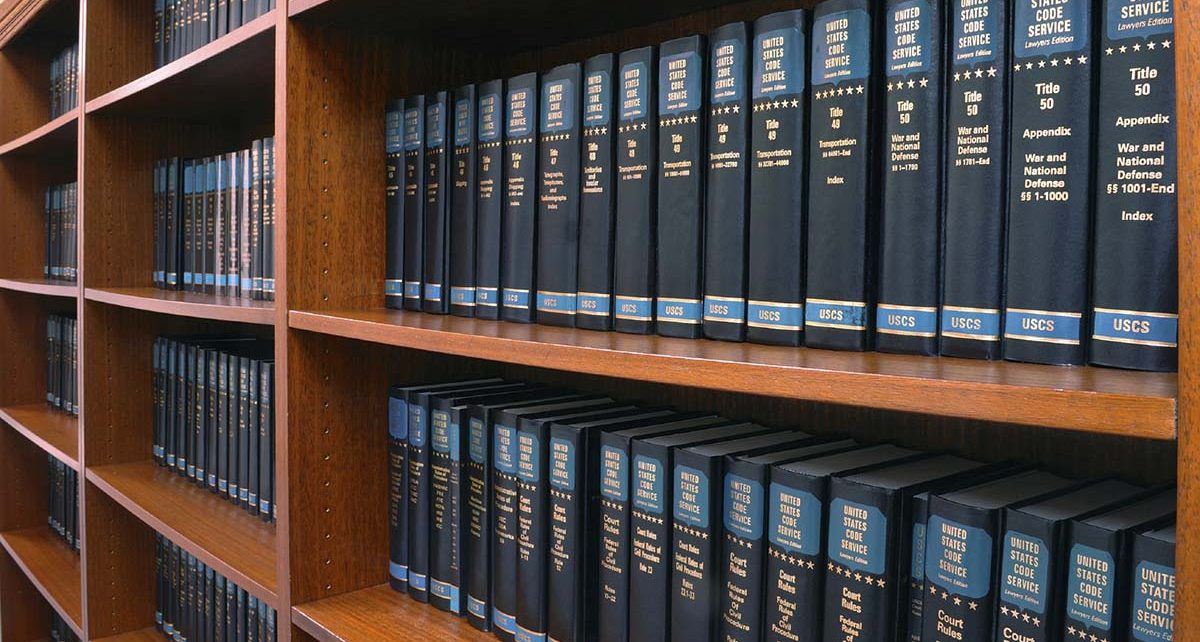
West's Legal Forms. (Photo: ebay)
Nonprofit Public Benefit Corporations
Article 3 of Chapter 1 of Part 2 of Division 2 of Title 1 deals with articles of incorporation for nonprofit public benefit corporations
By Chris Micheli, October 26, 2026 7:40 am
Article 3 of Chapter 1 of Part 2 of Division 2 of Title 1 deals with articles of incorporation for nonprofit public benefit corporations in this state.
Section 5130 requires the articles of incorporation of a corporation formed under this part to set forth five specified items of information.
Section 5131 allows the articles of incorporation to set forth a further statement limiting the purposes or powers of the corporation.
Section 5132 allows the articles of incorporation to set forth any of the specified provisions, which are not effective unless expressly provided in the articles. Nothing contained in law affects the enforceability, as between the parties thereto, of any lawful agreement not otherwise contrary to public policy. The articles of incorporation may set forth any of the four specified provisions.
Section 5133 explains that, for all purposes other than an action in the nature of quo warranto, a copy of the articles of a corporation duly certified by the Secretary of State is conclusive evidence of the formation of the corporation and prima facie evidence of its corporate existence.
Section 5134 specifies that, if initial directors have not been named in the articles, the incorporator or incorporators, until the directors are elected, may do whatever is necessary and proper to perfect the organization of the corporation, including the adoption and amendment of bylaws of the corporation and the election of directors and officers.
Title 1, Division 2, Part 2, Chapter 1, Article 4 deals with powers of nonprofit public benefit corporations in this state.
Section 5140 provides that a corporation, in carrying out its activities, has all of the powers of a natural person, including the power to do fourteen specified actions.
Section 5141 states that no limitation upon the activities, purposes, or powers of the corporation or upon the powers of the members, officers, or directors, or the manner of exercise of the powers, contained in or implied by the articles, are to be asserted as between the corporation or member, officer or director and any third person.
Section 5142 provides that any of the five specified persons may bring an action to enjoin, correct, obtain damages for or to otherwise remedy a breach of a charitable trust. In an action under this section, the court may not rescind or enjoin the performance of a contract unless three specified conditions are met.
Article 5 of Chapter 1 of Part 2 of Division 2 of Title 1 of the Corporations Code deals with the bylaws and organization of nonprofit public benefit corporations in this state.
Section 5150 allows the bylaws to be adopted, amended or repealed by the board unless the action would materially and adversely affect the rights of members as to voting or transfer. The articles or bylaws may restrict or eliminate the power of the board to adopt, amend or repeal any or all bylaws.
Section 5151 requires the bylaws to set forth the number of directors of the corporation, or the method of determining the number of directors of the corporation, or that the number of directors cannot be less than a stated minimum nor more than a stated maximum with the exact number of directors to be fixed.
Section 5152 allows a corporation to provide in its bylaws for delegates having some or all of the authority of members.
Section 5153 allows a corporation to provide in its bylaws for voting by its members or delegates on the basis of chapter or other organizational unit, or by region or other geographic grouping.
Corporations Code Title 1, Division 2, Part 2, Chapter 2 deals with nonprofit public benefit corporations and their directors. Article 1 contains general provisions.
Section 5210 requires each corporation to have a board of directors. Subject to the provisions of this part and any limitations in the articles or bylaws relating to action required to be approved by the members (Section 5034), or by a majority of all members (Section 5033), the activities and affairs of a corporation shall be conducted and all corporate powers shall be exercised by or under the direction of the board. The board may delegate the management of the activities of the corporation to any person or persons, management company, or committee however composed,
Section 5211 applies seven specified rules. An action required or permitted to be taken by the board may be taken without a meeting if all directors individually or collectively consent in writing to that action and if the number of directors then in office constitutes a quorum. The written consent or consents must be filed with the minutes of the proceedings of the board.
Section 5212 allows the board, by resolution adopted by a majority of the number of directors then in office, provided that a quorum is present, create one or more committees, each consisting of two or more directors, to serve at the pleasure of the board. Appointments to the committees must be by a majority vote of the directors then in office, unless the articles or bylaws require a majority vote of the number of directors.
Section 5213 requires a corporation to have four specified officers.
Section 5214 provides that any note, mortgage, evidence of indebtedness, contract, conveyance or other instrument in writing, and any assignment or endorsement thereof, executed or entered into between any corporation and any other person, when signed by any one of the chairperson of the board, the president or any vice president and by any one of the secretary, any assistant secretary, the chief financial officer or any assistant treasurer of such corporation, is not invalidated as to the corporation by any lack of authority of the signing officers in the absence of actual knowledge on the part of the other person that the signing officers had no authority to execute the same.
Section 5215 provides that the original or a copy in writing or in any other form capable of being converted into clearly legible tangible form of the bylaws or of the minutes of any incorporators’, members’, directors’, committee or other meeting or of any resolution adopted by the board or a committee thereof, or members, certified to be a true copy by a person purporting to be the secretary or an assistant secretary of the corporation, is prima facie evidence of the adoption of such bylaws or resolution or of the due holding of such meeting and of the matters stated therein.


- Nonprofit Public Benefit Corporations - October 26, 2026
- Court Jurisdiction and Venue - October 25, 2026
- Use of Dictionaries in California Statutory Construction - October 24, 2026
RELATED ARTICLES
-
 April 14, 2026
-
 August 11, 2026
-
 July 3, 2026