
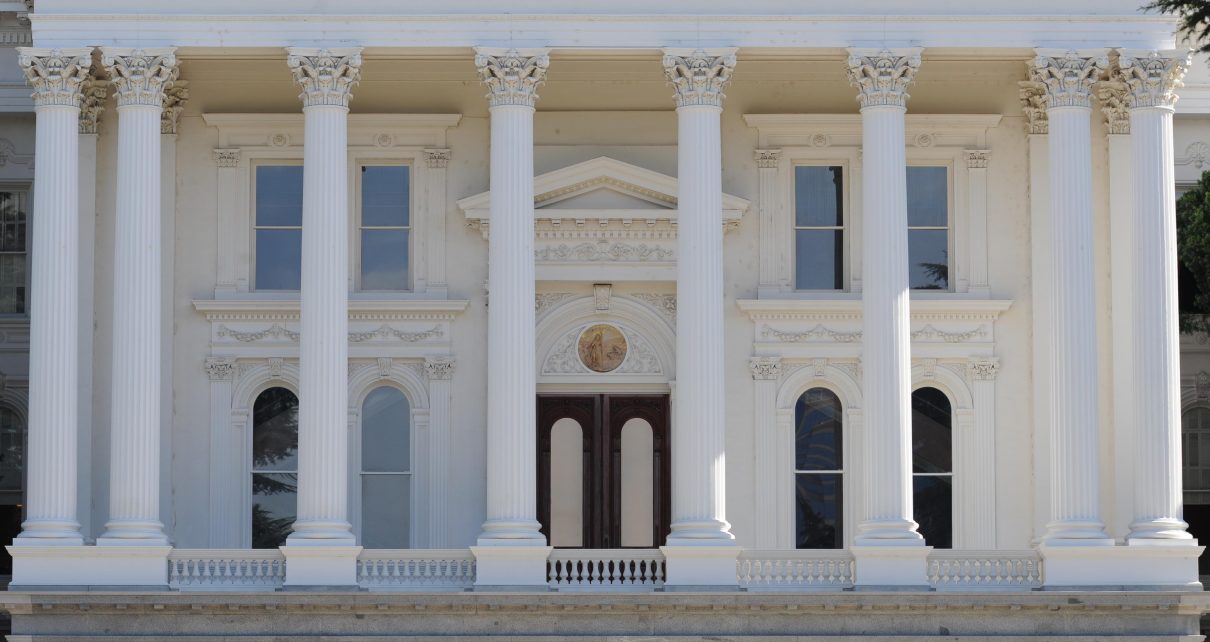
California State Capitol. (Photo: Kevin Sanders for California Globe)
Procedures for Determining Pilot Tariffs
There are numerous procedural rules related to the setting of dates
By Chris Micheli, October 24, 2025 2:30 am
Division 5, Chapter 6, Article 2 of the California Harbors and Navigation Code deals with general provisions related to pilotage tariff determinations and Procedures for pilots in Monterey Bay and the Bays of San Francisco, San Pablo, and Suisun.
Section 1255 specifies that the administrative adjudication provisions of the Administrative Procedure Act apply to an adjudicative proceeding required to be conducted under this chapter, unless the requirements of this chapter relating to the proceeding provide otherwise.
Section 1256 defines the following terms: “executive director,” “intervenor,” “party,” “person,” “petitioner,” “stakeholder,” “substantial interest in the pilotage tariff,” and “tariff.”
Article 3 deals with prepetition procedures. Section 1260 provides that any person intending to petition to request a change in pilotage rates is required to file a notice of intent to petition with the board, with a copy served to interested stakeholders. The notice of intent to petition has to contain specified information.
Section 1261 requires the executive director, upon receipt of a notice of intent to petition, to take three specified actions.
Section 1262 states that, within 20 days of publication of the notice of intent to petition at a duly noticed meeting of the board, the filing petitioner must provide a notice of a proposed meeting schedule to all interested stakeholders for the purposes of holding a meeting or series of prepetition meetings for the purposes described in this section.
The purpose of the meetings during the notice of intent to petition period is to clarify the issues presented in the notice of intent to petition, to explore means of narrowing and simplifying the issues as much as possible, and to consider areas of substantive agreement and substantive disagreement.
Article 4 deals with petitions. Section 1265 states that any person with a substantial interest in the pilotage tariff may file a petition with the board.
Section 1266 provides that a petition filing is in order after 90 days of provision of service of a copy of the notice of intent to petition or the reading of the notice of intent to petition at a duly noticed meeting of the board, whichever is earlier.
Section 1267 requires a petition filed under this chapter to include all five specified components. A petition filed may include any of the specified information. A petitioner has to file with the board specified documents.
Section 1268 requires, upon receipt of a petition, the executive director to do three specified tasks.
Section 1269 provides that any stakeholder with a substantial interest in the pilotage tariff may file a written request to intervene in a petition proceeding under this chapter. A request to intervene has to include all four specified items. The written request must be received by the administrative law judge within 20 calendar days of petition filing.
Section 1270 requires any intervening party, or proposed intervening party, to file an answer, counterpetition, or response within 30 calendar days of petition filing. For good cause shown, the administrative law judge may extend the time for filing by an additional 20 days.
Section 1271 requires the administrative law judge to hold an initial petition management conference to set a hearing date, establish a complete petition calendar, rule on requests to intervene, and address any other timely or appropriate business presented by the parties. There are numerous procedural rules related to the setting of dates.
Section 1272 provides that the administrative law judge retains the discretion to direct additional briefing or presentation of evidence by the parties posthearing. All parties have the right to respond at the hearing and in writing posthearing to a direction by the administrative law judge. During the public hearing on the petition, the executive director is required to be in attendance and available to the administrative law judge.
Section 1273 specifies that, at the conclusion of the public hearing on the petition and until the issuance of the tentative order and tariff, the administrative law judge may submit bench interrogatories and discovery requests to a party or parties. All parties have the right to respond to posthearing bench interrogatories and discovery requests.
Section 1274 states that members of the board and board staff cannot engage in ex parte communications regarding the pilotage tariff, pilotage rates, or issues that are the subject of a pilotage tariff petition with any party, stakeholder, member of the public, or other board member during the period beginning with the request by the executive director for assignment of an administrative law judge until the time that any potential for a related board hearing on the petition has concluded.
Article 5 deals with orders. Section 1275 requires the administrative law judge to issue a tentative order and tariff inclusive of the findings of law and findings of fact necessary to support the tentative order and tariff.
Section 1276 requires, upon receipt of a tentative order and tariff from an administrative law judge, the executive director to provide board members, parties, and the public with specified documents.
Section 1277 states that, if no request for the tentative order and tariff to be agendized is received by the executive director within 10 calendar days of the notice, the tentative order and tariff are final as a matter of law.
Section 1278 provides that, if a request for the tentative order and tariff to be agendized is received by the executive director within 10 calendar days of the notice, then the tentative order and tariff are to be agendized for the next regular monthly meeting of the board. Upon consideration of the tentative order and tariff at the next regular monthly meeting of the board, the board is required to hold a public hearing in accordance with the specified procedures.
The public has to be provided with the opportunity to comment on the tentative order and tariff and all public comments are recorded in board minutes. Upon conclusion of the public hearing, the members of the board are required to take one of the five specified actions.
There are specified procedures for when the board accepts the tentative order and tariff or takes no action, rejects the tentative order and tariff, or rerefers the tentative order and tariff to the administrative law judge.
Section 1279 specified the procedures if the board opts to rerefer a tentative order and tariff to the administrative law judge. Then the further review of the petition by the administrative law judge must be conducted pursuant to this section. The administrative law judge must follow the specified procedures.


- Can California’s Prop 40 Apply to Non-Billionaires? - October 27, 2026
- Credit for Taxes Paid - October 27, 2026
- Key Court Decisions in California Statutory Interpretation - October 27, 2026
RELATED ARTICLES
-
 November 10, 2024
 -
 September 14, 2025
 -
 February 13, 2025