
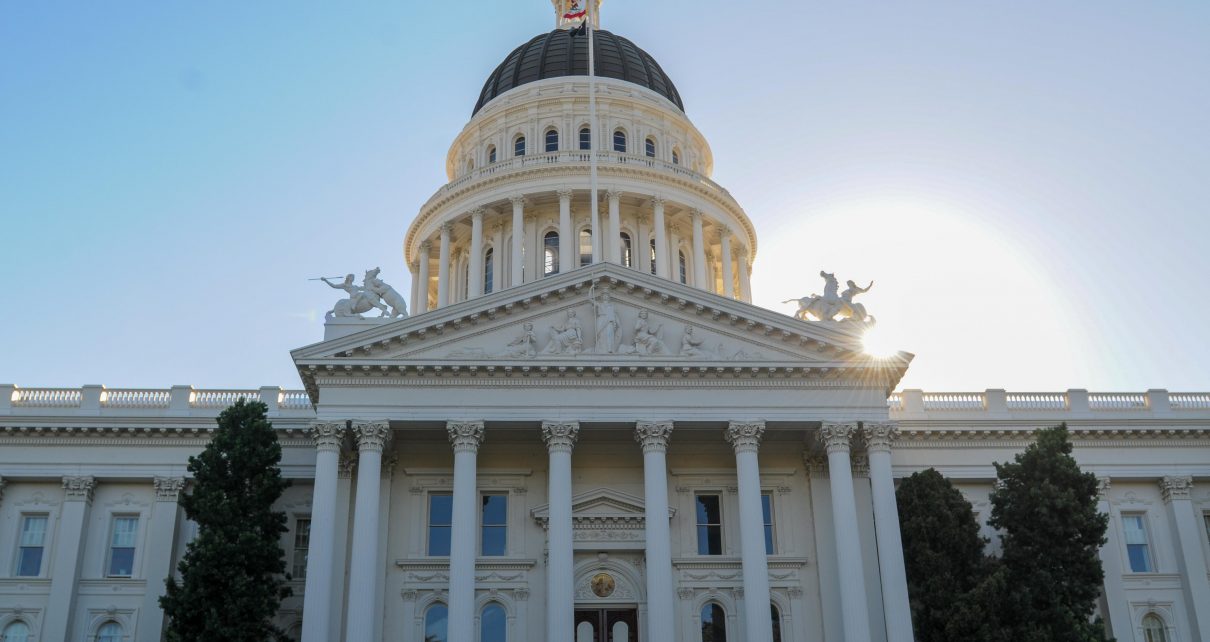
California State Capitol. (Photo: Kevin Sanders for California Globe)
Wills in California
Provides that an individual 18 or more years of age who is of sound mind may make a will
By Chris Micheli, July 29, 2026 2:30 am
Division 6, Part 1 of the Probate Code deals with wills. Chapter 1 contains general provisions.
Section 6100 provides that an individual 18 or more years of age who is of sound mind may make a will. A conservator may make a will for the conservatee if the conservator has been so authorized by a court order.
Section 6100.5 provides that an individual is not mentally competent to make a will if, at the time of making the will, either of two specified conditions is true.
Section 6101 allows a will to dispose of three specified types of property.
Section 6102 allows a will to make a disposition of property to any person, including to any of seven specified entities.
Section 6104 says that a will, the validity of which is made conditional by its own terms, is to be admitted to probate or rejected, or denied effect after admission to probate, in conformity with the condition.
Chapter 2 deals with the execution of wills in this state. Section 6110 provides that a will shall be in writing and satisfy the requirements of this section. The will is required to be signed by one of the three specified persons.
Section 6111 states that a will that does not comply with Section 6110 is valid as a holographic will, whether or not witnessed, if the signature and the material provisions are in the handwriting of the testator. If a holographic will does not contain a statement as to the date of its execution, two possible outcomes are specified. Any statement of testamentary intent contained in a holographic will may be set forth either in the testator’s own handwriting or as part of a commercially printed form will.
Section 6111.5 makes extrinsic evidence is admissible to determine whether a document constitutes a will, or to determine the meaning of a will or a portion of a will if the meaning is unclear.
Section 6112 provides that any person generally competent to be a witness may act as a witness to a will. A will or any provision thereof is not invalid because the will is signed by an interested witness.
Unless there are at least two other subscribing witnesses to the will who are disinterested witnesses, the fact that the will makes a devise to a subscribing witness creates a presumption that the witness procured the devise by duress, menace, fraud, or undue influence. This presumption is a presumption affecting the burden of proof. This presumption does not apply where the witness is a person to whom the devise is made solely in a fiduciary capacity.
Section 6113 provides that a written will is validly executed if its execution complies with any of the three specified actions.
Chapter 3 deals revocation and revival of wills. Section 6120 provides that a will or any part thereof is revoked by either of two specified actions.
Section 6121 states that a will executed in duplicate or any part thereof is revoked if one of the duplicates is burned, torn, canceled, obliterated, or destroyed, with the intent and for the purpose of revoking it, by either the testator or another person in the testator’s presence and by the testator’s direction.
Section 6122 provides that, unless the will expressly provides otherwise, if after executing a will the testator’s marriage is dissolved or annulled, the dissolution or annulment revokes three specified actions. If any disposition or other provision of a will is revoked solely by this section, it is revived by the testator’s remarriage to the former spouse.
Section 6122.1 states that, unless the will expressly provides otherwise, if after executing a will the testator’s domestic partnership is terminated, the termination revokes all three specified provisions or dispositions.
Section 6123 provides that, if a second will which, had it remained effective at death, would have revoked the first will in whole or in part, is thereafter revoked by acts under existing law, the first will is revoked in whole or in part unless it is evident from the circumstances of the revocation of the second will or from the testator’s contemporary or subsequent declarations that the testator intended the first will to take effect as executed.
Section 6124 provides that, if the testator’s will was last in the testator’s possession, the testator was competent until death, and neither the will nor a duplicate original of the will can be found after the testator’s death, it is presumed that the testator destroyed the will with intent to revoke it.
Chapter 4 deals with reference to matters outside of the will. Section 6130 provides that a writing in existence when a will is executed may be incorporated by reference if the language of the will manifests this intent and describes the writing sufficiently to permit its identification.
Section 6131 allows a will to dispose of property by reference to acts and events that have significance apart from their effect upon the dispositions made by the will, whether the acts and events occur before or after the execution of the will or before or after the testator’s death. The execution or revocation of a will of another person is such an event.
Section 6132 allows a will to refer to a writing that directs disposition of tangible personal property not otherwise specifically disposed of by the will, except for money that is common coin or currency and property used primarily in a trade or business. A writing directing disposition of a testator’s tangible personal property is effective if all of the specified conditions are satisfied.
The testator may make subsequent handwritten or signed changes to any writing. If there is an inconsistent disposition of tangible personal property as between writings, the most recent writing controls.


- Support Services and the Sales Tax - October 19, 2026
- Employee Notices - October 18, 2026
- Advice on Navigating the California Rulemaking Process - October 18, 2026
RELATED ARTICLES
-
 March 19, 2026
 -
 July 11, 2026
 -
 March 15, 2026