
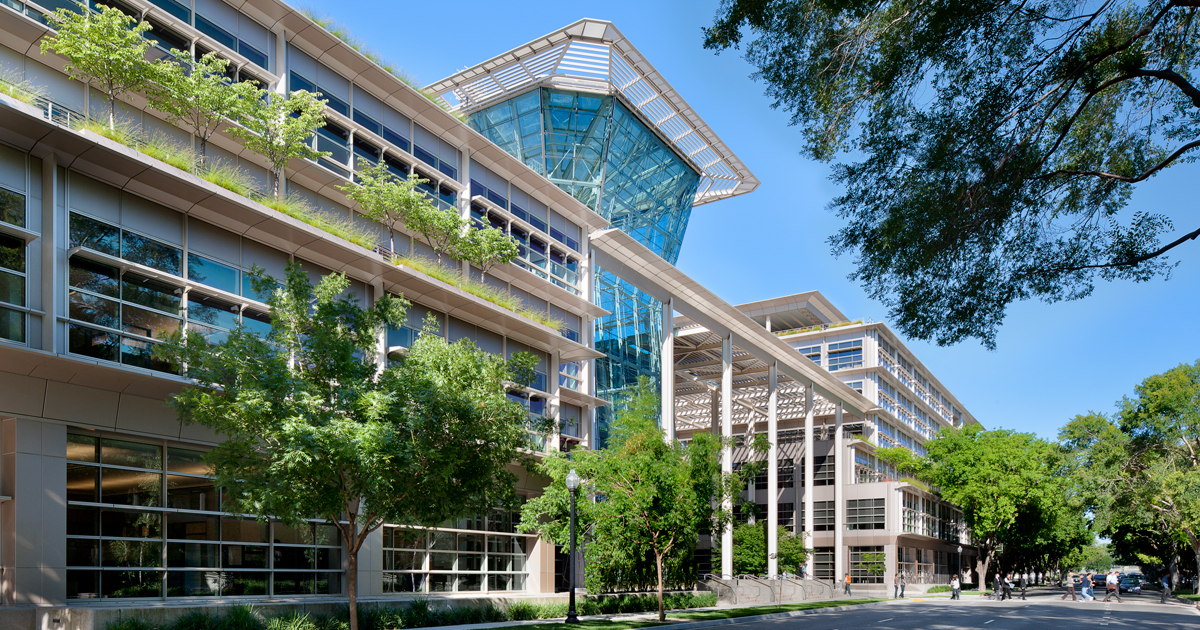
CalPERS headquarters, Sacramento. (Photo: calpers.ca.gov)
California Proves Pension Reform Was Never a Settlement
A strong investment year bought CalPERS some breathing room – AB 1383 spends it before it’s banked
By Jay Rogers, July 29, 2026 6:00 am
California’s Assembly Bill 1383 passed the Assembly 70 to 2 in January. Set aside for a moment what the bill does. Start with the vote. Seventy members, from the most progressive Democrat in the caucus to all but two Republicans, agreed to unwind the central protections of the state’s 2013 pension reform. That is not bipartisan consensus. That is bipartisan capitulation, and it tells you something the 2013 reform’s architects never wanted tested: the guardrails were a pause, not a settlement, and they hold only until organized labor decides it is time to lift them.
I have spent more than thirty years managing institutional capital, structuring private credit facilities, and advising family offices on the difference between a funded obligation and a promise resting on hope. That distinction is the whole of the fiduciary standard. A pension plan is a mathematical contract: contributions plus investment returns must equal or exceed future payouts, full stop. AB 1383 doesn’t touch the math. It just assumes someone else will fix it later.
The bill, carried by Assemblywoman Tina McKinnor and co-sponsored by the Peace Officers Research Association of California and the California Professional Firefighters, rolls back three specific guardrails from the Public Employees’ Pension Reform Act of 2013. It lowers the normal retirement age for CalPERS safety members from 57 to 55. It raises the pensionable compensation cap for employees outside Social Security from 120% to 135% of the federal wage base, lifting the ceiling by nearly $60,000 to roughly $249,000 a year, and extends that richer cap to every CalPERS and CalSTRS member, not just public safety. And it reopens the door PEPRA closed on employer “pickups” of employee contributions, letting local agencies absorb costs the 2013 law assigned to workers.
The bill faces the Senate Appropriations Committee, the last committee with the authority to hold it on suspense before a floor vote, at 10 a.m. on Monday, Aug. 3. CalPERS’ own actuarial estimate puts the cost at $282 million in new annual contributions and $4.8 billion in additional long-term liability under the base case. If local agencies use the bargaining room AB 1383 creates to adopt richer formulas, that annual figure climbs to $353 million, and the liability grows further still. Those obligations stack on top of a fund already carrying $153 billion in unfunded liabilities against a 79% funded ratio as of its June 30, 2025 valuation. A strong investment year bought CalPERS some breathing room. AB 1383 spends it before it’s banked.
The coalition itself is the argument. Progressive Democrats voted for AB 1383 because organized labor asked them to. Nearly every Republican voted for it because opposing law-enforcement and firefighter unions is not a fight most conservatives in Sacramento are willing to pick, fiscal restraint notwithstanding. Only Assemblymen Carl DeMaio and David Tangipa voted no. That’s the accountability vacuum in a single roll call: a bill with a nine-figure annual price tag and a multibillion-dollar liability tail cleared the Assembly with almost no one asking who pays for it when the next downturn arrives.
California has run this experiment before. In 1999, Gov. Gray Davis signed SB 400, sweetening state worker benefits while the dot-com market was still climbing and CalPERS was fully funded. The market stopped climbing. Unfunded liabilities exploded, cities cut services and raised taxes, and Sacramento spent the next decade cleaning up. PEPRA, in 2013, was the legislature’s written admission that the 1999 math had failed. Marcia Fritz, a longtime California pension watchdog, says lawmakers pushing AB 1383 are “drinking the Kool-Aid that the markets are never going to go down.” She’s tracked this movie before. She knows how it ends.
Supporters call AB 1383 a recruitment and retention fix, and the recruitment problem in public safety is real. But a retention bonus and a permanent benefit formula are not the same instrument and conflating them is how California got into this position the first time. Once AB 1383 is signed, California’s vested-rights doctrine, which courts have applied to protect earned public pension benefits from later reduction, means the enhanced formula cannot be undone for any member who has already qualified for it, regardless of what CalPERS’ investment returns do over the next twenty years.
The Senate Appropriations Committee has one job left: price this bill honestly and hold it on suspense until someone identifies the funding source PEPRA was built to make unnecessary. Every legislator who voted yes in January is betting that the next investment cycle behaves better than the last one did. California’s pension math has punished that bet twice already. There is no reason to expect a third result.


- Class President by Appointment - October 14, 2026
- Fewer Kids, More Payroll: LAUSD’s Math Problem - October 11, 2026
- Teachers Need Returns, Not Another Subcommittee - October 4, 2026
RELATED ARTICLES
-

-
 September 15, 2021
 -
 November 27, 2019
I would like to know how many of Newsom’s cronies get full benefits for filling a seat in an ineffective public agency for a week.