

Trump Admin Clamps Down on Hackers, ‘Ghost Students’ and Bots Fraudulently Collecting Federal and State Financial Aid
The Globe reported on hackers, crooks and bots who use stolen identities for the purpose of obtaining financial aid in California’s colleges and universities, ripping taxpayers off of billions of dollars
By Katy Grimes, May 17, 2026 9:20 am
In 2010, President Barack Obama eliminated the federal guaranteed student loan program and nationalized student loans. Prior to this takeover, private lenders offered student loans at low interest rates.
The Department of Education effectively became a lending institution and is now the only place to administer student loans.
As a result, universities and colleges throughout the country increased the cost of tuition. Suddenly, even community colleges were charging exorbitant fees and providing government financial aid.
“Obama sold this government takeover as a way to save money — why bear the costs of guaranteeing private loans, he said, when the government could cut out the middleman and lend the money itself?” Investors Business Daily reported in 2015. “The cost savings didn’t happen. In fact, the Congressional Budget Office increased its 10-year forecast for the loan program’s costs by 30%.”
In October, the Globe reported on hackers, crooks and bots who use stolen identities for the purpose of obtaining financial aid in California’s colleges and universities, ripping taxpayers off of billions of dollars. And, it’s been going on heavily since the covid shutdown.
California colleges must authenticate online student’s identities who apply for state or federal financial aid. But they weren’t, and probably still aren’t.
The Trump administration is doing something about this fraud.
On April 26, 2026, the U.S. Department of Education launched a new real-time fraud detection and risk assessment tool integrated directly into the Free Application for Federal Student Aid (FAFSA®) process.
The Department of Education explains:
“During the COVID-19 pandemic, the Biden Administration removed key verification safeguards, diverted resources away from fraud prevention, and required less than one percent of students to verify their identity following the submission of the FAFSA. These policies led to institutions across the country coming under siege by highly sophisticated fraud rings, ‘ghost students,’ and AI bots. In response, the Trump Administration launched a nationwide effort to combat identity fraud in the federal student aid programs by requiring institutions to verify the identity of each newly enrolled student – leading to more than $1 billion in savings.
Effective immediately, fraud detection is built directly into the FAFSA itself, with every applicant evaluated in real-time using risk-based identity screening. Applicants who display a certain level of fraud risk will now be required to present government-issued identification before accessing federal student aid funds such as Pell Grants and federal student loans.
Since the tool launched two weeks ago, the administration has found about 300,000 fraudulent applications that amounted to $60 million in student loans, the Daily Caller reported.
In October, one California professor told the Globe she was living this nightmare. She reported that she drops as many as 50% of her “ghost students” whom she cannot verify as real people.
Our college professor, Kim Rich, searched all nine colleges in her district, the Los Angeles Community College District – there are 10,286 online sections within the colleges. “If just one fraudulent student in each class received $3,000 for three semesters in each class, that’s $30,858,000,” Rich said. She multiplied that by 4 years, and it grows to ~$123,000,000 just for her colleges.
That’s billions, not millions.
Consequently, she has her students take two quizzes before the drop period in order to flush out the bots, and requires them to do a Zoom meeting with her. Last semester, she only had 2 of 40 students left after dropping all of the bots.
The Department of Education also recently began conducting a one-time review of all previously submitted 2026-27 FAFSA forms using the new screening technology, ensuring that all federal student aid program dollars are supporting students and families, not fraudsters. The Department estimates that its efforts to identify and deny federal student aid to fraudulent students will save taxpayers over $1 billion during this year’s FAFSA cycle.
“This new fraud detection tool will stop fraud at the start of the process, before money goes out the door, strengthening the integrity of our programs and expanding opportunity for students who depend on these resources to finance their postsecondary education,” said U.S. Secretary of Education Linda McMahon. “Under President Trump’s leadership, we’ve not only reversed the previous Administration’s years of mismanagement of the federal student aid portfolio, but have rooted out fraud, waste, and abuse—keeping $1 billion out of fraudsters’ hands and putting it back in the pockets of real students and families.”
Federal Student Aid warns fraudsters:
- The Department has completed the one-time fraud detection screening of all 2026–27 FAFSA forms that were submitted before real-time fraud detection was implemented. As a result of this review, approximately 300,000 applications from the 2026–27 award year have been selected for Verification Tracking Group V5. Schools will receive system-generated transactions for any application selected through this process. Each selected application was identified based on indicators associated with suspected fraud risk.
- The Department wishes to clarify that in addition to all applicants completing an initial FAFSA submission, a student that submits a new correction online will also be evaluated for fraud. As a result, if a student submits a correction and was not previously evaluated for fraud risk during the initial FAFSA submission or a prior correction, the application will be evaluated at that time and the appropriate fraud-related comment codes will be included on the resulting transaction, as applicable. Applications selected as part of the one-time fraud detection mentioned in the previous bullet will be considered as evaluated for fraud to avoid duplicate verification.
As applicants complete the FAFSA, the system, developed in partnership with a leading financial services firm, evaluates risk using data from the FSA ID creation and form submission. It assesses for identity fraud indicators.
The Education Department also strengthened real-time data-sharing with the Social Security Administration to prevent identity theft and stop money from going to dead individuals, saving the American taxpayer more than $30 million.
The Department resumed automated post-screening of student aid records, preventing overpayments to ensure lifetime federal Pell Grant limits are respected and enforced, saving American taxpayers more than $10 million.
The Department partnered with the U.S. Department of Homeland Security to ensure illegal aliens no longer receive federal student aid funds.
Not only is this is what Americans voted for, the criminality of the Biden Administration is being exposed one agency at a time.

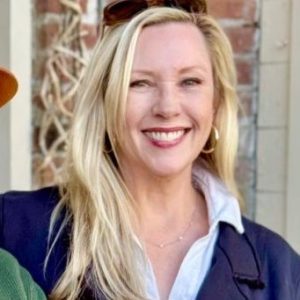
A California native and Navy mom, Katy lives in Sacramento, CA.

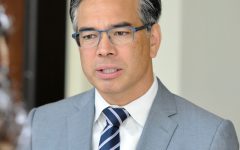

Once again, California’s AG, Rob Bonta does nothing, despite the fraud being identified six years ago, and our federal government has to step in.
Bonta is a Crook! He used Campaign funds to Lawyer up for the Duong Scandel.
So is Beccera!!!!!