
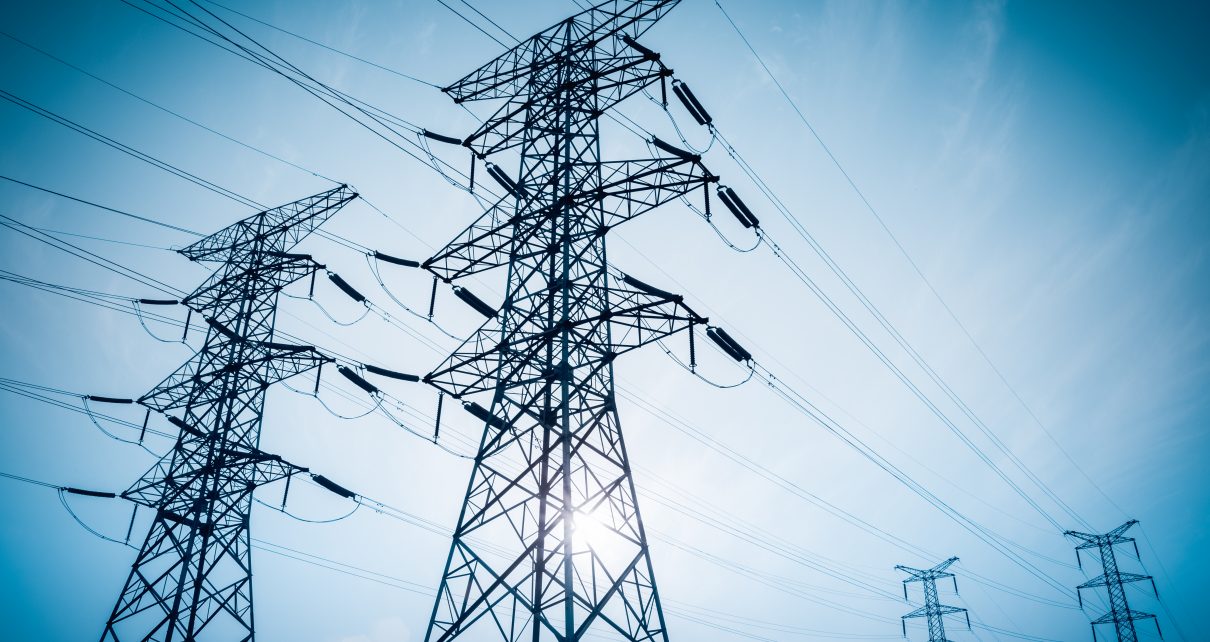
Electricity Transmission Pylon at Dusk. (Photo: chuyuss/Shutterstock)
California’s Climate Lawsuit Avoids the Real Work
California’s lawsuit is about control and reflects a governing mindset that favors lawsuits and executive orders over collaboration and accountability
By John Allard, January 26, 2026 11:45 am
Anyone who has paid a California electric bill lately knows how bad things have gotten. Costs are soaring, the grid is strained, and policymakers in Sacramento seem more focused on courtroom sound bites than keeping the lights on. To that end, California’s latest climate lawsuit against American energy producers may grab headlines, but it will not lower emissions, modernize infrastructure, or make life more affordable for families already struggling to keep up.
Attorney General Rob Bonta’s 2023 lawsuit accuses energy producers of misleading the public about climate change. But it conveniently ignores the fact that California’s energy policies have long relied on traditional fuels to fund state programs and meet consumer demand, even as leaders claimed to be phasing them out. In fact, California’s Public Resources Code even explicitly directs state supervisors to “encourage the wise development of oil and gas resources to best meet oil and gas needs in this state.” Yet instead of addressing these deep credibility issues and admitting the failures of their unrealistic green energy proposals, state officials now want the courts to rewrite history and send the bill to energy consumers.
The problems California faces are not due to a lack of ambition, but execution. California has set some of the most aggressive climate targets in the world, but the infrastructure needed to reach them is years behind schedule. Transmission upgrades, renewable-energy projects, and grid storage remain mired in permitting delays and bureaucratic review. Each new regulation or lawsuit adds yet another layer of uncertainty for investors and developers, driving up costs and pushing projects elsewhere.
Meanwhile, residents of the Golden State are paying the price. California families face electricity rates nearly double the national average and some of the highest gasoline prices in the country. For low- and middle-income households, these monthly realities make it harder to live, work, and commute. Suing American energy producers does nothing to solve these problems. If anything, it risks making them worse by discouraging investment in the systems that keep California running.
If our leaders truly wanted to bring relief to California families while working towards their climate targets, they would start by reforming the permitting and funding structures that delay new energy projects for years. They would invest in grid modernization, advanced storage, and cleaner domestic production of oil and natural gas rather than depending on more carbon-intensive imported fuels and foreign supply chains. They would also empower local communities to shape their own energy priorities instead of dictating one-size-fits-all mandates from Sacramento.
Other states are already doing this successfully. Across the country, bipartisan coalitions are streamlining approval for renewables, expanding nuclear capacity, and creating local energy investment funds that attract both public and private capital. California could easily do the same if it replaced litigation with leadership. That requires acknowledging the state’s own role in its energy challenges, a step this lawsuit carefully avoids.
There is also a constitutional issue at play. Emissions are a global occurrence that crosses borders and industries. Trying to assign liability for a planetary phenomenon through state courts is a legal stretch that undermines the separation of powers and invites years of costly appeals. Federal courts have consistently ruled that national energy policy is the responsibility of Congress and federal agencies, not individual states seeking to score political points.
Ultimately, California’s lawsuit is not about climate solutions. It is about control. It reflects a governing mindset that favors lawsuits and executive orders over collaboration and accountability. But real progress does not come from courtroom victories. It comes from building, investing, and innovating.
California has everything it needs to solve its energy crisis. What it lacks is focus and leaders with a clear understanding of the issues facing the state. Instead of weaponizing the courts against American energy producers, the state should focus on permitting reform, local empowerment, and infrastructure that delivers results.
The world’s fifth-largest economy should not have to choose between clean air and affordable power. We can and must have both. But that will require Sacramento to spend less time suing and more time solving.


- California’s Climate Lawsuit Avoids the Real Work - January 26, 2026
- AG Bonta’s Climate Lawsuit Escapade Will Hurt Californians - July 9, 2024
RELATED ARTICLES
-
 October 27, 2025
 -
 November 15, 2024
 -
 August 10, 2025
Dump renewable energy projects. It was a failed experiment. The U.S. and Europe have spent $20 trillion on renewable energy, and greenhouse gas emissions have only gone UP!
While I don’t necessarily agree with the lawsuits I can understand them. The plain fact is that these are publicly traded companies the salaries of their management is directly tied to their bottom line. Now tell me if you were a CEO would you rather return shareholders profits as dividend increases and stock buy backs or would you prefer to put them into long term project that are risky and resources intensive for the company and you should also know that in your tenure as CEO you won’t see a dime of that profit if there is any it go to your successor. I think the choice is clear.
You seem to have your own well-being in mind, your own pocket book in mind, your own bloated golden parachute in mind, rather that the well-being of the constituents of our community. that is the problem with a capitalist society. Energy should not be be governed by capitol it should be nationalized. Then and only then might people like George Bush and Donald Trump think twice about going to war over energy be it oil or nuclear.
These are indeed well-informed, constructive criticisms of the climate lawsuits from $acto.P.G.&E.has been allowed to pass-on costs of utility infrastructure fires,etc.to consumers far too often.I don’t agree in nuclear power investment,or petroleum-based.Let’s speak truth to power and hold it& them accountable NOW.Nikolai Tesla was right,his coil could easily power California,and take the profit motive away from the power broker$.What good are we anyway if we can’t stand up to some old businessmen?
You seem to have your own well-being in mind, your own pocket book in mind, your own bloated golden parachute in mind, rather that the well-being of the constituents of our community. that is the problem with a capitalist society. Energy should not be be governed by capitol it should be nationalized. Then and only then might people like George Bush and Donald Trump think twice about going to war over energy be it oil or nuclear.