

Facing a $91M Budget Deficit, Alameda County Passes Reparations Plan
California wasn’t a slave state
By Katy Grimes, July 24, 2026 6:00 am

Alameda County’s Board of Supervisors voted unanimously to pass a reparations plan in the county.
“For centuries, Black residents of Alameda County have endured economic exclusion, housing discrimination, educational inequities, criminal injustice, and systemic harm that continues to ripple across generations,” the Alameda County Reparations Commission says on its website. “The Alameda County Reparations Commission exists to end this cycle. We are not here to debate whether harm occurred — we are here to define how it will be repaired.”
According to the U.S. Census Bureau, Alameda County has a 2025 population of 1,636,630, and the demographics break down as follows:
| Race and Hispanic Origin | |
|---|---|
| White alone, percent |
42.7% |
| Black alone, percent(a) |
9.8% |
| American Indian and Alaska Native alone, percent(a) |
3.0% |
| Asian alone, percent(a) |
36.3% |
| Native Hawaiian and Other Pacific Islander alone, percent(a) |
1.0% |
| Two or More Races, percent |
7.3% |
| Hispanic or Latino, percent(b) |
23.8% |
| White alone, not Hispanic or Latino, percent |
25.9% |
Blacks make up just 9.8% of the population in Alameda County.
The “Black Reparations Action Plan” is a 43-point plan from the Reparations Commission.
Notably, Alameda County has a projected $91.4 million budget shortfall for fiscal year 2026–27.
Not one of the 9.8% of blacks residing in Alameda County were alive when slavery was in practice in the United States, nor do they have any living relatives who were alive at the time. Slavery was abolished in the United States with the ratification of the 13th Amendment on December 6, 1865.
“Although the adopted plan currently has no set price tag, advocates at Tuesday’s meeting stressed that true healing will require a tangible, well-funded commitment from the county, declaring that the time for study has concluded and the era of active repair has begun,” NBC Bay Area reported.
As the Globe has reported for as many years as the California Legislature has been trying to pass reparations of any kind, the Legislative Black Caucus claims this is about “its push for justice and equality.” Thus far, they’ve only been able to pass rather minor bills, authorizing analyses of methodologies for determining an individual’s descendancy, illegally collecting and storing demographic information gathered separately from employees’ personnel records – likely a violation of Proposition 209, the California Civil Rights Initiative, which is a ban on affirmative action. Prop 209 was passed by California voters in 1996, and prohibits discrimination or preferential treatment by the state, public universities, public employment, or other public entities, and banned affirmative action policies.
Nearly all reparations bills or programs would be a violation of Prop 209.
California wasn’t a slave state, by the way. The 1849 California Constitution explicitly banned slavery. When California officially entered the Union in 1850, it did so as a free state, which helped balance the Senate against the slave states at the time.
Slavery has existed on every inhabited continent for at least 4,000 years of recorded history. And humans have enslaved other humans for thousands of years: Europeans enslaved Europeans; Asians enslaved Asians; Africans enslaved Africans; and Native Americans enslaved Native Americans.
Reparations are just a shakedown.
In 2020, California voters even reaffirmed the ban on affirmative action policies and practices by voting down Proposition 16, 57% to 42%. Prop. 16 qualified for the ballot when ACA 5, authored by then-Assemblywoman Shirley Weber (D-San Diego), was passed by the California legislature in 2020. If passed, Prop. 16 would have repealed Proposition 209.
Despite several minor reparations bills passing, and Gov. Newsom signing several into law, Democrats are on notice that what they are doing is discriminatory and illegal.
We finally have some tight legal precedence. As the Globe reported in June, Assistant Attorney General Harmeet K. Dhillon of the Justice Department’s Civil Rights Division, announced that Evanston, Illinois’s “first in the nation” reparations program is discriminatory and illegal. “Dhillon sued the city today challenging the program. Other cities are on notice: discriminate against residents — you’ll hear from us!”
“The U.S. Department of Justice’s Civil Rights Division moved to intervene in a lawsuit challenging a program by the City of Evanston, Illinois, that distributes cash payments and financial assistance for housing solely to black persons, and their descendants, and not to similarly situated persons of other races,” the U.S. Department of Justice announced. “The United States’ proposed complaint in intervention alleges that the city’s actions violate the Equal Protection Cause of the Fourteenth Amendment and the Fair Housing Act.”
“Under the pretext of paying reparations for events more than 100 years ago, the City of Evanston has chosen to distribute millions of dollars in cash and housing benefits to people because of the color of their skin or the color of the skin of their parents, grandparents, or great grandparents,” said Assistant Attorney General Harmeet K. Dhillon. “There are sound ways for a city to remedy past discrimination or direct resources to its most vulnerable citizens and neighborhoods. Simply handing out money based on race, however, is not the answer. It is race discrimination, pure and simple. And it is illegal.”
Alameda County Board of Supervisors, expect to hear from Assistant Attorney General Harmeet K. Dhillon of the Justice Department’s Civil Rights Division, soon.
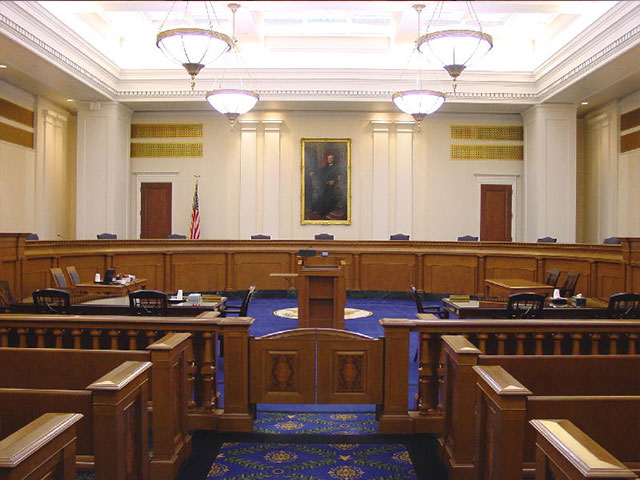
Bonus: Here’s your Alameda County Board of Supervisors



A California native and Navy mom, Katy lives in Sacramento, CA.
- US DOJ Gives California 48-Hours to Review/Address List of Noncitizens Who Received Ballots - October 14, 2026
- Gov. Newsom Finds Sneaky Backdoor Way to Advance Reparations - October 14, 2026
- Xavier Becerra Backs Out of Another Debate with Steve Hilton - October 13, 2026
RELATED ARTICLES
-

-
 January 28, 2025
 -

Pathetic. Unconstitutional. Discriminatory. Fiscally irresponsible.
Alameda County Board of Supervisors? “Let’s do it!”
“For centuries, Black residents of Alameda County have endured economic exclusion, housing discrimination, educational inequities, criminal injustice, and systemic harm that continues to ripple across generations,” the Alameda County Reparations Commission says on its website. “ Which Centuries would those be? I know, the 20th and 21st.
List where overt and documented discrimination is going on today. That is what you attack. The rest of this is a made-up shakedown. Has anyone been denied entrance to the state’s community college system due to race? Prove it. Because no one is denied access the greatest economic second chance of all – the California community college system.
If anything, Whites will soon need official protections and reparations having been subject to so much K-12 overt indoctrination and discrimination against them, for at least one generation. Democrat-backed illegal border invasions caused demographic dilution extra-legally as well, for those obsessed with keeping score. Shall none dare call open borders genocide or ethnic cleansing?
This is nothing new. Democrats are starting to slip with black voters. Blacks are realizing that Democrats don’t create conditions for blacks to thrive. Instead, Democrats let crime permeate their neighborhoods, promote schools that don’t teach, and place marijuana dispensaries to keep them drugged up. So reparations are a Hail Mary use of taxpayer money to buy back black votes.