

Legal System. (Photo: BillionPhotos/Shutterstock)
Life Coach Sues California Over Right to Speak With Clients
‘California’s psychology licensing law is so broad and so vague that regulators can use it to prosecute virtually anyone who talks with people for money’
By Katy Grimes, June 4, 2026 12:26 pm
A California life coach filed a federal lawsuit Wednesday challenging the State’s attempts to prosecute her for talking about mental health without a psychology license. Anna Runkle argues that California is violating the First Amendment by requiring her to have a license to speak with paying clients.
The First Amendment to the United States Constitution, as applied to the States through the Fourteenth Amendment, prohibits government officials from enforcing statutes that restrict more speech than necessary when the limitation on speech is otherwise permissible, the lawsuit filed by Pacific Legal Foundation says.
Through her business, “Crappy Childhood Fairy,” Ms. Runkle now has over one million YouTube subscribers, has published two books, and offers videos and coaching sessions to teach others how to heal and empower themselves after experiencing similar childhood traumas. She even has licensed psychologists as clients, who use her techniques for clients and themselves.
Runkle has turned her own experience overcoming childhood trauma into a mission to help others heal and move forward. Through her company she offers courses, webinars, books, and retreats that share the techniques that changed her life. She works with willing clients seeking alternatives or additions to traditional talk therapy.
Despite this, the State of California has used a vague and overbroad definition of psychology to punish Runkle for speaking with those willing clients. California defines the practice of psychology to include any service involving the application of “psychological principles” to understanding or influencing behavior — without defining what those principles are or where they end.
“Under the First Amendment to the United States Constitution, the government cannot prohibit Ms. Runkle from sharing her advice and experience with others. The Board’s order turns entirely on what Ms. Runkle says to willing listeners. Likewise, applying the psychology license law to self-help advice is substantially overbroad in violation of the First Amendment. And because the statute vaguely defines the ‘practice of psychology’ by sweeping in a countless amount of protected speech, the statute is void for vagueness under the Due Process Clause of the Fourteenth Amendment to the United States Constitution,” the lawsuit says.
“California’s psychology licensing law is so broad and so vague that regulators can use it to prosecute virtually anyone who talks with people for money,” said Caleb Trotter, a senior attorney with Pacific Legal Foundation. “The First Amendment protects the right to have conversations and give advice without government permission.”
There is no clear line in California’s definition of psychology between a life coach, a friend, a pastor, and a licensed psychologist. “The board believes it gets to decide whose conversations are legal,” Runkle says.
A ruling in her favor would affirm that the government cannot use an undefined licensing statute to silence speakers it has not authorized — and that the First Amendment protects conversations and advice as much as any other form of speech.
You can read the PLF lawsuit case page here.
Below is Anna Runkle explaining what she does, and the lawsuit filed against her by the State of California.

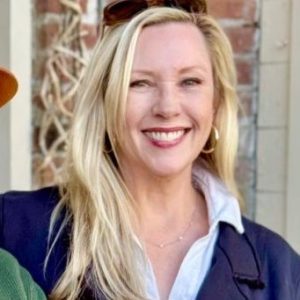
A California native and Navy mom, Katy lives in Sacramento, CA.
- FBI Raids Billionaire’s Beverly Hills Mansion in Connection With Eric Swalwell Case - October 27, 2026
- California Has 14 Propositions, 2 Statewide Tax-Increases, and 273 Local Tax Increases on Nov Ballot - October 27, 2026
- California Gov Newsom Flunks Freedom Test: Ranks One of the Worst Governors in America - October 26, 2026
RELATED ARTICLES
-
 August 10, 2022
 -
 September 14, 2022
 -
 February 10, 2022
Katy, I really appreciate the California Globe featuring this story. I’m a subscriber to Anna Runkle’s YouTube channel as well as a consumer of her books and courses. Her shared experiences and advice have been invaluable. When she announced on her channel the lawsuit filed on her behalf against the State of California , I was shocked yet not surprised at the level of overreach by the State. This case has implications beyond what life and recovery coaches can do and say. I shudder to think what would happen to Dear Abby in this day and age.
Over reach by the state? No way. Unthinkable…I hope she wins. Screw the state.
California Democrats don’t believe in free speech. There are a number of examples.
In X Corp. v. Bonta, the 9th Circuit Court of Appeals ruled that key provisions of Assembly Bill 587 violated the First Amendment. The law sought to compel social media companies to report to the state how they moderate controversial categories of speech, such as hate speech and disinformation. The court determined that forcing platforms to disclose their editorial standards and recast their moderation practices in state-prescribed language constituted compelled speech and interfered with editorial independence. Following this ruling, California settled with X Corp. in early 2025, agreeing to drop enforcement of the contested provisions.
Additionally, in late 2025, Federal Judge John Mendez struck down Assembly Bill 2839, part of the state’s “Defending Democracy from Deepfake Deception Act.” The law prohibited AI-generated deepfake material within 120 days of an election. Judge Mendez declared the ban unconstitutional, stating that while deepfakes pose risks, they “cannot be quashed through censorship or legislative fiat,” and that the government cannot “preemptively sterilize political content.”
The U.S. Chamber of Commerce filed a lawsuit challenging Senate Bills 253 and 261, known as the Climate Accountability Package. These laws require large businesses to publicly disclose greenhouse gas emissions and climate-related financial risks. The plaintiffs argue these mandates constitute compelled speech on a politically fraught subject, designed not just to inform but to “stigmatize” companies and shape their behavior to align with state policy preferences. The lawsuit contends that forcing companies to estimate and publish data about their global value chains violates the First Amendment by compelling them to articulate messages they might not otherwise choose to disseminate.
Similarly, in Miyoko’s Kitchen Inc. v. Ross, the state faced legal action for ordering a vegan dairy company to remove terms like “butter” and “lactose-free” from its labels. The company argued that prohibiting these truthful descriptors of their product’s characteristics was an unreasonable restriction on commercial speech.
California explicitly attempted to limit physician speech regarding COVID-19 through Assembly Bill 2098 (AB 2098), a law signed by Governor Gavin Newsom in September 2022 that was widely criticized as a First Amendment overreach and subsequently repealed. Facing imminent defeat in the 9th Circuit Court of Appeals, where judges signaled the law was likely unconstitutional, California quietly repealed AB 2098 in October 2023. Governor Newsom signed the repeal bill (AB 697) effectively admitting the legal untenability of the restriction.
The primary example of California attempting to limit journalists from investigative reporting on fraud is Assembly Bill 2624 (AB 2624), introduced in April 2026 by Assemblywoman Mia Bonta. Critics and free press advocates have dubbed it the “Stop Nick Shirley Act” because it was drafted shortly after independent journalist Nick Shirley released viral investigations exposing billions in fraud within California’s hospice and immigrant daycare systems. Criminal Penalties: Violators could face misdemeanor charges, up to one year in jail, and fines up to $10,000.
This situation is totally infuriating! I live in Utah and this is why so many people are fleeing this 1984-level dictatorship that is attempting to overthrow its own citizens. Ridiculous bs! I love “Crappy Childhood Fairy.” She’s no different than Tony Robbins, Zig Ziglar, Dale Carnegie–but they are all MEN. I am not shocked that Lea Tate (a woman) is responsible for this irritating event. Women are just as against other women as men are. Lea, if you read this, shame on you! Anna has done the work of a saint, and you are just trying to take her down because of your sour grapes and jealousy. Didn’t you go to school in order to learn about bad human behavior? Didn’t the state of California bestow upon you the divine right to understand and have empathy. Do Anna’s millions of subscribers mean nothing to you? The fact that she is doing great things in the world? I guess not. It’s all about your fragile ego and appealing to unfair licensing boards. You’re a misogynist. Lea, you can’t control everyone like you think you can. The constitution was created to stop people like you from power plays meant to soothe your fragile sense of self. Anna, I hope you get millions for this.