

Are you a citizen? Yes or No? Represents the honor system in registering to vote in state and federal elections in NV (Screenshot: nv.gov)
Report: SAVE America Act Turns Nevada into GOP Stronghold
Yale researchers project the bill would surge Nevada’s Republican margin from a slim +1 to a solid +6.3, moving the state from battleground to more reliable GOP territory
By Megan Barth, May 5, 2026 12:24 pm
A new Yale Law School analysis, published as an opinion piece in The Washington Post on May 3, confirms what election integrity advocates have argued: the SAVE America Act would dramatically shift Nevada’s political landscape by requiring proof of U.S. citizenship for federal voter registration.
Yale researchers Ian Ayres and Jacob Slaughter project the bill would surge Nevada’s Republican margin from a slim +1 to a solid +6.3, moving the state from battleground to more reliable GOP territory. Nationally neutral, the impact would be decisive in Nevada and flip neighboring New Mexico from D+4 to R+3.3. The study quantifies how non-citizen voting currently tilts outcomes toward Democrats.
The SAVE America Act, passed by the House 218-213 in February, mandates citizenship documentation and strengthens mail-ballot safeguards. President Trump and Republicans call it essential security; Democrats label it suppression. Yet the Yale piece in the left-leaning Post validates the GOP argument on non-citizen influence.
Nevada voters will decide the issue directly in November via Question 7, the Require Voter Identification Initiative. The measure, which garnered 73% approval in 2024, needs a second “yes” vote in 2026 to enact photo ID for in-person voting or specific identifiers for mail ballots.
This push for basic safeguards comes as Nevada’s election system has been exposed as dangerously weak. According to the Meyers Report — an Illinois-based international study of 37 nations released last year — the United States ranks dead last overall in election security with a score of just 59.9 out of 100. America scored below Rwanda, Kenya, Mexico, Chile, Ghana, and Italy in written procedures, with the report’s co-authors declaring the U.S. “the worst voting system of the countries studied” and the only nation relying on the “honor system” in any part of its election process.
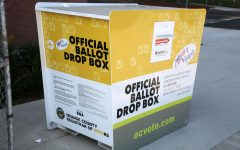
Nevada itself ranks dead last among all U.S. states at a dismal 30 out of 100, failing every major category due to unlimited ballot harvesting, universal mail-in balloting sent to every actively registered voter, extended deadlines for mail-in ballots (even those without postmarks), and unsecured drop boxes that accept ballots after Election Day. These drastic, unverified changes to Nevada’s voting laws were passed unilaterally by the Democratic majority during the pandemic.
The 2024 cycle illustrated the problem in real time: early GOP leads on Election Day evaporated as roughly 55,000 post-Election Day mail ballots poured in from Clark County alone — flipping Sen. Jacky Rosen’s margin by 34 points and handing down-ballot Democrats an approximate 2% edge. Three Assembly Democrats won by less than 1%.
Nevada Attorney General Aaron Ford has repeatedly opposed reforms, declaring voter ID “unconstitutional” and vowing he “will not abide by an unconstitutional act like voter ID here in this state.” He has also dismissed Question 7 as a “ruse to disenfranchise” veterans, seniors, and communities of color.
In April, Secretary of State Francisco “Cisco” Aguilar and Ford announced plans to sue the Trump administration over federal election measures, dismissing non-citizen voting concerns while preparing litigation against the SAVE Act.
This fits a pattern of Democratic resistance. California and Nevada Democrats, including former Speaker Nancy Pelosi, held “shadow hearings” to attack the bill as anti-democracy.
Public polling shows strong bipartisan support: 85% back proof-of-citizenship, with Harvard data at 71% overall (including 50% of Democrats).
Despite this and the Yale math, Senate Republicans under Sen. John Thune have stalled the bill via filibuster. As one X account noted of the Post analysis: “The math just explained why Democrats fight it so hard.”.
The Yale study offers data-driven projections, not guarantees. For Nevada, the 5.3-point swing could mean the end of razor-thin recounts and narrow Democratic victories.
As Nevadans prepare to vote on Question 7 amid Democratic opposition to basic ID rules, the question is clear: Will Republicans deliver on 85 percent public support and the evidence, or let non-citizen voting shape the Silver State’s future? The math doesn’t lie.


RELATED ARTICLES
-
 April 14, 2026
 -

-
We have to stop this before it comes to KleptoFornia!
I would not be surprised to see prop 39 “accidentally” left off the ballot.