
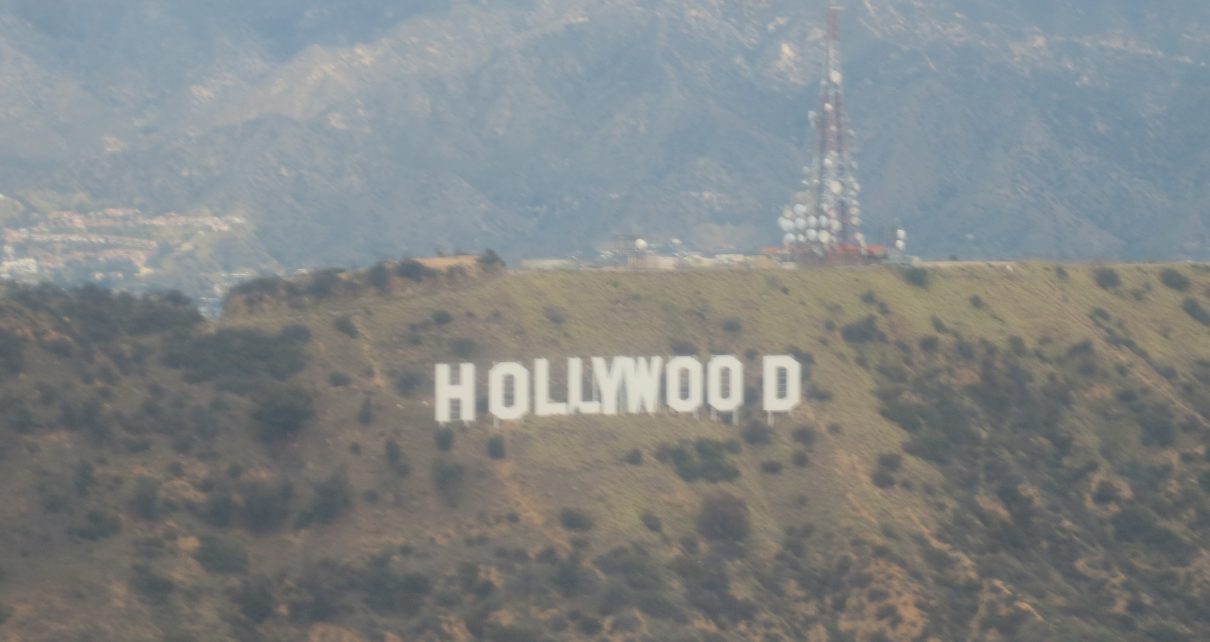
Hollywood Sign (Photo: Evan Symon for California Globe)
Scorsese Embraces AI Storyboarding But Guilds Call It ‘Betrayal’ of Human Craft
He has positioned AI as another technological step in filmmaking’s history, not a replacement for craft
By J. Mitchell Sances, June 12, 2026 1:00 pm
In a promotional video for Black Forest Labs, the German AI startup where Scorsese serves as advisor, the director demonstrates the company’s FLUX model. He generates a detailed medieval street scene storyboard in seconds, calling the process “creatively freeing.” The tool, he explains, solves a perennial problem: “There’s always been this problem of how do you communicate what you see in your head to your cast and crew. There are some things you have to see and feel.”Scorsese frames the technology as an efficiency tool that lets him share visualizations instantly with production designers, art directors, and cinematographers. “During the pre-production process, time costs money, and this allowed us to move faster without sacrificing quality or craft,” he said. “If you have a tool like this, you could figure it out much quicker and you could save production time, and also less wear and tear on the crew.” He ties it to cinema’s youth: “Cinema is a young medium, only around 125 years old, so we have to be open to how it can evolve.”
The Art Directors Guild, which represents storyboard artists, concept artists, illustrators, production designers, and related crafts, fired back with a blistering statement. They accused Scorsese of “turning his back on the human artists who throughout his career have helped him create his most memorable works.”
The guild charged that his endorsement of FLUX “circumvents the input of Art Directors Guild Local 800 art directors, graphic artists, illustrators, production designers, scenic artists, set designers, and other talented Union professionals.” They argued the generative AI, built on work “likely stolen from them and many other artists from around the world”, threatens livelihoods in pre-production visualization, a core part of their jurisdiction. “To think their professional contributions can be mimicked or outshone by generative AI… is a betrayal of the collaborative nature of cinema,” the statement read.
Critics on social media echoed the guild. Concept artist Karla Ortiz called it throwing “every single storyboard artist he’s ever worked with under the bus.” Others questioned the ethics of models trained on artists’ work without consent or compensation.
The guild’s anger fits a broader pattern. Membership in the Art Directors Guild has declined from 3,492 in 2022 to 2,966 in 2025 amid industry contraction and AI fears. Some members worry tools like FLUX could accelerate displacement in storyboarding and concept art, where human collaboration has long been central to directors’ vision.
Meanwhile, the Directors Guild of America (DGA) took a more proactive approach in its 2023-2026 contract with the Alliance of Motion Picture and Television Producers. That agreement includes notable anti-AI guardrails: generative AI is explicitly not a “person,” and it cannot replace the ordinary duties performed by DGA members. All such duties must be performed by actual people. Employers cannot use generative AI in connection with creative elements without first consulting the director or other DGA-covered employees. The deal also mandates twice-yearly meetings between the guild and studios to discuss AI developments and any appropriate remuneration.
Scorsese has not issued a direct point-by-point rebuttal to the guild’s statement. His public comments focus on the tool’s practical benefits for communication and speed, benefits he says enhance, rather than replace, the human creative chain. He has positioned AI as another technological step in filmmaking’s history, not a replacement for craft.
The clash highlights a widening fault line in Hollywood. On one side are legacy artists and unions fighting to preserve jurisdiction, compensation, and the human element amid shrinking production budgets and rising competition from streaming and international incentives. On the other are innovators like Scorsese who see AI as a practical aid that could lower costs, accelerate pre-production, and keep more projects viable in high-cost California.
For a state whose film and television industry has shed tens of thousands of jobs in recent years, the debate over tools like FLUX is not abstract. Guilds have every right to negotiate protections, as the DGA did. On the other hand, branding a legendary director a traitor for testing technology that might help crews work smarter and productions move faster risks looking more like resistance to change than defense of craft.
Cinema has survived sound, color, widescreen, CGI, and digital intermediates. Whether it survives—or thrives—under generative AI may depend less on guild statements than on whether tools like FLUX ultimately serve storytellers or simply displace them. Scorsese, at least, seems willing to find out. The guilds, predictably and understandably, are not. The California film industry’s future may hinge on which side wins the argument.


- Private Initiative Steps Up While Sacramento and City Hall Stall: Caruso, Skydance, and the Bay Theater’s Return to the Palisades - October 15, 2026
- Newsom’s Latest Medical Laws: California Defies Other States and Medical Realities - October 13, 2026
- Zach Bryan Wears a ‘Free Palestine’ Shirt Protesting Imaginary Silencing - October 8, 2026
RELATED ARTICLES
-
 August 1, 2025
 -
 March 1, 2024
 -
Hollywood overwhelmingly votes for Democrats who have displaced the jobs of workers in this state without a care in the world. Now that their jobs are on the line, and they are crying like babies.
California would be much better off without Hollywood.