
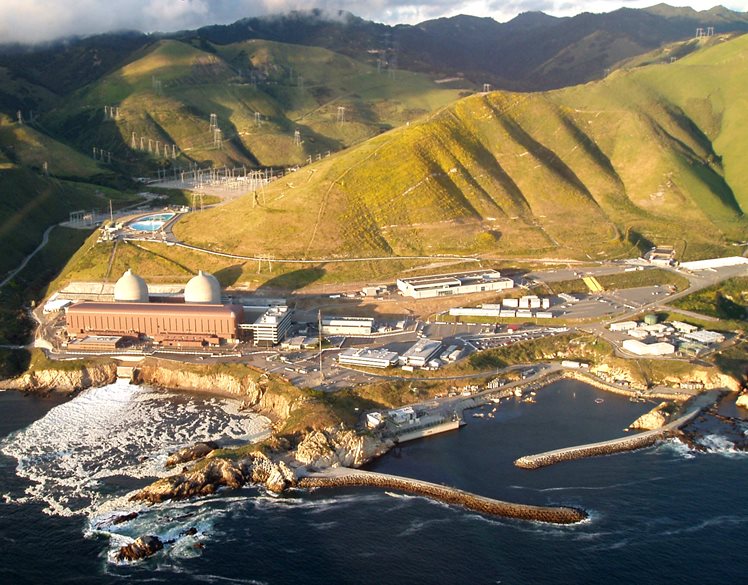
Diablo Canyon Nuclear Power Plant. (Photo: slocounty.ca.gov)
Newsom’s Energy Wrecking Crew
The CA Energy Commission has become a machine for higher bills, slower housing, fewer fuel options, and the next mandate
By Richie Greenberg, August 20, 2026 3:16 pm
Governor Gavin Newsom does not set California’s electricity rates from a high podium. He does something more devious: He personally staffs the California Energy Commission (CEC).
Gavin installs loyalists, treats the controversial results as if they fell from the sky. The five-member CEC board is his wrecking crew.
David Hochschild is the chairman. J. Andrew McAllister writes the building codes. Siva Gunda runs the forecasts and the fuel-market retreats. Noemí Gallardo leads site selection. Nancy Skinner, who authored the oil-profit law as a senator, now sits on the commission that delayed it.
After seven-plus years, this is not some magical independent watchdog agency that seemed to have wandered off. It is Newsom’s board.
Start with the state’s energy regulations. California households pay roughly twice the national average for electricity, in the mid-30 cents a kilowatt-hour against about 17 elsewhere. The extra cost runs into the tens of billions a year. California’s commercial and industrial customers get hit even harder.
Data centers and factories look at these rates and build somewhere else.
Newsom’s energy commissioners keep signing the plans and the standards that make those horrendous prices stick.
Then look at our homes. Every three-year Title 24 cycle, Commissioner McAllister’s building codes add another layer of regulations: rooftop solar, electric-ready panels, heat-pumps. The 2025 code, coming in force January 1, 2026, makes heat pumps the required path for both space heating and water heating in new single-family homes in every climate zone up and down the state. Gas furnaces and gas tankless water heaters are gone.
Existing homes get squeezed too – from electric-ready rules, air-district zero-NOx water-heater mandates, and upcoming sales limits. Your kitchen and water heaters are being redesigned so gas becomes the expensive exception.
The CEC commission calls it an energy budget. The buyer calls it a higher mortgage.
Light Bulbs? CEC’s Title 20 made selling a standard incandescent illegal by 2018. Then they regulated LEDs. Then AB 2208 banned screw-base CFLs in 2024 and pin-base CFLs and linear fluorescents in 2025.
First they pushed adoption of CFLs. Then they outlawed it.
Amazon will not ship ordinary bulbs to a California address.
This week, the CEC unanimously approved the nation’s first replacement-tire efficiency standards. Starting in 2029, replacement tires need CEC “rolling-resistance” and “wet-grip” numbers, manufacturer reporting, and a state rating system.
After they went for your house, your heater, and your light bulbs, the CEC went after the spare.
How about power generation? It was the same story in reverse. Fountain Wind, a 205 megawatt plant in Shasta County, used the “fast track” the state’s Sacramento legislature created so the CEC could override local construction blockage. After years of delay, Newsom’s commission voted unanimously to kill it – claiming dozens of “unmitigable” impacts. The same people who demand more wind just showed project developers the fast track is a trap.
Diablo Canyon Power Plant as well: California’s last nuclear plant still puts out about 9 percent of the state’s power around the clock. Official policy was to shut it in 2025. Then the margins looked ugly and Newsom signed on to keep it through 2030. The CEC had to write the annual reports explaining why the plant they had treated as a relic was suddenly “prudent.” The Nuclear Regulatory Commission licensed the plant into the 2040s. Newsom’s CEC authorized a mere five years – and is kicking the next extension down the road.
Gasoline? Newsom signed SB X1-2, handed the CEC power to cap refining profit margins and penalize “excess” profits. He declared he had beaten Big Oil. Nancy Skinner (the Tire Tyrant) wrote the law. Then Phillips 66 shut its Los Angeles-area refinery and Valero sought to idle its Benicia refinery – about 18 percent of in-state capacity. The commission paused the penalty until 2030 to restore “investor confidence.”
Punish the industry until it leaves. Then panic about dropping supply.
Newsom hides behind the CEC’s letterhead. The statutes are accepted as “the law.” The CEC commissioners have “independent duties,” it’s claimed.
Governor Newsom chose the CEC chair, the building code writer, the site lead and the vice chair. The tire rule, the dead wind farm, the nuclear plant scramble, and the refinery debacle – all are on his watch.
The CEC is not an agency enshrined in California’s state constitution- it was created by statute in 1974 and can be abolished or restructured the same way – through ordinary legislation or a Governor’s reorganization plan, because it is not a constitutional agency. Gubernatorial candidate Steve Hilton has vowed to reorganize and combine the CEC with other existing state regulatory agencies to streamline regulation.
The CEC is unlike anything else in the country. No other state has built an independent energy commission with this much reach. It controls utility-scale power planning and sites. At the same time, it writes broad efficiency standards for the products we buy every day – refrigerators, air conditioners, computers, and now tires.
California does not need another climate sermon. It needs to say the quiet part: Newsom’s Energy Commission has become a machine for higher bills, slower housing, fewer fuel options, and the next mandate. He hired them. He kept them. The wrecking crew is his.


- A Year Later, We Need a Surge in SF Dealer Takedowns - October 17, 2026
- Pelosi Must Press Connie Chan on Anti-Israel Stance - October 11, 2026
- Connie Chan: Failing Upward - October 5, 2026
RELATED ARTICLES
-
 August 28, 2022
 -
 July 31, 2020
 -
During the Brown administration I saw that unelected state agencies like CARB were vehicles to create regulation with the force of law by fiat that were too radioactive for democrat legislators to address.
And they yell all day long about democracy.
Goes along with Katy’s article yesterday. Richie was on with John Philips yesterday. I commented commissions are unconstitutional. The legislature is tagged with making laws, not pawning it off to unelected officials. The Courts should declare them NULL AND VOID as with anything unconstitutional. The Law of the land is not what is legislated, its the Constitution!
@MCSF, That’s a very good point. Why are these commissions being allowed to create law?
Because California voters are basically willfully ignorant and uninvolved, and (s)elect the same idiotic cast of Democrat characters who get their campaign funding from Soros, unions and PAC’s with nefarious ties to Singham and the CCP….
More deception, lies, moving the goal post’s. Can we Expect “YES KINGS” rallies now on CA overpasses?