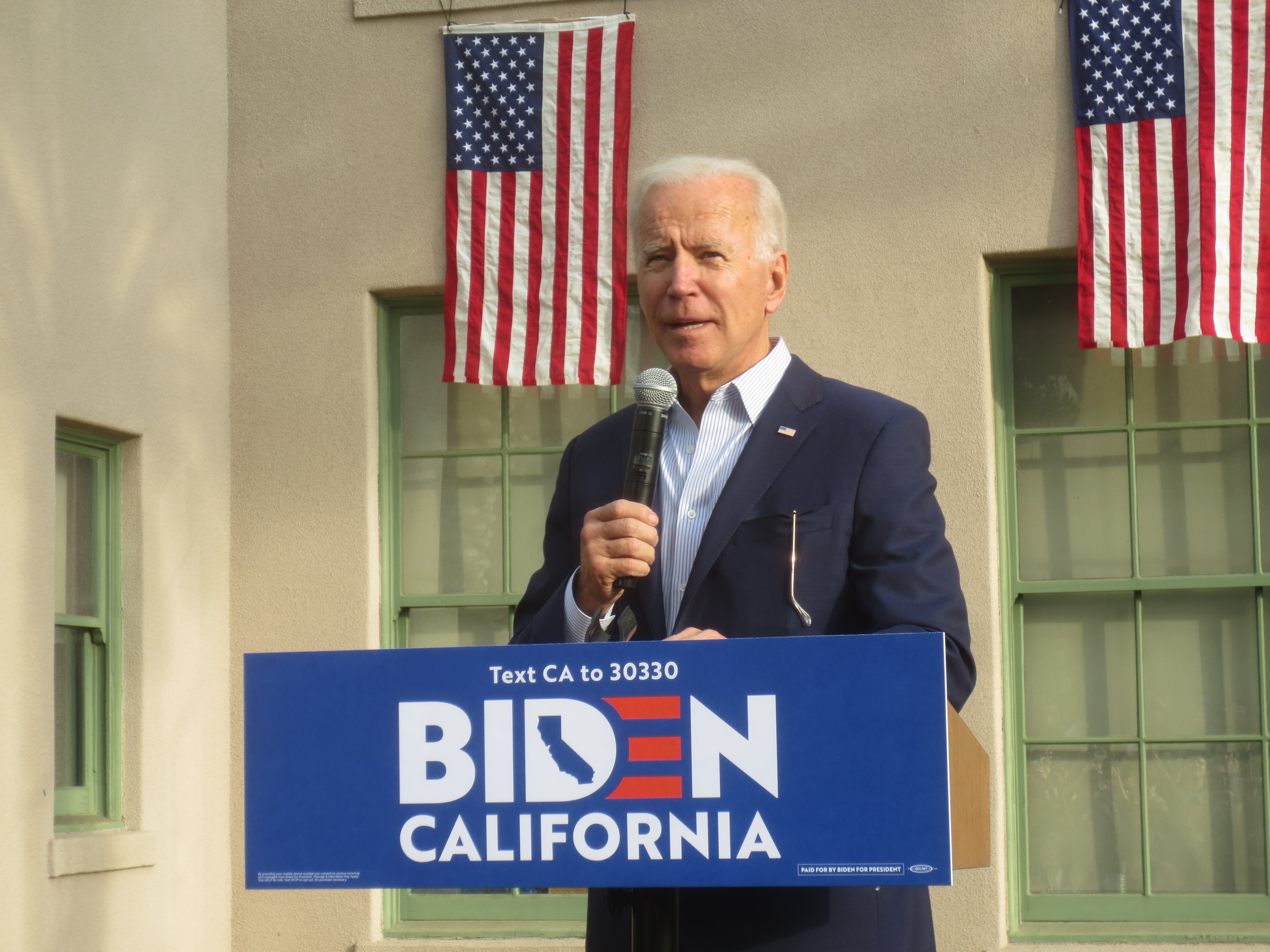
Rep. Steven Horsford and Culinary Union 226 organizer Casiano (Screenshot)
Stay Denied: Red Rock Stuck With Biden NLRB Union Bargaining Order
Forced bargaining at Red Rock and the political machine behind it
By Megan Barth, September 10, 2026 10:04 am
Nothing screams worker “choice” like a federal agency and the courts overriding a secret-ballot election.
Chief Justice John Roberts last week refused Red Rock Resort’s emergency bid to freeze a Biden-era National Labor Relations Board order that forces the Summerlin casino to recognize and bargain with the Culinary Workers Union Local 226 and Bartenders Local 165. The D.C. Circuit had already left that order in place.
Station Casinos, which owns Red Rock, must now sit down with the union even though its employees voted 627-534 against representation in December 2019. Biden’s NLRB concluded Station’s “carefully crafted corporate strategy” tainted the election: improved benefits announced just before the vote, threats that those benefits could vanish if workers chose the union, and even steaks branded “VOTE NO!” served in the employee dining room.
The board imposed a Gissel bargaining order—the remedy that lets the government substitute card-check majority support for an actual election when it decides the vote was, in their opinion, hopelessly compromised. It also applied the Biden-era Cemex standard. Red Rock was the first case in which the board used that new framework after Cemex landed in 2023.
Station Casinos has said it will comply while still objecting. A company spokesperson noted the NLRB “overturned the clear vote of Red Rock team members rejecting the Culinary Union.” The company has long argued it already pays above Culinary scale and offers family health coverage many union properties do not match without bargaining. Workers at other Station properties have repeatedly sought to decertify the union or voted it down.
The National Labor Relations Board is not a court. It is a five-member agency whose majority flips with presidential appointments. Precedent lasts about as long as the administration that wrote it.
In 2023, the Biden board issued Cemex Construction Materials Pacific. It discarded more than 50 years of reliance on the Supreme Court’s 1969 Gissel test and made it far easier to impose a bargaining order after an employer commits unfair labor practices—even when workers later vote the union down.
Critics called it card-check by another name: a government order that imposes union recognition and bargaining without a new secret-ballot election, after the Biden NLRB decided a fair vote was no longer possible.
The Sixth Circuit later vacated a Cemex order as unauthorized policy-making after Loper Bright. The Ninth Circuit enforced a bargaining order under old Gissel rules and refused to bless the new standard. Red Rock sat at the intersection of both rulings.
The D.C. Circuit this June enforced the order under Gissel and declined to adopt Cemex. Trump-appointed General Counsel Crystal Carey has now told regional directors she intends to ask the board to overrule Cemex as “contrary to Supreme Court precedent and sound labor policy.”
The board spent much of 2025 without a quorum. It now has a Republican majority but has said it will not overturn major Biden-era cases without three affirmative votes. Workers at Red Rock voted in 2019. The legal theory used to erase that vote was written in 2023 by a board majority that no longer exists.
Days after Chief Justice Roberts left the bargaining order in place, Station Casinos marked its 50th anniversary the way it has always argued it treats workers: directly. At a surprise ceremony inside Red Rock itself, owners Frank and Lorenzo Fertitta announced more than $70 million in Red Rock Resorts Class A stock for nearly 10,000 full and part-time employees—$1,000 in shares for every year on the job, with the longest-tenured worker set to receive $49,000. The grants start September 14. The company called it taking care of team members. Culinary maintains “Stations workers are not second class workers.”
That is the labor-law story. The political story is why a 2019 election is still being litigated in 2026—and who pays when the same union that runs Nevada’s Democratic field operation also collects taxpayer money for its organizing efforts on behalf of Democrats.

The Culinary machine—and the $25 million taxpayer-funded Christmas
Culinary’s cash contributions to Nevada legislators are modest compared with gaming. In the 2024 cycle, unions and labor groups gave more than $1.6 million to state lawmakers—almost all of it to Democrats. UNITE HERE gave more than $84,000, about 70% of it to Assemblywoman Linda Hunt (D-North Las Vegas), a 45-year Culinary member. Culinary Union Secretary-Treasurer Ted Pappageorge says the union prefers voter outreach to writing checks as the union’s ground game is the real currency.
In 2020 the union said it knocked on more than 650,000 doors. In 2022 it aimed at 1 million. In 2024 about 600 paid canvassers—workers on leave from casino jobs—knocked on more than 900,000 doors, held more than 130,000 conversations, and then ran a ballot-cure operation hitting more than 24,000 additional doors. The 2024 target list was explicit: Kamala Harris, Sen. Jacky Rosen, and Reps. Titus, Horsford, and Lee.
Workers Vote, tied to Culinary/UNITE HERE activity, reported a $254,069 independent expenditure for Rosen in late October 2024, plus earlier 2024 IEs of about $139,000 for Rosen and $107,000 for Harris.
Despite the union’s deep pockets, the Nevada taxpayers picked up another tab.
In the final days of the 2023 legislative session, Democratic majorities hung more than $110 million in last-minute “Christmas tree” appropriations on AB 525, SB 341, and related legislation. As the Nevada Globe reported at the time, the Assembly version steered $15 million to the Culinary Academy of Las Vegas for an undefined “capital improvement plan.” Senate Democrats, led by Nicole Cannizzaro, who is running for Attorney General, nearly doubled it to $25 million within 48 hours. Capitol sources told the Globe they had not seen a detailed capital plan as required by capital improvement projects receiving taxpayer money.
Democratic leaders also parked fallback language in the state’s Capital Improvement Program budget—normally reserved for public works—so the money would still flow if Gov. Joe Lombardo vetoed the Christmas tree bills. Of the $110 million in those bills, $25 million went to the Democratic Party’s largest field operation, the Culinary Union. A later Globe follow-up noted that at least 13 legislators had ties to groups that collectively received more than $33 million from the same session.
The culinary academy is a labor-management training trust tightly bound to Culinary Local 226 and Bartenders Local 165. Union officers sit on its board. Eligible union members train for free. It was later reported the split as $21 million for construction and remodeling on the Historic Westside campus and $4 million for “student outreach.” Academy officials said the money would expand kitchens, classrooms, and labs. The campus has since grown from 40,000 to 55,000 square feet and now claims capacity for 4,000 students a year. That is a real building. It is also a public subsidy to the political machine that elects the legislators who wrote the check.
Although Strip resorts already bankroll the industry that employs these workers, Democrats chose taxpayer to foot the bill.
Unions (and higher prices) for all
California Globe has documented what guests actually pay when union demands drive up the cost of a Vegas stay.
Visitation through November 2025 was down 7.4% year over year. Yet, off-Strip, non-union properties—including Red Rock—kept growing by skipping $50 self-parking, $30 cocktails, and $50-plus resort fees. A September 2025 Globe report catalogued $26 water bottles, $30 pancakes, and $400–$600 weekend rooms on the Strip. Increased union labor costs were part of that escalation.
When workers from Station Casinos decided to form a union organizing committee in 2010, Casiano joined because he wanted a better future for himself, his family, and his coworkers. Station Casinos has numerous charges against them from the National Labor Relations Board for… pic.twitter.com/UshiSJdPW6
— Rep. Steven Horsford (@RepHorsford) September 7, 2026
Rep. Steven Horsford (D-NV) celebrated the Red Rock ruling by spotlighting Casiano, who joined Station’s organizing committee in 2010. Horsford quoted him: “The company may not want a union, but it is not their decision to make.” Horsford, co-chair of the Congressional Labor Caucus and a former Culinary training academy official, tied the fight to the PRO Act. Culinary’s 2026 endorsement guide lists him again.
Attorney General Aaron Ford, the Democratic nominee for governor, has already promised to repeal Nevada’s right-to-work law on day one. That law is the only reason a Red Rock worker could still refuse Culinary dues after the government imposed the union as bargaining agent. Repeal would let the same political operation that canvasses for Democrats and collected $25 million in session-ending appropriations close the last exit.
Station Casinos built a locals model on direct employment and benefits without union middlemen or their political overlords. Red Rock was one of the last large properties where a “no” vote could still mean no—until a politicized NLRB, a Culinary field army, and a $25 million taxpayer capital gift to the same network decided otherwise.
That is not a labor love story. It is how power is financed in Nevada.


- Stay Denied: Red Rock Stuck With Biden NLRB Union Bargaining Order - September 10, 2026
- Mayor Bass Exits Embattled LAHSA as Feds Probe Homeless Spending - September 9, 2026
- Becerra Finally Agrees to CNN Debate With Hilton - September 8, 2026