
Connie Chan: Failing Upward
A familiar San Francisco promotion: preside over a mess, then ask for a bigger office
By Richie Greenberg, October 5, 2026 10:00 am
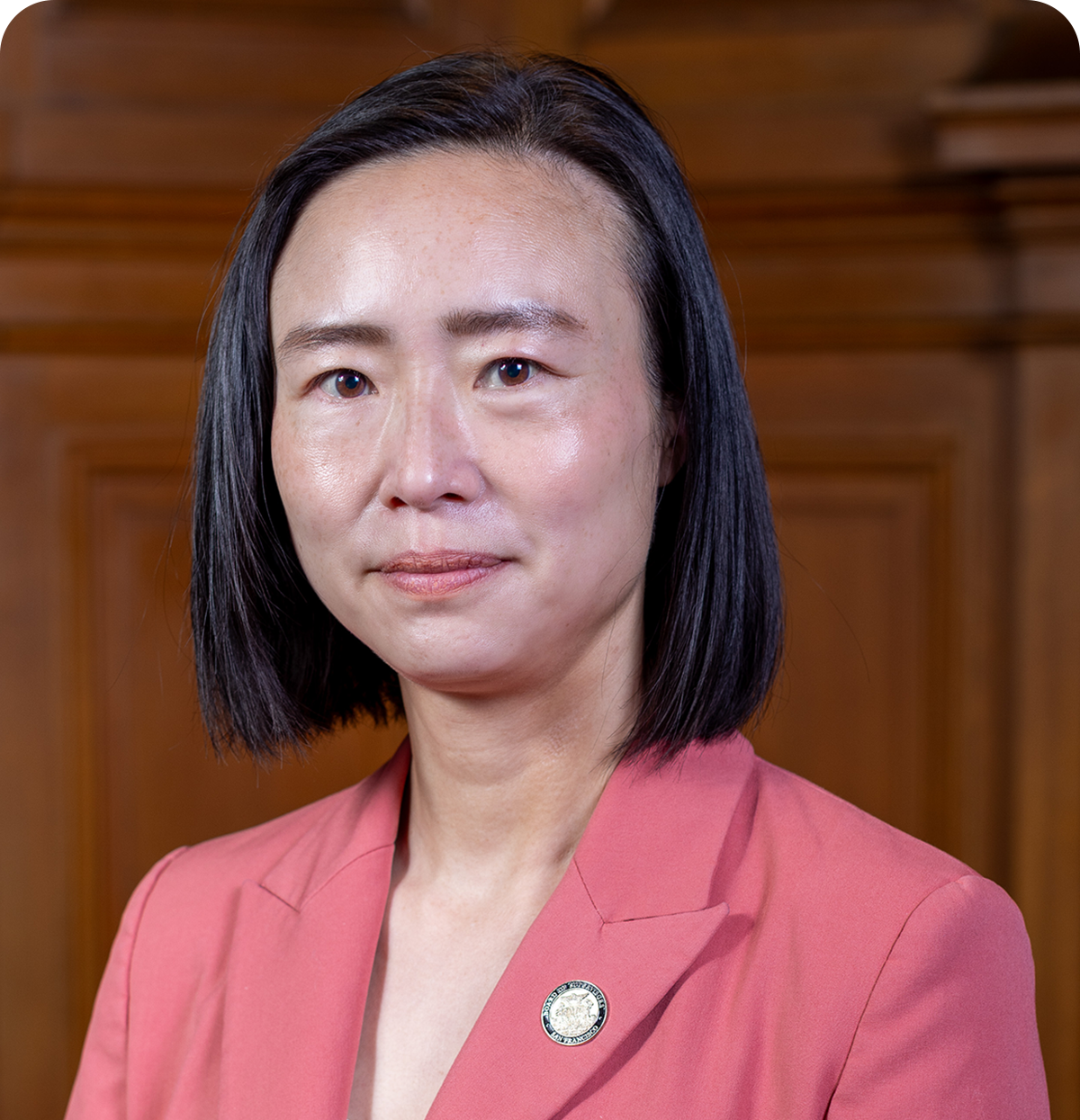
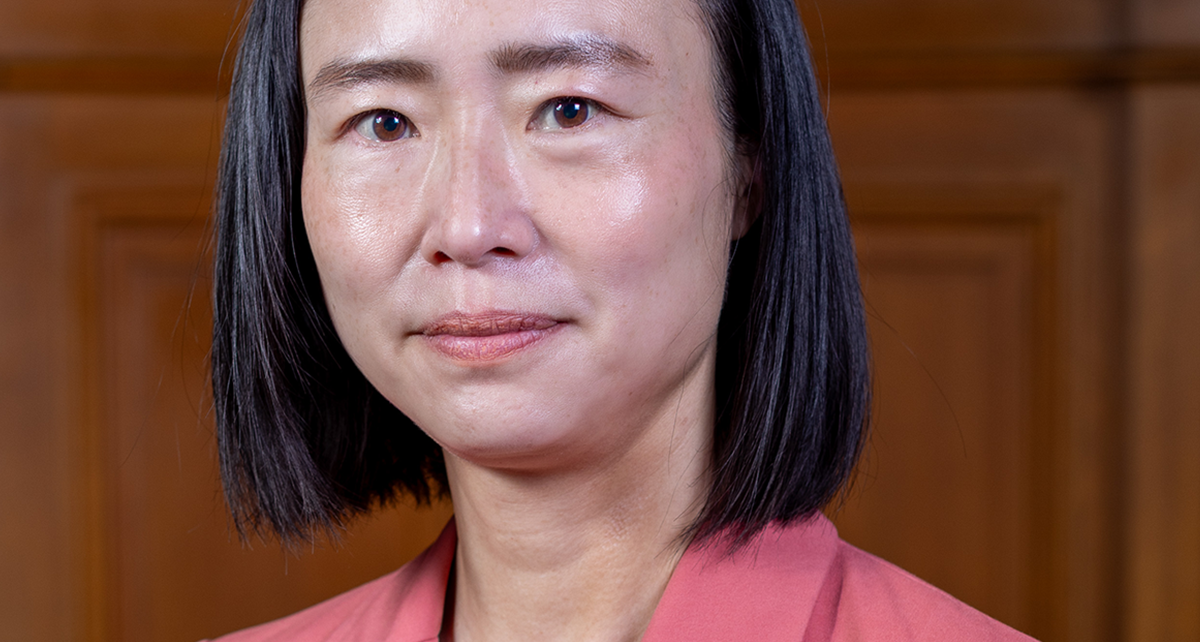
Connie Chan’s campaign for Congress to succeed Nancy Pelosi is a familiar San Francisco promotion: preside over a mess, then ask for a bigger office. After years at City Hall during civic disorder, massive budget increases, housing paralysis, and a trickle of a COVID recovery, she is offering voters an accounting – but later. Maybe.
Her résumé is real. The explanation is missing.
Chan has been a city councilwoman/supervisor since January 2021, representing San Francisco’s Richmond District. She has also chaired the Budget and Appropriations Committee since February 2023 and, by her own account (and admission), has presided over four budget cycles – under two mayors.
She’s not a mere bystander – she helped set priorities, move money, restore cuts she favored, and sustained the governing culture that left San Franciscans with too little civic order for too much money.
The decline didn’t happen while she was looking the other way. She had the gavel. Literally.
San Francisco now runs on roughly $17 billion annually. Insane. The mayor’s latest submitted budget is $16.9 billion for the fiscal year and $17.2 billion the year after – for a population of barely 800,000.
For that price, a functioning city would offer clean streets, safe public spaces, treatment that works, housing that gets built, and a downtown people are excited for – and willing to enter.
San Francisco has instead become fluent in administration dysfunction – and calling it compassion. The compassion is well funded. The results keep needing another task force.
The city has been staring at deficits in the hundreds of millions. As budget chair, Chan’s message was that there had been enough cuts, with one-time funds and a speculative ballot measure offered as the bridge. True, it’s a fight about services and labor. But it’s also a strange companion to a record in which enormous spending has not purchased civic order.
A city can protect safety-net programs and still fail at the sidewalk. San Francisco has managed to do both.
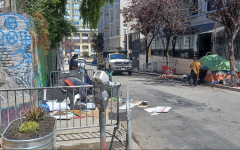
The Tenderloin neighborhood remains the exhibit. Residents, workers, and shop owners have lived with open-air dealing, public intoxication, overdose emergencies, theft, encampments, and untreated mental illness. City Hall has issued emergency declarations, assembled task forces, funded programs, and announced operations. The dealers, apparently, missed the press release. Addicted people still remain in danger. Everyone else is asked to treat the obvious abnormal as the new normal, and to stop complaining.
Chan, as budget chair, shares responsibility for what the city funds. A compassionate city would offer (or demand) treatment, shelter, psychiatric care, and a path out. It would also enforce the law against dealers, intervene when people are incapacitated in public, and stop letting a drug economy colonize a neighborhood.
Yet San Francisco has too often failed at both halves of the job, which is an achievement of sorts. The spending is measurable. The stability is, well, still under debate.
The city’s SoMa District (South of Market) tells the same story: it should be one of San Francisco’s bragging-rights assets: lots of transit, jobs, employers, venues, downtown. Yet too many blocks are still lined with empty offices, fragile storefronts, thin foot traffic, public drug use, and a general sense that the social contract is still on a very prolonged coffee break.
Recovery has improved in places. But it has not restored confidence among workers, businesses, visitors, or residents.
“Incomplete” is the polite word. “Well, we spent the money” is the accurate one.
Housing makes it worse, and here the record is specific. San Francisco cannot become affordable while treating new homes as a threat, and it cannot retain working families while proposals die in process, veto, and bargaining.
Chan’s congressional campaign that treats all this as background noise is asking voters to grade the candidate on a new subject she now chooses, not the one she’s been paid to handle prior. Her campaign’s answer? Change the subject- preferably to a country she does not govern and she can’t be blamed for.
Chan has built her new congressional candidate identity around a maximalist demand: a full U.S. arms embargo on Israel. At a candidate debate last week, she said that on Day-One in Congress she would vote to end what she labels genocide in Gaza and an apartheid state. She supports a total embargo on the Israeli government, opposes U.S. aid, and would not fund Iron Dome, the system that shoots down rockets aimed at civilians. She’s said the United States should stop enabling Israel’s government entirely.
She presents this as “moral clarity”. It is also a convenient change of venue. Denouncing a foreign government is easier than explaining why a $17 billion San Francisco cannot keep sidewalks drug-free and usable.
An embargo is a press statement. A drug use treatment-and-enforcement system is an actual hard job. Guess which of these shows up in a debate clip?
Nancy Pelosi’s endorsement makes Chan’s contrast more confusing: the former House speaker spent years supporting Israeli military aid, opposing boycotts and refuting genocide and apartheid labels.
Apparently, Chan is not running as a continuation of Pelosi’s record. She is running as a correction of it, while asking voters to skip the correction she never delivered back home.
Foreign policy matters. Human rights matter. A candidate who helped govern San Francisco does not get to swap the latest overseas outrage for a local record she would rather not itemize. Or talk about at all.
The moralism is also strikingly selective. Chan reserves her harshest language and her most sweeping penalty for Israel. She has not built a comparable campaign around sanctions, arms embargoes, or genocide findings on the Chinese government’s treatment of Uyghurs, Tibetans, or Hong Kong’s crushed democratic movement.
Some atrocities get a day-one vote. Others get a pass.
China is not a side issue. Chan was born in Hong Kong, spent part of her childhood in Taiwan, and is today actively courting a Chinese-American electorate estimated at roughly 73,000 voters in the district, about 16 percent of the roll.
On China and Taiwan she emphasizes the One-China policy: peace, and direct engagement.
After meeting Chinese-American community leaders last February, she was described as supporting that policy and favoring dialogue between Beijing and Taipei without Washington dictating terms.
Asked whether America should use military force if China invaded Taiwan, she did not answer.
Confrontation, it seems, is a policy she applies by level of topic outrage.
On Israel: isolation, an arms embargo, and no defensive assistance. On China, whose government faced formal U.S. findings of actual genocide and crimes against humanity? A dialogue, mutual respect, and coexistence.
Curiously, as current Board of Supervisors / City Council member, she also backed a city outreach contract that added Sing Tao Daily as an official outlet for Chinese-speaking residents in Chinatown, the Richmond, the Sunset, Visitacion Valley, and the Excelsior.
What’s the controversy? Sing Tao had to register under the Foreign Agents Registration Act in 2021 after the Justice Department concluded the paper’s activity was political advocacy for a foreign principal.
The perplexity lands especially hard in the Richmond District, the district which elected Chan twice, and she actually represents – including a substantial Jewish community: synagogues, institutions, families, and businesses for whom Israel, antisemitism, Jewish security, Hamas’s violence, hostages, and Israel’s survival are sore topics.
She does not have to share every constituent’s view. She does have to represent them without treating disagreement as a character flaw.
Many Jewish constituents hear her message clearly enough. Listening, in this campaign, is optional. She makes it clear an embargo is not.
San Francisco has problems. Everyone knows it. Voters should judge Chan by her work, not the causes she discovered on the way to a larger, national stage. We have wealth, talent, and public money. Yet the city is still burdened by addiction, disorder, a soft downtown, scarce housing, and a recovery that keeps being announced but fails to show up.
She helped govern through that, literally.
That is failing upward.


- Connie Chan: Failing Upward - October 5, 2026
- Wiener Faces San Francisco’s Jewish Voters - September 30, 2026
- AI Kill-Switch Folly - September 20, 2026
RELATED ARTICLES
-
 December 12, 2018
 -
 September 10, 2018
 -
 July 18, 2023
“On China, whose government faced formal U.S. findings of actual genocide and crimes against humanity? A dialogue, mutual respect, and coexistence.”
Connie Chan (born Chan Sze-man 陳詩敏 in Hong Kong) is just another radical Democrat–and maybe a CCP asset?
Communist China has captured the Democrat party in San Francisco and in California?
See Julie Su for a predecessor “fail upward” story…
And, let’s address the elephant in the room… both of Asian extraction, and given the recent issues with foreign agency in the Arcadia Mayor’s office and the Irvine CA Realtor that was spying on Taiwanese leadership family members, the question begs to be answered as to her connections to the CCP, as mentioned by another poster….
More and more, it appears that California is indeed under at least INFLUENCE if not outright control of the CCP, either by coercion or by bribery, as Governor Gavin Newsom’s BYD contracts and market-making trips via his travels there, and Xi’s travel here, would tend to suggest….
And California’s political leanings would tend to indicate that many of our politicians are on the take, and beholden to CCP influence….