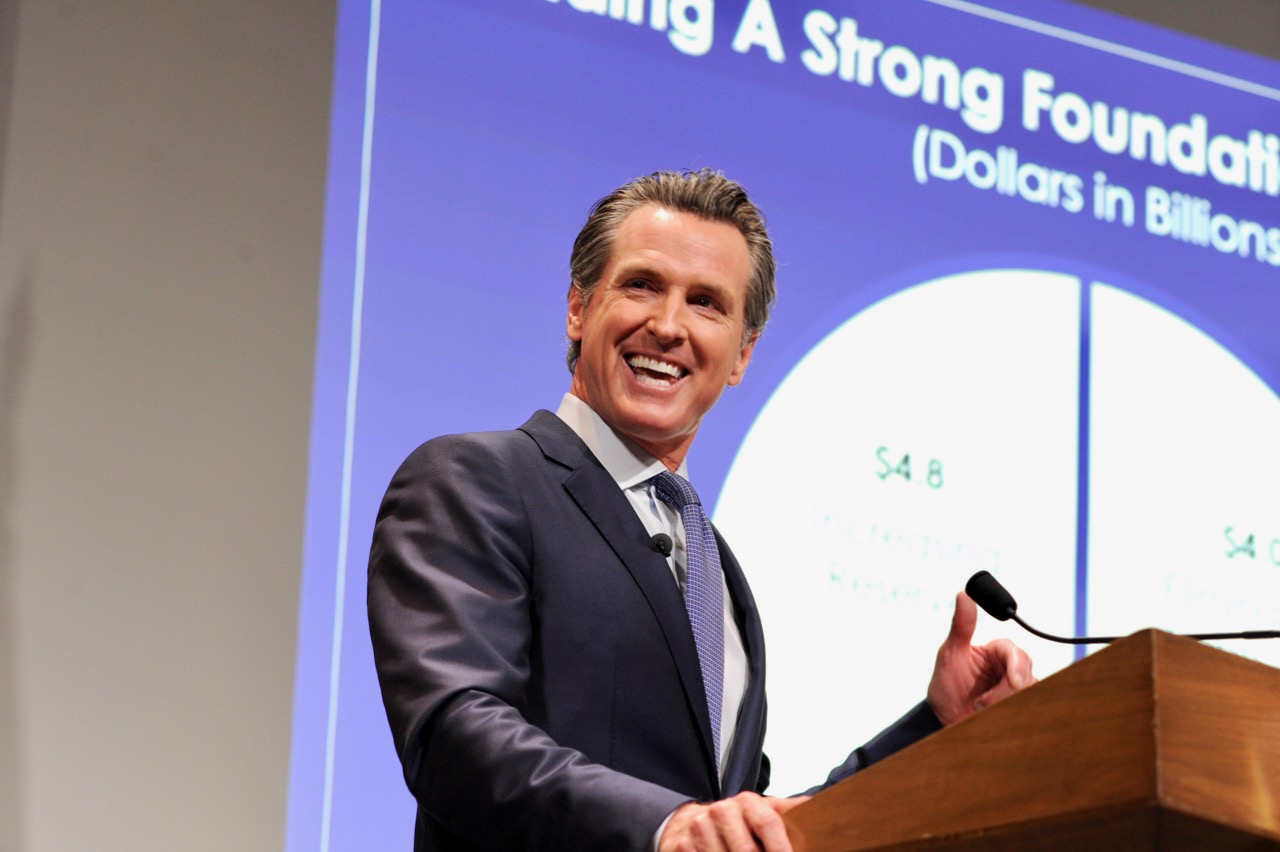
Gov. Gavin Newsom's final State of the State address. (Photo: gov.ca.gov)
Newsom Talks Affordability – Californians Pay the Bills
You don’t get credit for every goal and then get to blame someone else for every cost
By Hector Barajas, October 5, 2026 1:00 pm
Governor Gavin Newsom was in New York this past month talking about California’s climate record and arguing that clean energy, economic growth, and affordability can go together.
That sounds good.
But if you live in California, there is a much simpler way to judge whether something is affordable: look at your bills.
Look at your electric bill. Look at what you paid the last time you filled up your car. Look at your rent, groceries, and insurance.
That is where political talking points run into real life.
California has made progress in renewable energy and battery storage. But Californians should also be allowed to ask a basic question:
What did it cost us?
The nonpartisan Legislative Analyst’s Office says California residential electricity rates are close to twice those in the rest of the country. From 2019 through 2023, residential rates increased about 47%, while overall inflation increased about 18%.
Then there is gasoline. California drivers are now paying about $6.39 per gallon for regular gas, roughly $1.70 more than the national average.
These are not numbers on a government spreadsheet. They are the parent deciding whether there is enough money left after paying the electric bill. The small business owner watching another operating cost go up. The worker who has to drive 40 miles to work because living closer is too expensive.
For millions of Californians, there isn’t much room left.
The Public Policy Institute of California found that 17.4% of Californians were living in poverty in 2024, about 6.7 million people. Another 6.9 million were living just above the poverty line. Together, those numbers mean roughly one out of every three Californians was poor or near poor.
The California gas prices, electricity rates, and poverty statistics are part of California’s story we don’t hear enough about when our politicians travel around the country, talking about what other states should learn from us.
There is actually a term for the active use of selective, factually true statements to mislead someone or create a false impression: paltering.
In politics, we might call it “policy paltering.”
Talk about emissions reductions. Talk about renewable energy. Talk about economic growth.
But don’t leave out the fees, regulations, or electric or gas bills.
After nearly eight years as governor, Newsom also has to own his administration’s broader record and the trade-offs he made.
That is what accountability is supposed to mean.
You don’t get credit for every goal and then get to blame someone else for every cost.
As Newsom’s time as governor moves toward its end, Californians, and anyone looking at California as a model, should look past the speeches and ask a few simple questions:
- What changed?
- What did it cost?
- Who benefited?
- And who paid?
Because affordability isn’t a talking point.
For millions of Californians, it arrives every month with a due date.

- Newsom Talks Affordability – Californians Pay the Bills - October 5, 2026
- Everything Online Feels Like a Scam - September 25, 2026
- Why Every Californian Has a Stake in Keeping Hollywood Home - September 23, 2026
RELATED ARTICLES
-
 October 16, 2025
 -
-