
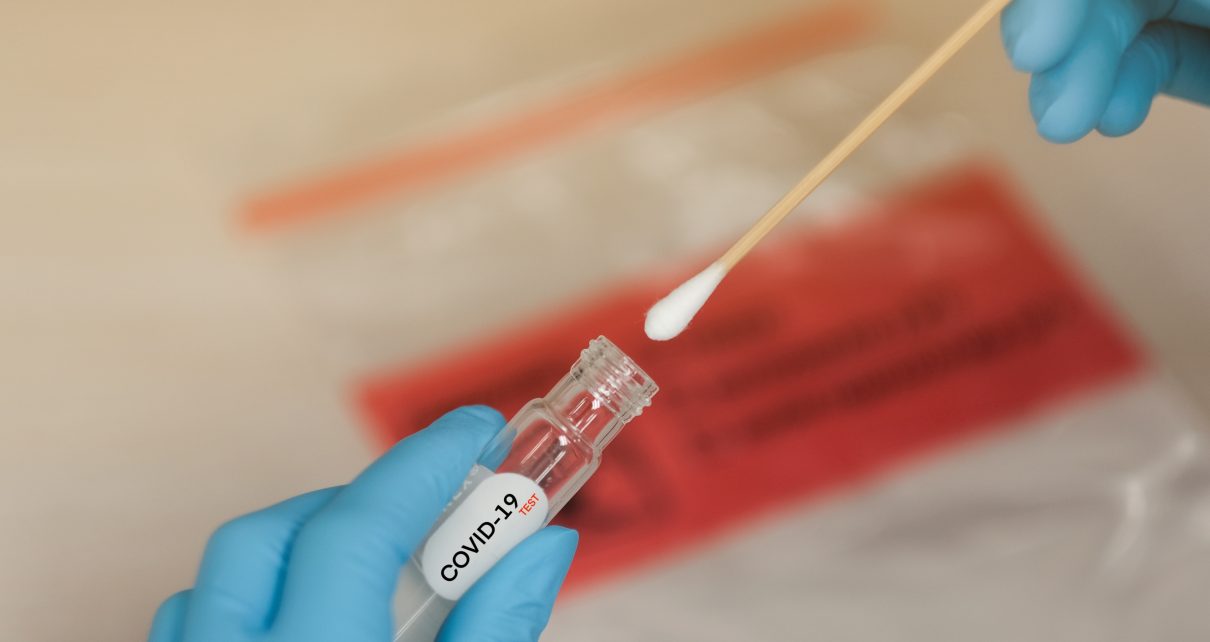
Covid-19 Nasal Swab. (Photo: Horth Rasur/Shutterstock)
Arizona Lawmakers Clash Over ASU China Research Ties
The discussion in the Arizona Legislature occurred within that broader context of national security concerns tied to academic research partnerships and foreign funding
By Matthew Holloway, March 31, 2026 11:10 am
An exchange between Republican Rep. John Gillette (R-LD30) and Democratic lawmakers escalated during a recent Arizona House committee hearing after Gillette raised a question about potential research links involving Arizona State University (ASU), China, and COVID-19.
The confrontation occurred during a March 25 meeting of the Arizona House Federalism, Military Affairs, and Elections Committee, where lawmakers were considering legislation addressing foreign funding and research partnerships involving Arizona’s public universities.
During the hearing, Committee Chair Gillette asked whether any research funding connected to COVID-19 had involved ASU, referencing testimony presented earlier in the meeting regarding foreign research ties.
Arizona House Minority Leader Rep. Oscar De Los Santos (D-LD11), standing in for Rep. Brian Garcia (D-LD8), immediately pushed back, stating there was “zero evidence” to support any implication that ASU had been involved in the origins of COVID-19. Sen. Analise Ortiz (D-LD24) also criticized the remarks to Arizona’s Family, calling them “deeply unserious” and “irresponsible.”
However, the exchange followed an extended portion of the hearing focused on ASU’s documented research partnerships with Chinese institutions and broader national security concerns tied to those collaborations.
Gillette referenced millions of dollars in foreign contracts, research partnerships, and co-authored academic papers involving Chinese entities. He cited the U.S. Department of Justice’s now-concluded China Initiative, the Congressional Fox in the Henhouse Report, and related federal investigations that examined cases involving undisclosed foreign funding and research affiliations at American universities, previously reported by California Globe, including concerns over the transfer of sensitive technologies.
Testimony and materials presented to lawmakers indicated that ASU researchers have participated in approximately 2,395 co-authored academic publications with Chinese institutions across fields, including material science, medicine, molecular biology, and engineering, according to committee records.
The materials also identified collaborations with Chinese universities, as described in federal reporting, as part of China’s defense and industrial base, including institutions linked to the country’s military research apparatus.
In addition, lawmakers discussed research projects funded by the U.S. Department of Defense that involved collaboration between ASU and Chinese entities, as well as questions about whether any such partnerships continued after federal restrictions were put in place.
The legislation under consideration, Senate Bill 1327, would prohibit Arizona public universities from entering into or maintaining research partnerships, contracts, or funding arrangements with entities affiliated with foreign adversaries, and would require additional oversight of such agreements.
“It’s clear, the U.S. is funding defense-relevant research and is exposing our most vulnerable secrets to the People’s Republic of China through Arizona State University,” Gillette said during the hearing.
“They have really no control of the money,” he observed. “They don’t know where the money is.”
The remarks came after more than 30 minutes of testimony from Marina Macklin, Vice President of American Global Strategies, and a discussion focused on foreign funding, research ties, and potential national security risks associated with university partnerships, the outlet reported.
During the exchange, while discussing a researcher who allegedly spent four weeks at Wuhan University before the emergence of COVID-19, Gillette asked, “Just saying, did we fund a portion of COVID through ASU?”
In a statement following the hearing, Gillette told AZ Family,
“My question during the hearing was a direct response to the testimony provided by the subject-matter expert. When the witness raised serious research questions regarding bioweapons, China, and research activity connected to Wuhan, it was entirely appropriate for me to ask clarifying questions about whether any Arizona-based institutions had been involved in related research or funding.
Legislative oversight requires asking difficult and sometimes uncomfortable questions, especially when public funds, public institutions, and public safety intersect. That is what the legislative process is designed for. My inquiry was not an accusation – it was a logical follow-up based on the information presented in real time during the hearing.
Any suggestion that I implied ASU was responsible for the COVID-19 pandemic is simply incorrect. My responsibility is to ensure transparency and accountability, and that includes examining whether Arizona taxpayer dollars supported research connected to topics that would implicate national security.”
Federal agencies, including the National Institutes of Health (NIH), have also raised concerns about researchers failing to disclose foreign support or participation in overseas talent recruitment programs, particularly those linked to China.
The discussion in the Arizona Legislature occurred within that broader context of national security concerns tied to academic research partnerships and foreign funding.
ASU had not publicly responded to the remarks at the time of the report.


- Hobbs Audio Recordings, Released After Reported Yearlong Records Wait, Renew Sunshine Questions - October 7, 2026
- TPUSA Frontlines Reporter Says Activists Assaulted Him, Slashed Tires At Arizona Border Protest - October 6, 2026
- Fontes Rejects ‘Cartel Lawyer’ Label in AZ SOS Debate Clash With Kolodin - October 2, 2026

