
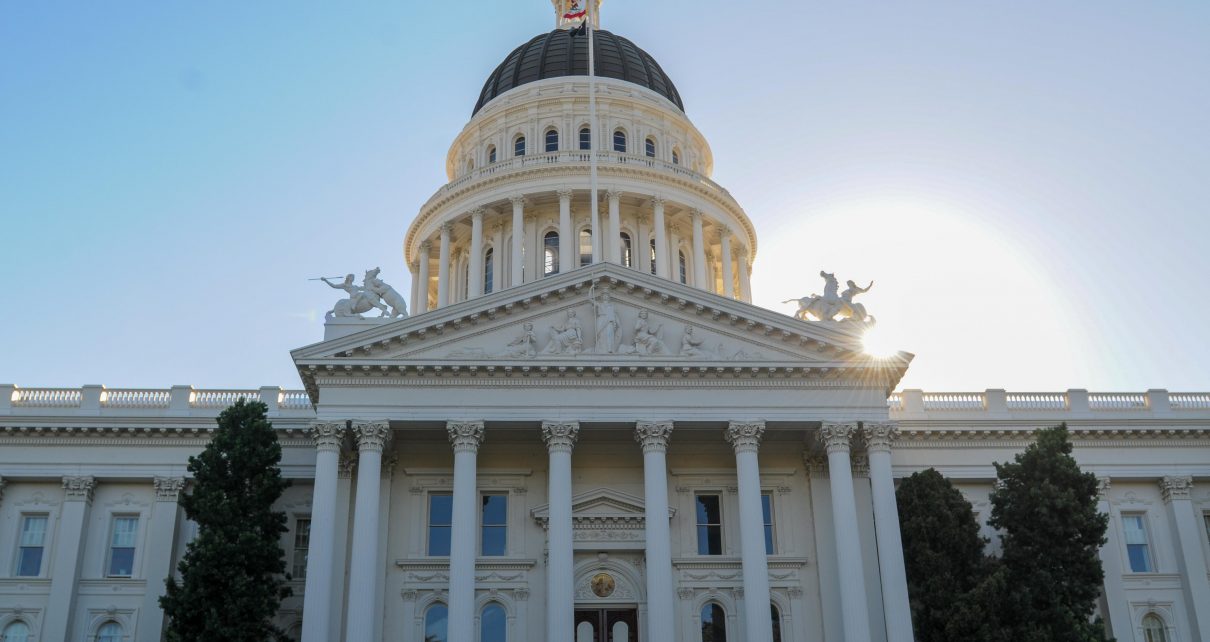
California State Capitol. (Photo: Kevin Sanders for California Globe)
Indian Children under California Law
Proceedings cannot be held until at least 10 days after receipt of notice by the parent, Indian custodian, the tribe, or the Bureau of Indian Affairs
By Chris Micheli, November 12, 2025 2:00 pm
In California’s Family Code, Division 1, Part 3, it deals with Indian children. Section 170 defines the terms “Indian,” “Indian child,” “Indian child’s tribe,” “Indian custodian,” “Indian organization,” “Indian tribe,” “reservation,” and “tribal court” to be those definitions as provided in Section 1903 of the Indian Child Welfare Act under federal law. It also defines the terms “extended family member,” “parent,” and “Indian child custody proceeding.”
If an Indian child is a member of more than one tribe or is eligible for membership in more than one tribe, the court is required to make a determination, in writing together with the reasons for it, as to which tribe is the Indian child’s tribe for purposes of the Indian child custody proceeding. The court has to make that determination in the specified manner.
Section 175 contains two main legislative findings and declarations. A determination by an Indian tribe that an unmarried person, who is under the age of 18 years, is either a member of an Indian tribe or eligible for membership in an Indian tribe and a biological child of a member of an Indian tribe constitutes a significant political affiliation with the tribe and requires the application of the federal Indian Child Welfare Act to the proceedings.
In any case in which this code or other applicable state or federal laws provides a higher standard of protection to the rights of the parent or Indian custodian of an Indian child, or the Indian child’s tribe, than the rights provided under the Indian Child Welfare Act, the court must apply the higher standard.
In addition, any Indian child, the Indian child’s tribe, or the parent or Indian custodian from whose custody the child has been removed, may petition the court to invalidate an action in an Indian child custody proceeding for foster care, guardianship placement, or termination of parental rights if the action violated provisions of the Indian Child Welfare Act.
Section 177 requires, in an Indian child custody proceeding, for the court to apply specified sections of the Welfare and Institutions Code and California Rules of Court, as modified.
Section 180 requires a notice to comply with specified sections and be sent to the minor’s parent or legal guardian, Indian custodian, if any, and the Indian child’s tribe and it must also comply with all five of the specified requirements.
Notice must be sent whenever it is known or there is reason to know that an Indian child is involved, and for every hearing thereafter. After a tribe acknowledges that the child is a member or eligible for membership in that tribe, or after the Indian child’s tribe intervenes in a proceeding, certain prescribed information does not have to be included with the notice.
Proceedings cannot be held until at least 10 days after receipt of notice by the parent, Indian custodian, the tribe, or the Bureau of Indian Affairs. Those individuals can be granted up to 20 additional days to prepare for the proceeding.
Section 185 provides that, in a custody proceeding involving a child who would otherwise be an Indian child, but is not an Indian child based on status of the child’s tribe, the court may permit the tribe from which the child is descended to participate in the proceeding upon request of the tribe. If the court permits a tribe to participate in a proceeding, the tribe may do all of the seven specified items, upon consent of the court.


- Uniform Rule Against Perpetuities - April 8, 2026
- Limited Liability Partnerships in California - April 8, 2026
- Exemptions from Securities Regulation - April 7, 2026
RELATED ARTICLES
-
 March 21, 2022
 -
 May 31, 2025
 -
 January 12, 2023