
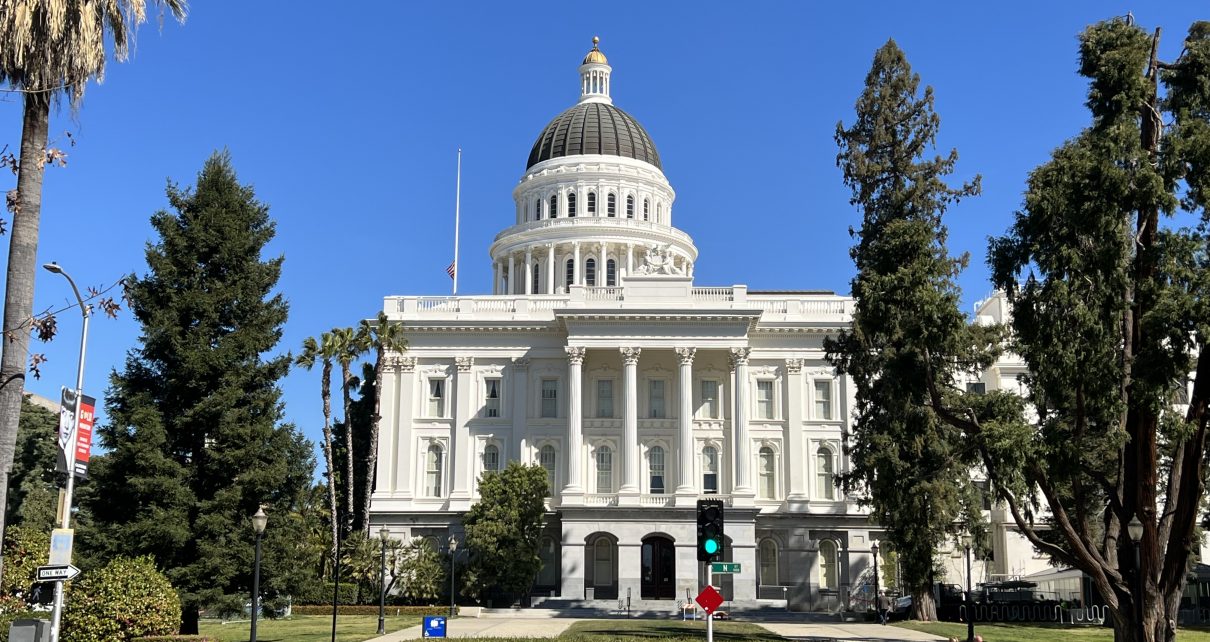
California State Capitol. (Photo: Kevin Sanders for California Globe).
Liability of Marital Property
Quasi-community property is liable to the same extent, and is treated the same in all other respects, as community property
By Chris Micheli, November 2, 2025 7:00 am
Division 4, Part 3 of the California Family Code deals with liability of marital property. Chapter 1 deals with definitions. Section 900 provides that the definitions in this chapter govern the construction of this part. Section 902 defines the term “debt.” Section 903 explains when a debt is “incurred.”
Chapter 2 deals with general rules of liability. Section 910 provides that the community estate is liable for a debt incurred by either spouse before or during marriage, regardless of which spouse has the management and control of the property and regardless of whether one or both spouses are parties to the debt or to a judgment for the debt.
Section 911 specifies that the earnings of a married person during marriage are not liable for a debt incurred by the person’s spouse before marriage. After the earnings of the married person are paid, they remain not liable so long as they are held in a deposit account in which the person’s spouse has no right of withdrawal and are uncommingled with other property in the community estate, except property insignificant in amount. The terms “deposit account” and “earnings” are defined.
Section 912 states that quasi-community property is liable to the same extent, and is treated the same in all other respects, as community property.
Section 913 says that the separate property of a married person is liable for a debt incurred by the person before or during marriage. The separate property of a married person is not liable for a debt incurred by the person’s spouse before or during marriage.
Section 914 makes a married person personally liable for the two specified debts incurred by the person’s spouse during marriage. The separate property of a married person may be applied to the satisfaction of a debt for which the person is personally liable pursuant to this section. If separate property is applied at a time when nonexempt property in the community estate or separate property of the person’s spouse is available but is not applied to the satisfaction of the debt, the married person is entitled to reimbursement to the extent such property was available.
Section 915 states that a child or spousal support obligation of a married person that does not arise out of the marriage is to be treated as a debt incurred before marriage, regardless of whether a court order for support is made or modified before or during marriage and regardless of whether any installment payment on the obligation accrues before or during marriage.
Section 916 provides that, after division of community and quasi-community property, there are three specified rules for the separate property owned by a married person at the time of the division of property.
If property of a married person is applied to the satisfaction of a money judgment for a debt incurred by the person that is assigned for payment by the person’s spouse, the person has a right of reimbursement from the person’s spouse to the extent of the property applied, with interest at the legal rate, and may recover reasonable attorney’s fees incurred in enforcing the right of reimbursement.


- Some Suggestions for Those New to the California Executive Branch - October 19, 2026
- Support Services and the Sales Tax - October 19, 2026
- Employee Notices - October 18, 2026
RELATED ARTICLES
-
 September 28, 2025
 -
 October 7, 2025
 -
 October 27, 2025