

Nevada Democrats passed political maps awarding them an unfair advantage (Photo: Screenshot of study from Princeton's Gerrymandering Project)
Nevada Democrats Weaponized Redistricting to Flip GOP Strongholds
Clark County’s explicit racial map-drawing ‘carved out heavily white districts’ to engineer majority-Hispanic districts
By Megan Barth, May 2, 2026 9:58 am
In 2021, as Nevada conducted its post-census redistricting, Democratic-controlled Clark County openly engineered majority-Hispanic districts using explicit racial criteria, while the state Legislature—dominated by Democrats—drew maps with the help of an undisclosed consulting group whose identity has never been publicly revealed. The process systematically converted competitive and Republican-leaning areas into Democratic advantages, locking in structural gains designed to secure a veto-proof supermajority in a crucial swing state that remains closely divided overall.
In an on-the-record interview at a public Clark County meeting, redistricting consultant Dave Heller—a Democratic activist—described how county commissioners (all Democrats) directed him to create two majority-Hispanic (Latino) districts from one, aiming to amplify Latino representation on the seven-member board which had zero Hispanic members. Pointing to a map of Districts E and G, Heller explained carving a “heavily white” portion from District G and adding it to District E “because I’m trying to create this majority Latino district… because I’m trying to get as many Latino voices heard as possible.” Predominantly Hispanic neighborhoods were shifted from the existing majority-Hispanic District D into District E, pushing both to approximately 50.01% Hispanic population.
“These people right here [District G] are heavily white. These people in this little corner right here [District E] are more Latino. So because I’m trying to create this majority Latino district, I carve out this little piece of white. Because I’m trying to get as many Latino voice heard as possible. Make sense?” Heller told me in a brief, recorded interview after the meeting.
Heller also addressed Native American representation, urging the public to help “maximize the Native American population effect” in the districts to ensure their voices were heard through population cohesion.
At the meeting, one public questioner asked if the native American population would be appropriately represented. Mr. Heller pointed to a map and said, “I would ask you to help me make sure we maximize the native American population effect in this process. Tell me where they are and how to keep them together. I’ve tried to do that as I said, up here, with this cut and you can show me other places where they are. and if there are places where they’ve been divided in the past, I will do my very level best to make sure we don’t divide them.”
The county’s criteria for Heller explicitly included “racial balance and minority opportunity,” directing map-drawers to avoid packing or cracking minority voters.
This race-based approach prioritized ethnic identity over compact geography, traditional communities of interest, or neutral boundaries, pitting neighborhoods against one another and raising concerns about political motivations given Heller’s openly-partisan background.
The maps were approved unanimously by the seven Democratic Commissioners in November 2021.
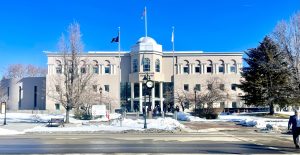
At the state level, Democrats used their trifecta control to pass Senate Bill 1 in a rushed five-day special session on party-line votes. The maps were created by an unknown consultant or firm hired by Democrats, whose identity has never been disclosed to the public.
The Princeton Gerrymandering Project assigned Nevada’s congressional maps an “F” for partisan fairness, citing a significant built-in Democratic advantage. Democrats “unpacked” safe urban Democratic seats in Clark County—spreading reliable voters, including Hispanic communities that lean strongly Democratic—into swing or formerly competitive districts.
Similar manipulation extended to Washoe County, Nevada’s second-most populous county and a longtime political bellwether often called the “swingiest county in the swingiest state.” Post-redistricting analysis showed Democrats benefiting from boundary changes that helped flip key districts. Most notably, Senate District 15 in Washoe County flipped from Republican-leaning to Democratic control due to the new lines, contributing to broader Democratic footprint in northern Nevada despite competitive voter registration. Critics argued the maps diluted rural and conservative voices by adjusting boundaries in ways that spread Democratic-leaning voters from growing urban/suburban areas into formerly balanced or GOP-friendly seats.
Key swings from Republican strongholds or competitive seats to Democratic advantages included:
- Congressional District 3: Shifted from a near-toss-up (previously rated competitive, with Biden winning by less than one point under old lines in some analyses) to a clearer Democratic lean. By incorporating more Democratic voters from Clark County suburbs while adjusting boundaries, it helped secure the seat for Democrats even in challenging cycles.
- Congressional District 1: Once a solidly blue urban seat (Biden +25 points), it was unpacked—losing some core Democratic areas and adding more conservative portions of Henderson and Boulder City—reducing its Democratic margin. This “bleeding” of Democratic voters fortified adjacent swing districts like CD-3 and helped maintain the 3-1 Democratic edge in Nevada’s U.S. House delegation (holding the three Clark County-based seats while ceding rural northern NV-2 to Republicans). Democrats retained three seats even when Republicans won the statewide congressional popular vote in cycles like 2022. Even Rep. Dina Titus (D-NV1) herself complained vulgarly to a union audience, stating, “I totally got fucked by the Legislature on my district.”
- State legislative level: Multiple swing Assembly districts in Clark County became safer Democratic holds or leans, helping Democrats maintain majorities and limit losses in tough environments (e.g., minimal seat losses in 2022). Senate District 15 in Washoe flipped blue. Overall, the maps protected Democratic incumbents and converted competitive territory into structural advantages, advancing their goal of a veto-proof supermajority in a state with narrow registration edges. As The Nevada Globe previously reported, Assemblywoman Jill Tolles (R) noted that her district (AD25) was “carved up like a Thanksgiving turkey,” transforming it from a +6 Republican district to a near +4 Democratic district. Assmemblywoman Heidi Gansert made the case that Reno was “severed” and Reno and Washoe County voters were “disenfranchised.” Gansert claimed that Senate District 15 had been “artificially engineered.”
These maneuvers echoed broader criticisms of the process: maps were accused of both partisan gerrymandering and racial manipulation– drawing objections from Republicans, progressive nonprofits, and minority advocates who felt concentrated Hispanic voting power was diluted for partisan gain rather than maximized for opportunity districts. I reported at the time, “Everyone hates their maps.”
With Democrats holding near-supermajorities in the Nevada Legislature, meaningful reform through the political process remains unlikely—efforts for an independent redistricting commission have faced legal challenges from Democratic-aligned groups, and a subsequent lawsuit filed by GOP Assemblyman Gregory Hafen II — challenging the maps as an unconstitutional partisan gerrymander — was swiftly dismissed by the courts, allowing the new boundaries to remain in place.
As The Nevada Globe reported in 2021 and subsequent analyses confirmed, the maps—drawn with input from the still-undisclosed consultant—were designed and have delivered lasting Democratic advantages through the decade.
The recent U.S. Supreme Court decision in Callais v. Louisiana underscores the constitutional limits on race-based redistricting. In a 6-3 ruling, the Court struck down Louisiana’s map creating a second majority-Black congressional district as an unconstitutional racial gerrymander. The majority held that Section 2 of the Voting Rights Act did not require the race-conscious map, and no compelling interest justified the predominant use of race in drawing lines—applying strict scrutiny under the Fourteenth and Fifteenth Amendments. Compliance with the VRA cannot override equal protection principles when race becomes the dominant factor.
Nevada’s 2021 process, with its documented racial engineering in Clark County and partisan shifts statewide involving undisclosed map-drawers, invites similar scrutiny.
Absent legislative action, any challenge to the maps—or push for new, neutral redistricting—will likely require the courts. The Callais precedent strengthens arguments that race cannot predominate in map-drawing without a compelling justification that survives strict scrutiny, providing a potential pathway for Nevada voters and candidates to seek fairer lines through litigation.
My 2021 reporting, including “Redistricting Consultant Reveals How Politics and Race Shape District Lines,” laid bare these tactics at the county level as a microcosm of the state’s highly partisan and deliberately opaque process.
As California and other states grapple with their own redistricting battles, Nevada stands as a cautionary tale of how one-party control, hidden consultants, and racial engineering can entrench power at the expense of competitive, color-blind representation.


- Von Wilpert Claims Stewardship as San Diego Residents Hit Potholes and Sue Over Trash Fees - September 17, 2026
- DOJ Sues San Jose Over $1,600 Concealed Carry Fee: ‘An Unconstitutional Tax on the Second Amendment’ - September 17, 2026
- Spencer Pratt Drops Video Showing Palisades Reservoir Still Bone Dry - September 17, 2026
RELATED ARTICLES
-
 April 14, 2026
 -
 September 19, 2025
 -

Well, leave it to the Democrats, the first ones, always, to bring up race and what’s between your legs. The Democrats have NOTHING to offer, nothing and no one. So that just leaves cheating and stealing as much as they can. It’s the only thing they have left. Does ANYONE think that they REALLY care about monoritys?, they can virtue signal all they want when they are doing this…cheating. It would be funny, everyone knows what they are doing and why they are doing it, if it wasn’t so damn pathetic. But yet people continue to vote for these morons. SMDH. HEY! Nevada, take a good look at your neighbor California and look at the shape they are in. It’s BECAUSE of a Democrat super majority and an idiot for a governor. Do you really want this?.