
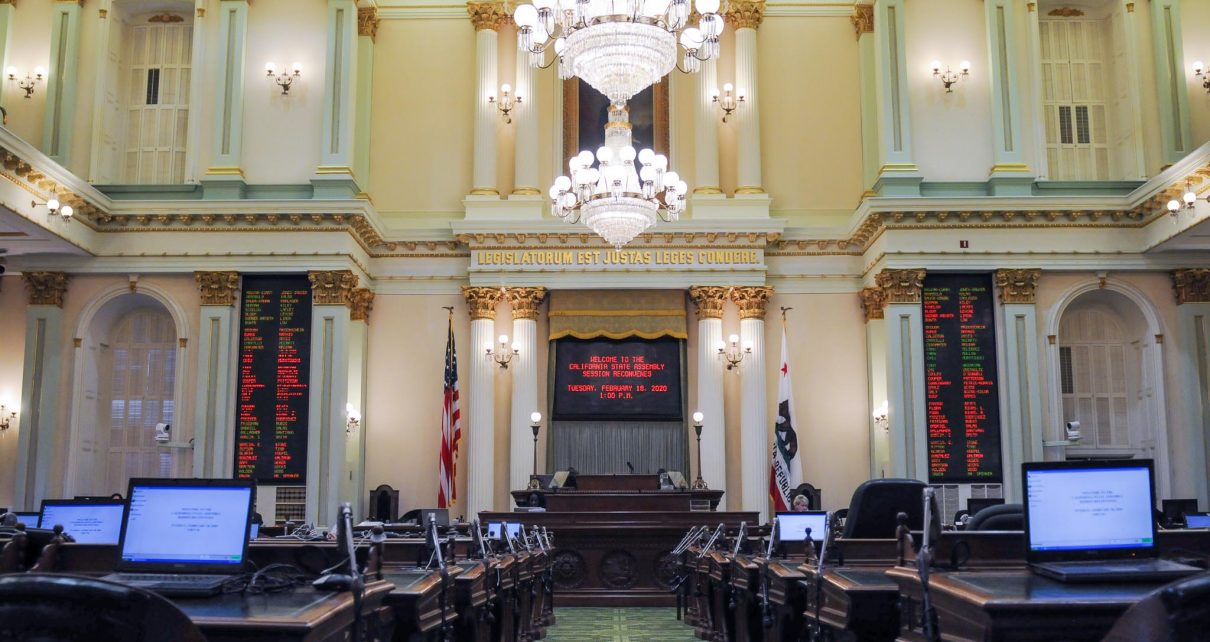
California State Assembly. (Photo: Kevin Sanders for California Globe)
A Few Bill Drafting Observations
If the Legislature wants a state entity to do something, then they should be it in statute
By Chris Micheli, April 19, 2026 4:11 pm
In reviewing some of the newly-introduced bills in the 2026 California Legislative Session, I came across a few interesting provisions.
Expanded Notwithstanding Clause
I came across this relatively new language, which adds everything after “notwithstanding any other law.” I’m not sure it is necessary because that is the purpose of the introductory phrase, but perhaps this is a new approach that is being taken:
Notwithstanding any other law, and for purposes of this code and any other law or regulation, …
New Declaratory Language
In two bills that were amended in March, I came across this new statement, instead of the more common legislative findings and declarations. In addition, this included a new phrase, “matter of legislative policy.” I think I like the traditional language myself:
The Legislature declares all of the following as a matter of legislative policy:
Saying It Twice
I also came across a bill that not only expresses the “policy of the state” (which is used in many Code sections), but also it then says almost the same thing as an intent statement. I am not sure why two similar statements are being made (and I would suggest that one of them is not necessary):
It is the policy of the state to promote and encourage the use of solar energy systems and to limit obstacles to their use.
It is the intent of the Legislature to encourage the installation of solar energy systems by removing obstacles to, and minimizing the costs of, those systems.
Operative Versus In Effect
In Revenue and Taxation Code sections, we often state that a tax statute will remain operative until a specified date; on the other hand, we normally substitute the term operative for “in effect” in most other statutes that contain a sunset date.
For example, in a tax statute, the reader will often see the following:
This chapter shall remain operative only until December 1, 2032, and as of that date is repealed.
On the other hand, as an example, a reader will see the following in other statues:
This chapter shall remain in effect until December 1, 2032, and as of that date is repealed.
Interesting Legislative Statement
The following section is being proposed in a Revenue and Taxation Code bill which is unique because we usually do not use a “whereas” clause in a bill (and therefore a statute), but rather in resolutions. In addition, this provision would usually be either a legislative intent statement or legislative finding and declaration:
Whereas, the people of the State of California desire to promote and achieve tax equity and fairness among all the state’s citizens and further desire to conform to the public policy of nondiscrimination, the Legislature hereby enacts the following for these reasons and for no other purpose:
New Items in Section 1 of a Bill
First time I’ve seen this type of statement in Section 1 of a bill because it is most often in a “plus section” (standalone section at the end of the bill). I’ll be curious to see if this is an anomaly or a new approach:
(d) The Legislature finds and declares that this act furthers the purpose and intent of the California Privacy Rights Act of 2020.
Should this Be in Statute?
Why is this language below uncodified? Yes, it is a statute, but this should be in the Heath and Safety Code where it will be readily found, as opposed to uncodified and quite difficult for the average person to find in law.
SEC. 5. The Employment Training Panel shall adopt or amend regulations and guidance as necessary to implement this act, including conforming changes to terminology, application materials, compliance procedures, and audit standards, consistent with the purposes of this act.
New Approach on State-Designated Animals
After several years of adding specified species to the California Government Code section of law related to “state emblems,” it appears that we are tasking the California State Library (CSL) with a new duty. There are currently three Senate Bills that have been similarly amended to require a study be conducted by the CSL to determine the “best candidate” for three types of specifies. Here are the three current ones:
The California State Library shall conduct a study, in consultation with the public, on the best candidate for the official State Butterfly.
The California State Library shall conduct a study, in consultation with the public, on the best candidate for the official state pinniped.
The California State Library shall conduct a study, in consultation with the public, on the best candidate for the official state wasp.
(b) (1) On or before January 1, 2028, the California State Library shall submit a report to the Legislature with the California State Library’s recommendations based on the study conducted pursuant to subdivision (a).
Including Items in Legislative Counsel’s Digest
When should a statement be used in a Legislative Counsel’s Digest to alert the reader that there are legislative intent statements or legislative findings and declarations? There is not a specified threshold for its use, although I think it is most common when there are more than half a dozen or so of these statements in the bill, then Legislative Counsel will call them out at the end of their Digest with a statement such as the following:
The bill would make related findings and declarations.
Giving Direction
The following statement in a bill this Session I found a little strange. If the statutory language uses the permissive term “may,” then this statement would appear duplicative and unnecessary. Although, perhaps more statutes need explanatory language such as this:
This section is directory only and does not mandate dismissal of an action by its terms.
Make It a Mandate
I doubt I will ever understand why these types of legislative intent statements are included in bills. If the Legislature wants a state entity to do something, then they should be it in statute, rather than make it a simply expression which has no binding force or effect, such as the following provision I came across:
It is the intent of the Legislature that the Treasurer incorporate net energy metering, including net surplus electricity compensation, coenergy metering, and wind energy cometering projects undertaken pursuant to this section as sustainable building methods or distributive energy technologies for purposes of evaluating low-income housing projects.


- Cooperative Corporations - October 26, 2026
- Nonprofit Public Benefit Corporations - October 26, 2026
- Court Jurisdiction and Venue - October 25, 2026
RELATED ARTICLES
-
 November 18, 2024
 -
 March 23, 2022
 -
February 27, 2023