
A Minority With No Benefits
The way to stop discrimination on the basis of race is to stop discriminating on the basis of race
By Jay Rogers, November 7, 2026 12:17 pm

This week Lockheed Martin agreed to pay about $29.5 million to settle federal claims that it shortchanged white employees on pay, and the company denies the allegations and admits no liability. Meanwhile, the Census Bureau reports that non-Hispanic whites are just 32.5% of Californians, behind Hispanic residents at 41.2%. So I’m a minority in my own state. I checked the mailbox for the benefits package. Nothing. Not even a pamphlet.
I’m a husband, a father of three sons, a small business owner, and I’ve never asked anyone for a preference. I ran the 400-meter hurdles in high school and college, where every lane gets the same hurdles at the same height and nobody gets a head start. My argument is simple. White men in California are a numerical minority losing ground in the classroom and in hiring, and the law already promises them the same treatment as everyone else. We should enforce that promise, measure it, and fix the pipeline for boys before the gap hardens.
The pipeline problem starts in school. Women were 58% of U.S. undergraduates in fall 2021, and male enrollment fell 17% from fall 2010, against 13% for women. Among 25-to-34-year-olds, 52% of white women hold a bachelor’s degree, compared with only 42% of white men. Women lead in every major racial and ethnic group, too. The University of California admitted women at 54% and men at 42% of its California-resident first-year class for fall 2025. Campuses have built programs for many groups. I haven’t seen one built for the boy who would rather pick up a wrench than a syllabus. Pew’s survey backs the instinct: men without a degree were more likely than women to say they just didn’t want one.
Hiring is murkier, and I’ll say so. A 2025 online survey of 1,216 hiring managers at companies with DEI programs found 10% said their company avoids hiring white men. That is self-reported, from a job-site poll, so weigh it accordingly. Harder evidence is arriving in court. On Oct. 23, a federal judge in Florida let white male employees’ claims against Danaher Corp. proceed, finding that four plaintiffs plausibly alleged they were passed over for less-qualified candidates under its diverse-slate policy. That is an early ruling. Back to Lockheed: the government alleged that a 2021 “Compensation Adder” program gave the top 20% of employees in each business area an extra raise, and that HR staff pressured leaders to swap out nonminority employees initially selected for it.
Universities deserve scrutiny too. Writer Jacob Savage’s December essay in Compact tallied white men falling from 49% of Harvard’s tenure-track positions in 2014 to 27% in 2024, and just three of the 64 tenure-track assistant professors UC Irvine hired in the humanities and social sciences since 2020. I can’t audit his tabulations, which is exactly why the schools should publish their own. After Washington turned on DEI programs, white men took nearly 55% of new S&P 500 director seats in 2025 through late September, the first majority since 2017. Pendulums swing. That’s their job.
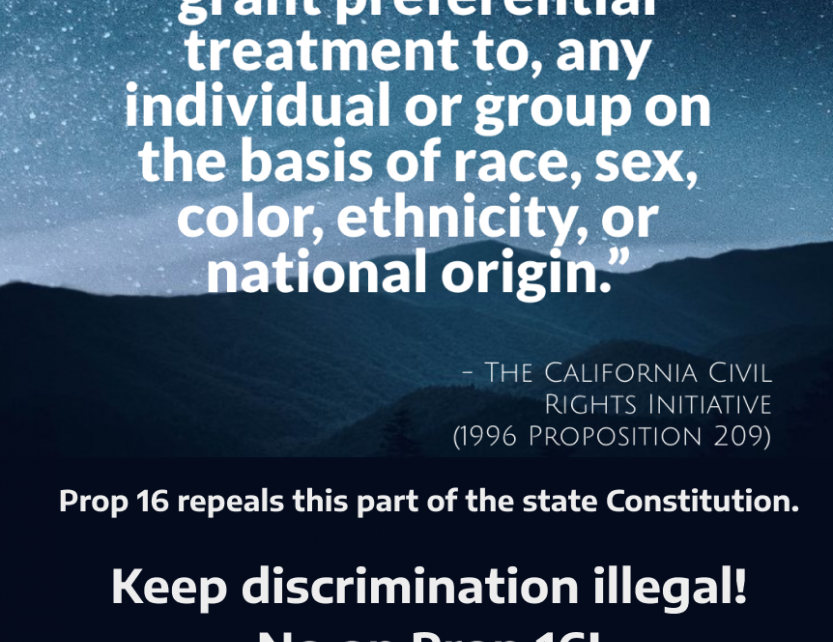
Proposition 209 bars the state from discriminating against, or granting preferential treatment to, anyone because of race or sex in public employment and education. UC dropped diversity statements from faculty hiring in 2025. A federal lawsuit filed in February 2025 alleges the system still considers race in admissions, and in December a judge found the undergraduate admissions claim plausible enough to proceed, while tossing the medical school claims. In June 2025, the Supreme Court ruled 9-0 in Ames v. Ohio Department of Youth Services that majority-group plaintiffs face no tougher burden than anyone else. Dr. King asked that people be judged by “the content of their character”. He didn’t add an asterisk for applicants who happen to be white and male.
Skeptics have fair points. Women lead 56 Fortune 500 companies, or 11.2%, so men still run nearly nine in ten. A settlement is not a finding of guilt. All true. None of it answers the question a 27-year-old applicant asks, which is whether anyone judged the résumé. Title VII protects individuals, and group averages don’t submit applications. A CEO’s success in Greenwich does nothing for a kid in Bakersfield.
Here’s what I’d do. California should require UC, Cal State, and state agencies to publish applicants, offers, and hires by race and sex every year. Clean numbers have nothing to fear from daylight. Employers should drop diverse-slate mandates and numeric targets, and regulators should enforce Proposition 209 and Title VII the same way for everyone. Then rebuild the pipeline for boys with apprenticeships, career technical education, and mentors who expect something from them. I’ve coached youth football, rugby, and track for years, and boys respond to structure, standards, and a coach who keeps score honestly.
Chief Justice John Roberts boiled the remedy down to one sentence in Parents Involved in Community Schools v. Seattle School District No. 1: “The way to stop discrimination on the basis of race is to stop discriminating on the basis of race.” Four justices joined that passage, which makes it a plurality opinion, one vote short of a majority. The logic still travels. A rule that applies to everyone in the stack is the only rule anyone can defend.
Moneyball worked because Billy Beane quit scouting how players looked and started counting what they did. Hiring and admissions deserve that same discipline, applied to everyone. California’s white men are a minority now. I’ll skip the benefits package. Just hand me the same rulebook everyone else plays by.


- A Minority With No Benefits - November 7, 2026
- Sacramento Flunks Civics Again - October 19, 2026
- Class President by Appointment - October 14, 2026
RELATED ARTICLES
-
 September 2, 2024
-
 October 27, 2024
-
 October 4, 2024