

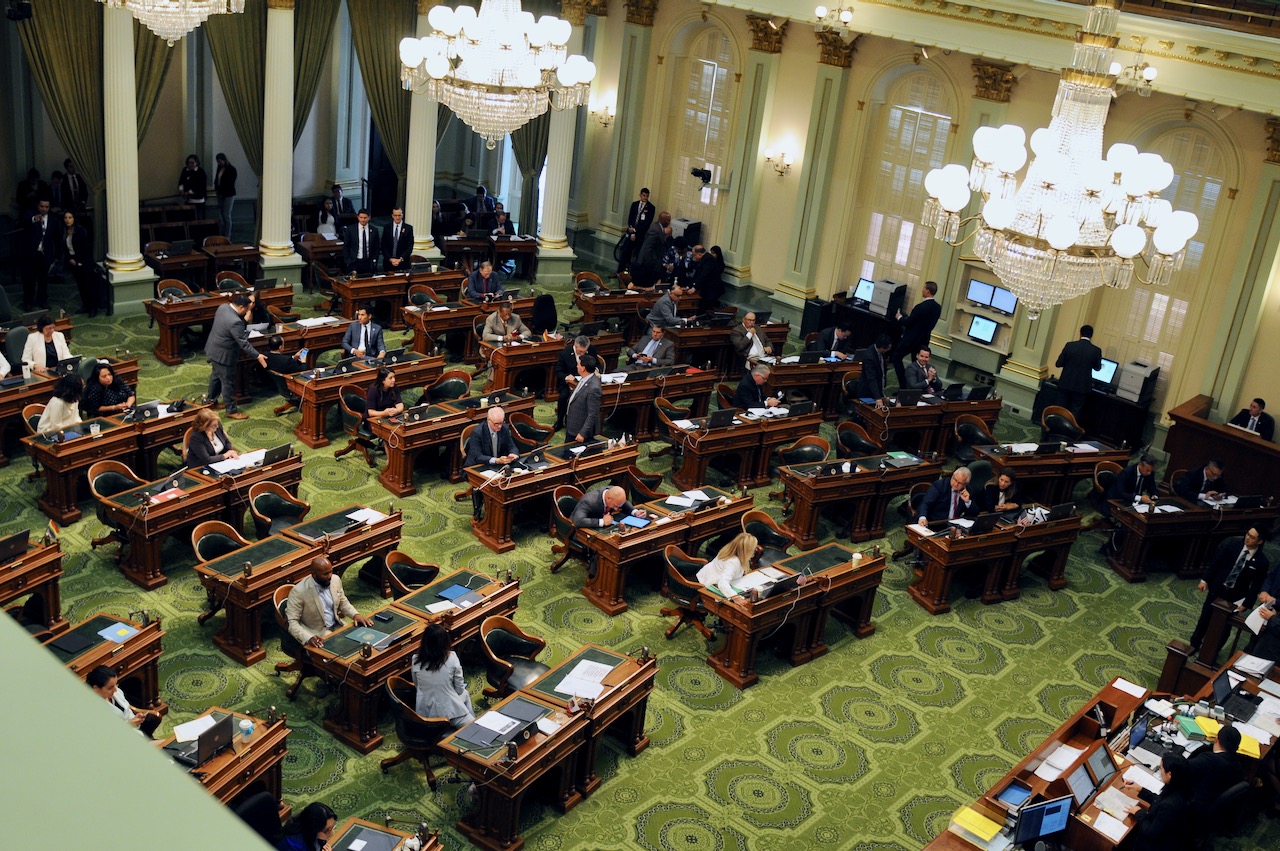
California State Capitol. (Photo: Katy Grimes for California Globe)
Certain Bill Statements Are Not Opinions
Statements of legislative intent should express the desired outcome to be achieved by the proposed law changes
By Chris Micheli, May 9, 2026 2:38 am
What is the point of legislative intent statements and findings and declarations in California bills? To me, these are separate, distinct words included in a statute.
Findings and declarations provide the foundation or basis for the bill. What is the factual basis for the new statute being proposed or the amendments to an existing statute? How do those fact-based statements justify the proposed law changes in the bill?
Statements of legislative intent should express the desired outcome to be achieved by the proposed law changes. No commentary or explanation is necessary or appropriate. Rather, what is the stated goal or desired outcome that the Legislature would like when these law changes are in effect?
To me, I do not believe these statements are opinions or unsubstantiated statements. When in a bill, whether ultimately codified or uncodified, they will become the law of the State of California. As such, they should be written with that knowledge and understanding. They should be factual, objective, and verifiable.
Unfortunately, I continue to find what amounts to opinions, most often quite biased ones, in these two types of statements. Again, that is not the purpose of these official legislative pronouncements. It is incumbent upon elected officials, their staff, lobbyists, and interest groups to use these types of statements appropriately and when necessary.
In fact, for findings and declarations, I advise the citation to each statement be in included in the statutory language. That way, the F&D is an accurate and verifiable statement, rather than just a biased opinion. Remember the purpose of these: they are findings and declarations of the Legislature and will become an official part of state law. They underlay the foundation for the statute itself. It does not need superfluous language.
For intent statements, they should be objective and accurate, not simply someone’s opinion. In fact, they should be helpful to someone trying to comply with the law, or an agency trying to implement the law, or a court trying to interpret the statutory language. Again, remember the purpose of expressing the Legislature’s intent. It is not to express an opinion. It is to serve as a statement of a goal or intended outcome. It does not need extraneous language.


- Use of Dictionaries in California Statutory Construction - October 24, 2026
- Revocable Transfers on Death Deeds - October 24, 2026
- Significant Natural Areas - October 23, 2026
RELATED ARTICLES
-
 March 17, 2022
 -
 October 18, 2023
 -
October 9, 2023