
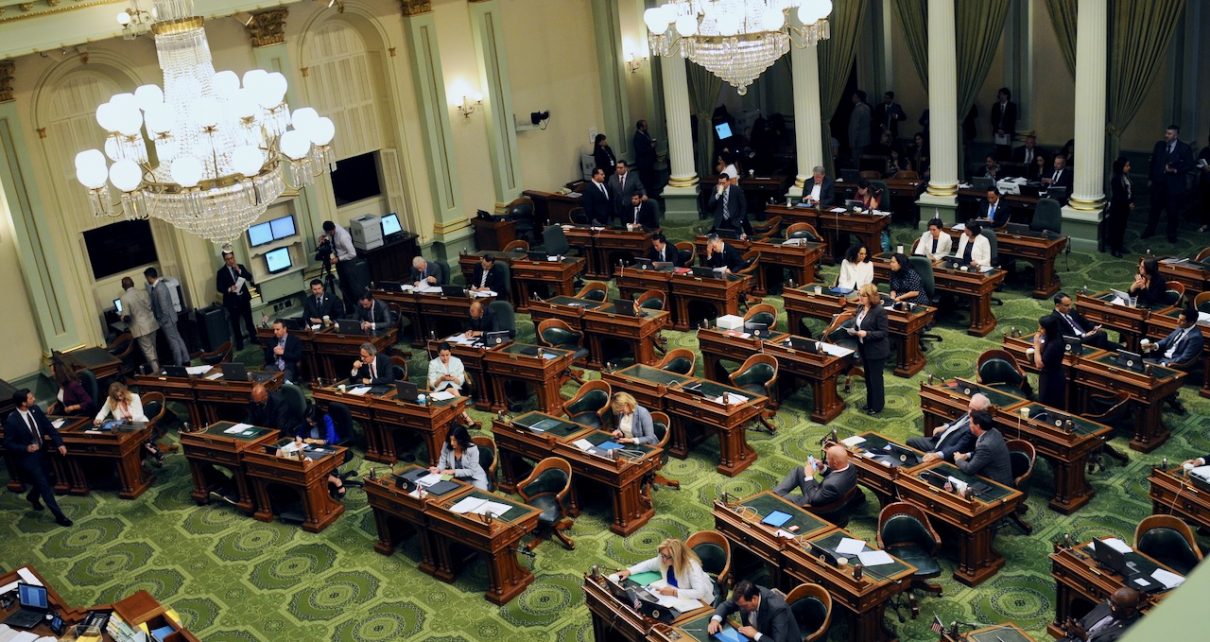
California State Assembly Chamber. (Photo: Kevin Sanders for California Globe)
Why Might a Bill Be Referred to More than One Committee?
Multiple committees mean multiple rounds of hearings and possible amendments
By Chris Micheli, September 27, 2026 2:30 am
Bills in the California Legislature are referred to at least one policy committee in each house, and just over 80% of those bills also get re-referred to the respective Appropriations Committees for a hearing on the fiscal impacts. In some instances, bills get “double-referred” or even “triple-referred” to multiple policy committees. In other words, these terms refer not to a policy and a fiscal committee, but rather to two or more policy committees.
Why might a bill be referred to more than one policy committee?
As a general rule, a bill is referred to the committee(s) that have jurisdiction over the provisions of the bill based upon the rules of the respective house and past referral decisions.
In the Senate and Assembly, except as otherwise provided, the Committee on Rules refers each bill to a committee by a majority vote of the membership of the committee.
In most instances, the bill referral is relatively straightforward. Sometimes, however, more than one committee might be appropriate to hear the bill. In most cases, only one policy committee will get to hear a bill. However, there are occasions when it is necessary for more than one committee to hear a bill. As a result, the referral of bills is an important part of the legislative process.
Basically, the California Legislature refers a bill to two or more policy committees when the bill’s topics cross more than one committee’s areas of responsibility. Some complex bills touch multiple subjects. The Rules Committee may “double refer” (or, in rare instances, “triple refer”) a bill to two (or more) separate policy committees if the content splits across different committee jurisdictions.
Again, “multiple referrals” refers strictly to multiple policy committees. It does not count a bill going to one policy committee and then to a fiscal committee (i.e., the Assembly or Senate Appropriations Committee). The main factors influencing a multiple committee referral for a bill can include a bill’s subject matter, overlapping committee jurisdictions, legislative precedents set by similar past bills, and other reasons.
Note that subsequent amendments could impact bill referral as well. For example if a bill is significantly amended after its introduction to include new topics or programs, it may be re-referred to an entirely different policy committee to evaluate the newly added provisions.
Be aware that a multiple-referred bill must pass every assigned committee sequentially. If the bill fails to clear or be reconsidered by even one committee in the chain, then that bill dies for the remainder of the legislative session, absent a rule waiver.
Due to the California Constitution’s single subject rule (see Article IV, Section 9), bill referrals beyond a triple referral are exceptionally rare. If a bill spans enough distinct topics to warrant four or more policy committees, it likely violates the California Constitution’s prohibition against multi-subject legislation.
In some instances, there may be a political strategy behind bill referrals. For example, the deliberate use of multiple referrals as an obstacle course to delay a controversial bill or steer it toward a less receptive committee to kill it could be employed. Conversely, authors may carefully craft bill language to intentionally trigger or avoid certain committees receiving a bill for consideration.
Ultimately, multiple committees mean multiple rounds of hearings and possible amendments. Moreover, the extra procedural steps increase the likelihood of delay or a “veto” point by an opposing committee. But a multi-committee bill referral also spreads gatekeeping power across multiple committee chairs instead of concentrating it within just one.


- General Principles of Nuisance - October 17, 2026
- Guidance on California Judicial Branch - October 17, 2026
- Sales Tax Presumptions - October 17, 2026
RELATED ARTICLES
-
 January 25, 2024
 -
 February 6, 2025
 -
 October 6, 2024