

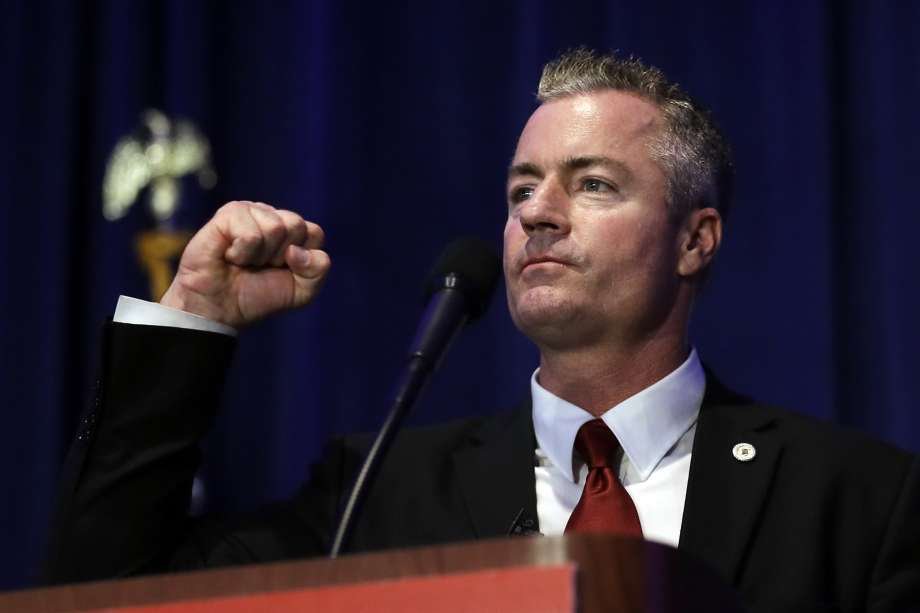
(Photo: Jon Fleischman, So Does it Matter?)
Antisemitism Has No Place in the Conservative Movement or the Republican Party
After nearly four decades in conservative politics, I refuse to remain silent while Jew-haters try to claim a place on the American right.
By Jon Fleischman, November 23, 2026 7:30 am
The Antisemitism Growing on the Right
I’ve been involved in conservative politics since 1988, starting with my time as an activist with California Young Americans for Freedom. For nearly four decades, I’ve fought for limited government, constitutional principles, and individual liberty and freedom. I’ve worked alongside generations of conservative activists, candidates, and leaders. This movement has been an enormous part of my life, and I care deeply about its future.
I also happen to be Jewish. And something is happening on the American right that I find deeply disturbing.
Antisemitism is gaining an audience among people claiming to be conservatives. Political outcasts are attracting followers and influential platforms while spreading conspiracy theories about Jews controlling American institutions.
Let me be clear. Antisemitism isn’t a competing school of conservative thought, a legitimate faction within our movement, or some edgy interpretation of America First. An antisemite is not a conservative. Their beliefs are incompatible with what conservatism stands for. They don’t belong in our movement.
For years, conservatives have rightly condemned antisemitism on the left, particularly on college campuses and among activists who excuse hostility toward Jews under the banner of anti-Zionism.
But we lose our credibility when we recognize antisemitism coming from the left and suddenly develop an inability to recognize it among people claiming to be on our side.
When “Christ Is King” Becomes a Political Weapon
Earlier this month, hundreds gathered in Irving, Texas, for a conference called Christ Is King: America After Trump. One speaker was Nick Fuentes, the notorious white nationalist whose antisemitic rhetoric has made him a prominent figure on the extremist right (if calling it “right” is even the best term for these hate-mongers).
This wasn’t simply a theological conference. Organizer Joel Webbon and other speakers advocated government-sanctioned Christian supremacy, with Americans’ rights depending on their religion.
Webbon declared Christianity American, but not Islam, Hinduism, or Judaism. Speakers discussed restricting voting rights and abandoning political equality.
According to the Associated Press, Webbon outlined a strategy to organize, raise money, win elections, and place allies in government.
Conservative commentator Erick Erickson – my friend – didn’t mince words:
“So they had this conference this weekend, and it was full of conspiracy theorists and white supremacists and neo-Nazis, anti-Semites, racists, and it got a lot of coverage.”
Erickson was condemning extremism, not Christians professing their faith.
There’s nothing objectionable about a Christian declaring that Christ is King. But invoking Christianity to justify treating Jews, or anyone else, as lesser human beings is a perversion of faith, not an expression of conservative principles.
Antisemitism is morally repugnant, period. It doesn’t become wrong because it violates some provision of the Constitution. It is wrong because judging people by their ancestry or religion, and denying them the dignity we owe every human being, is fundamentally evil.
This Is Not What Conservatism Stands For
My own conservatism has always had a strong libertarian streak, rooted in the fusionist tradition. I don’t believe the United States should be writing blank checks overseas or involving itself in every foreign conflict. That applies to Israel just as it applies to every other country receiving American assistance.
I’m perfectly willing to entertain a serious debate about how much American taxpayers should spend on foreign aid, whether that spending advances our national interests, and whether we should be spending the money at all. Israel shouldn’t be exempt from that scrutiny.
There’s an enormous difference between advocating American restraint abroad and claiming Jews manipulate our government, drag us into wars, or control American institutions.
One is a legitimate foreign-policy disagreement. The other is antisemitism. Conservatives ought to know the difference.
I believe in religious liberty because government has no business dictating religious belief. That principle protects Americans of every faith, and those of no faith. It doesn’t mean we must accept every political program advanced in the name of religion. Religious freedom and government-enforced religious supremacy are two very different things.
Conservatives who abandon religious liberty in pursuit of religious or ethnic supremacy aren’t defending the American founding. They’re rejecting an essential part of it.
Ted Cruz Is Fighting Back
One conservative who understands the danger is U.S. Senator Ted Cruz, whom I’ve known for many years.
Cruz has become one of the most outspoken Republican leaders confronting antisemitism on the right. More importantly, he’s helping turn that opposition into political action.
At Tikvah’s November 15 Jewish Leadership Conference in New York, Cruz recalled deciding to take matters into his own hands. He told his team:
“All right, damn it. We’re somebody. If nobody else is going to do it, let’s do it.”
Cruz established The Front Line to confront antisemitism within Republican politics, along with its political arm, The Front Line Action.
The Front Line announced a $400,000 advertising campaign targeting Florida Republican gubernatorial candidate James Fishback over statements the organization characterized as antisemitic.
Cruz also warned about foreign efforts to amplify the problem:
“Understand the Jew hate that is being pushed. It’s not organic. There is real money behind it. Iran and Qatar and China are putting millions of dollars into spreading Jew hate online.”
And he delivered a message Republican leaders need to hear:
“The way you prevent it is having very real consequences. Deploying resources and messaging to say if you are a bigot, if you are a Jew hater, get the hell out of the Republican party. You do not belong in this party.”
That’s what drawing a line actually looks like.
The Conservatives Refusing to Stay Silent
Harmeet Dhillon, a longtime friend from California conservative politics, recently stepped down as Assistant Attorney General for Civil Rights. At the Justice Department, she challenged discriminatory DEI practices, defended religious liberty, and confronted antisemitism on college campuses.
Since leaving the department, she’s spoken candidly about antisemitism on the right and the reluctance of prominent figures to confront it. She told Jeremy Boreing:
“People don’t have that moral courage. They just want to, like, keep their head down and go home. And then you get this situation where we have a deeply fractured country. We have aimless youth who are being seduced by antisemitism, Nazism, by ancient evils. It is evil. It’s absolutely evil.”
I’ve known Ben Shapiro for many years, and I recognize the same determination in his willingness to confront influential figures on the right.
At Turning Point USA’s AmericaFest last December, Shapiro warned:
“The conservative movement is also in danger from charlatans who claim to speak in the name of principle, but actually traffic in conspiracism and dishonesty, who offer nothing but bile and despair, who seek to undermine fundamental principles of conservatism by championing enervation and grievance.”
Dennis Prager, another longtime friend who has influenced generations of conservatives, addressed the courage required to confront antisemitism within one’s own ranks. In a September 2025 interview, he recalled William F. Buckley Jr.’s example:
“There were voices on the right that were anti-Semitic in William Buckley’s time. And he, to his great courageous credit, publicly rebuked them. It took a lot of courage.
Courage is the rarest of the good human traits, as I always point out. There are a lot of good people, but there are very few courageous good people.”
Prager’s right. Courage is what this comes down to.
What I Saw at the California GOP Convention
At the California Republican Party convention in San Diego this April, I attended a dinner featuring Ted Cruz.
Cruz delivered a forceful denunciation of antisemitism on the right. He wasn’t offering the usual vague declaration that hatred is bad. He was warning Republicans about people trying to corrupt their movement.
After dinner, I watched several young men approach Cruz, repeatedly trying to get him to make hand gestures for photographs.
I recognized them as Nick Fuentes followers and the gestures as symbols associated with the Christ Is King subculture surrounding his movement.
I was across the room, so I couldn’t hear what Cruz said to them. But I could see his response. He refused to make the gestures, offering a thumbs-up in photos instead.
After delivering an unmistakable warning about antisemitism, Cruz faced young men trying to draw him into the very subculture he’d condemned.
He wouldn’t play along.
I’ve been to plenty of Republican conventions. I’ve seen ideological disputes, personal feuds, and political theater. But this is different. We’re talking about whether the conservative movement will maintain some basic moral boundaries.
I don’t expect every Republican to agree with Ted Cruz on foreign policy, presidential politics, or anything else.
I certainly have plenty of disagreements with liberals, and I’m not shy about blaming liberal policies for many of America’s problems. But liberalism and conservatism aren’t divided along religious lines. They’re competing political philosophies, not competing faiths. There are Jewish conservatives and Christian liberals, just as there are Christian conservatives and Jewish liberals. Our political disagreements are about ideas, principles, and policies. Not someone’s religion or ancestry.
So, Does It Matter?
I’ve devoted much of my adult life to a conservative movement built on individual liberty and constitutional government. I won’t stand quietly by while antisemites try to claim it as their own.
The First Amendment protects the right to say hateful things. It doesn’t require conservatives or the Republican Party to endorse those saying them or entitle anyone to conference invitations, friendly podcast interviews, campaign contributions, or conservative organizations’ support.
Those are choices. And choices have consequences.
The people who concern me aren’t only the loudest antisemites. They’re also the influential conservatives who recognize what’s happening but calculate that speaking out might cost them an audience, a donor, or a relationship.
It’s easy to condemn prejudice among political opponents. The real test comes when the people spreading it claim to be on your side.
I’ve been a conservative since Ronald Reagan was in the White House. I intend to remain one.
And that is precisely why I refuse to remain silent.


- Antisemitism Has No Place in the Conservative Movement or the Republican Party - November 23, 2026
- Newsom’s Diaper Deal Stinks - July 21, 2026
- Without Unity, a Very Narrow Path for California Republicans Becomes Possible - June 30, 2026
RELATED ARTICLES
-
 November 15, 2018
-

-
 December 8, 2020