
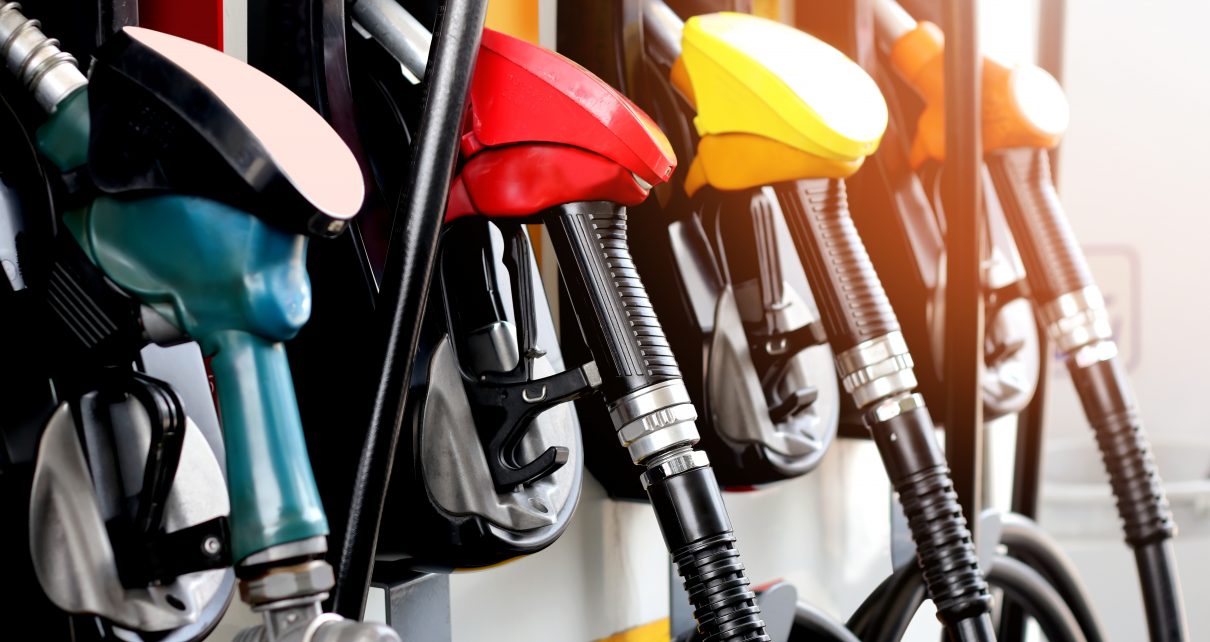
Gasoline Pump (Photo: ThePowerPlant/Shutterstock)
India’s Ethanol Gambit: A Muddled Climate Policy
Technology transitions should deliver genuine value to consumers rather than impose ideological preferences on captive markets
By Vijay Jayaraj, September 22, 2025 4:00 pm
Indian authorities have accelerated a nationwide transition to a 20% ethanol blend in gasoline. Of the 1.46 billion people in India, many, including myself, were completely unaware that gasoline at the pumps was now a 20% blend.
This is because the original deadline for the nationwide implementation of a 20% ethanol mix in gasoline, known as E20, was set for 2030. The decision to fast-track was done silently and without notice.
The move was defended with two primary justifications: a reduction in the cost of fuel imports and a more environmentally desirable standard to combat climate change. Both justifications are deeply flawed.
Cost and Compatibility
India imports nearly 85% of its crude oil, a major contributor to the country’s trade deficit. Theoretically, ethanol made domestically could replace some imported oil and reduce the imbalance. But the country’s Ministry of Petroleum and Natural Gas admits that the high cost of ethanol production will offset any reduction in the cost of foreign oil.
The bigger issue is mechanical. Engines and fuel systems designed for lower ethanol concentrations may suffer long-term damage when exposed to E20. Car makers have warned that vehicles manufactured before 2023 are not fully compatible.
Parts such as fuel pumps, injectors, and seals may degrade faster, increasing maintenance costs. This burden falls disproportionately on India’s middle- and lower-income populations, who typically drive decades-old vehicles, unable to afford frequent replacements.
In the U.S., ethanol content typically ranges from 10% to 15%, with higher blends of up to 83% available for “flex-fuel” vehicles designed for them. Consumers retain choice, and pure gasoline remains an option in many states.
In European nations like Germany, Finland and France, consumers enjoy the choice between E10 and E5 at fuel stations, though uptake remains limited due to rigorous consumer protection laws and comprehensive labeling requirements
Brazil’s five decade-long ethanol program succeeded only because car technology evolved alongside policy. Brazilians can still buy gasoline with and without ethanol. But no such choice is available in India.
The Environmentally Safe Fuel Logic
The second pillar purportedly supporting E20 policy – environmental benefits – rests on the scientifically shaky claim of ethanol being a climate savior. For instance, the U.S. Department of Energy’s July report, “A Critical Review of Impacts of Greenhouse Gas Emissions on the U.S. Climate,” challenges assumptions underlying aggressive policies to mitigate effects of vehicle emissions.
The report says that most extreme weather in the United States shows no long-term trends, with assertions of increased frequency or intensity of hurricanes, tornadoes, floods and droughts unsupported by historical data. Undermining the case for sacrificing economic progress to meet climate goals, the report says greenhouse gas emissions pose no immediate threat to global stability.
Even in India, data for monsoon precipitation show no anthropogenic climate footprint. Frequent floods and droughts have been the norm since at least the 1870s, when government data first became available, and likely long before then. If anything, the country is now more resilient than ever to avert catastrophic consequences from extreme weather, partly because of improved infrastructure and warning systems.
When the effects of climate change prove less severe than commonly projected, the economic costs of policies like E20 are impossible to justify.
If wealthy countries like Norway – with a per capita GDP (gross domestic product) of $90,400 – continue to issue licenses for exploration of oil and natural gas, why should India with 3% of the Norwegian GDP burden citizens with the agenda of international climate elites?
Ethanol may have its place, but only if compatible with the internal combustion engines it is supposed to power. Technology transitions should deliver genuine value to consumers rather than impose ideological preferences on captive markets. True affordability measures costs honestly, including hidden expenses and both positive and negative effects on performance.
More importantly, freedom to choose must remain essential, particularly for populations whose income levels make them vulnerable to policy mistakes. Climate alarmism no longer presents a credible argument for forcing hurried transitions. Poor people ought not foot the bill for pet projects of Europe’s political aristocracy.


- South Korea’s Net Zero Boast Crumbles - April 28, 2026
- Australia’s ‘Renewable’ Obsession Decimates Industry - April 2, 2026
- Carbon for Me, Not for Thee: Climate Class Warfare - February 11, 2026
RELATED ARTICLES
-

-
 April 11, 2022
 -
 September 25, 2018
It’s not a matter of if you will have engine problems, it is a matter of when. I had to replace one or two carburetors a year on my garden power equipment with 10% Ethanol gas. I switched to Ethanol free fuel, and haven’t replaced a carburetor in over 10 years. Up that to 20% Ethanol for engines not designed for it, then get ready to be stranded on the side of the road.
It should be noted also that ethanol blended fuel uses miles per gallon than straight gasoline thus creating even more fuel needed to move the fleet.
Here in the US a study shows that to produce ethanol from corn requires more energy farming the product than it saves. On a cost/benefit analysis, there is little or no benefit to the environment.
Yet the farm lobby is one of most powerful in Congress and producing corn keeps many midwestern states’ economies rolling .
The report says that most extreme weather in the United States shows no long-term trends, with assertions of increased frequency or intensity of hurricanes, tornadoes, floods and droughts unsupported by historical data. Undermining the case for sacrificing economic progress to meet climate goals, the report says greenhouse gas emissions pose no immediate threat to global stability.